Max Roser: Transforming Global Data into Human Progress
In an era of constant news cycles often dominated by crisis and catastrophe, Max Roser provides a critical counter-perspective. A German economist and philosopher, Roser has dedicated his career to analyzing the world's most pressing challenges—from extreme poverty and disease to climate change and existential risks—through the lens of long-term data. By shifting the focus from isolated events to systemic trends, he helps the public understand not just where the world is failing, but where it is succeeding.
Roser is a professor at the University of Oxford and the director of the program on global development at the Oxford Martin School. He is perhaps best known as the founder and director of Our World in Data (OWID), a scientific publication that translates complex datasets into accessible visualizations to combat apathy and cynicism regarding global progress.
Key Facts
- Role: Professor at the University of Oxford and Director of the Global Development program at the Oxford Martin School.
- Major Contribution: Founder of Our World in Data, which reaches approximately 100 million readers annually.
- Academic Focus: Economics of income distribution, poverty, global health, and global development.
- Recognition: Named one of the "World’s Top 50 Thinkers" by Prospect Magazine (2019) and received an honorary doctorate from KU Leuven and UCLouvain in 2025.
- Impact: His research has been cited over 50,000 times according to Google Scholar as of May 2025.
Early Life and Academic Foundation
Born in 1983 in Kirchheimbolanden, Germany, Roser displayed an early aptitude for science and exploration. In 1999, he won a prize in the Jugend forscht (German youth science competition) for creating a self-navigating vacuum cleaner model. His youth was marked by extensive travel across the Andes, the Himalayas, and along the Nile, fostering a global perspective that would later define his professional work.
Roser's academic background is multidisciplinary, reflecting his holistic approach to global problems. He holds two undergraduate degrees in geoscience and philosophy, and two master's degrees in economics and philosophy. He completed his doctoral dissertation at the University of Innsbruck in Austria in 2011.
The Evolution of Our World in Data
After his doctorate, Roser joined the University of Oxford in 2012, where he worked under the mentorship of Sir Tony Atkinson, a renowned scholar of poverty and inequality. Encouraged by Atkinson to share his datasets on global living conditions, Roser founded Our World in Data. In its early stages, Roser self-funded the project by working seasonally as a bicycle tour guide across Europe.
Our World in Data serves as a repository of research and visualizations on topics including hunger, economic growth, violence, and environmental change. Roser advocates for open access, ensuring that all content, tools, and code are shared under Creative Commons licenses for free reuse in teaching, media, and research.
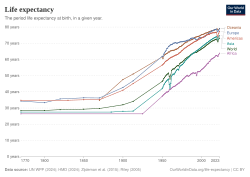
Roser argues that while news media focuses on immediate events, long-term indicators provide a more accurate picture of human progress. He often highlights that in many historical societies, child mortality rates exceeded 40%, a stark contrast to modern improvements. He summarizes the core message of his work in three statements: "The world is much better; The world is awful; The world can be much better."
Research and Scientific Contributions
Beyond public communication, Roser contributes original research to the fields of economics and health. A primary focus of his work is the measurement of poverty. He has criticized the reliance on a single international poverty line, suggesting instead a multi-tiered approach. This includes a global poverty line at $30 per day and a specific line at 10.89 international dollars per day, which he identifies as the minimum required for basic healthcare access.
His work on economic inequality includes the Chartbook of Economic Inequality, which tracks indicators across 25 countries over a century. He has also investigated the divergence between GDP per capita growth and median household income in OECD countries to understand why typical living standards sometimes lag behind overall economic growth.
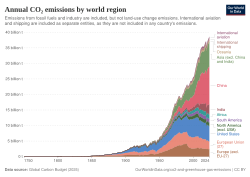
In the realm of environmental science, Roser and Felix Pretis found in 2017 that the growth rate of CO2 emission intensity had exceeded the projections of all existing climate scenarios. During the COVID-19 pandemic, his team at OWID became a vital resource, compiling global datasets on vaccinations and testing.
Data Visualization and Global Recognition
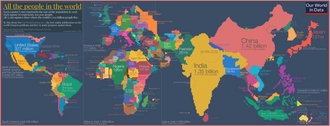
Roser's ability to synthesize data into visual narratives has earned him acclaim from experts like Edward Tufte, who reprinted Roser's work in his books. His population cartograms have been featured in The Economist and The Financial Times, and he collaborated with Hans Rosling on a BBC documentary.
His contributions have been recognized with the Lovie Award (2019), the Covid Innovation Heroes Award (2021), and his inclusion in "The Future Perfect 50." He has also served on the Statistical Advisory Panel of the UNDP and spoken at various United Nations institutions.
| Category | Details |
|---|---|
| Primary Affiliation | University of Oxford / Oxford Martin School |
| Key Publication | Our World in Data (OWID) |
| Core Research Areas | Poverty, Inequality, Global Health, Climate Change |
| Educational Background | PhD (Innsbruck); Degrees in Economics, Philosophy, and Geoscience |
| Annual Readership (OWID) | 100 Million people (as of 2025) |
Frequently Asked Questions
What is the primary goal of Our World in Data?
The primary goal is to provide research and data to make progress against the world's largest problems, combating apathy and cynicism by showing both the scale of global challenges and the progress made against them.
How does Max Roser propose we measure poverty differently?
Roser suggests using multiple poverty lines rather than a single international line. He proposes a global line at $30 per day and a basic health-related poverty line at 10.89 international dollars per day to better understand the needs of the world's poorest.
What is the significance of Roser's work on child mortality?
Roser has highlighted that historically, over 40% of children died in many societies. By visualizing this long-term trend, he provides a counterpoint to negative news, showing the massive improvement in global health over time.
How is the content of Our World in Data licensed?
The content is published under open licenses (Creative Commons), meaning the data, visualizations, tools, and code are free for the public to reuse in research, media, and teaching.
What was the result of Roser's research on CO2 emissions?
In a 2017 study with Felix Pretis, Roser found that the actual growth rate of CO2 emission intensity was higher than what had been projected in all existing climate scenarios.