Maurice A. Ferré Park
Located in the heart of downtown Miami, Florida, Maurice A. Ferré Park is a 30-acre (12 ha) municipal urban oasis. Originally opened in 1976 as Bicentennial Park to commemorate the United States' bicentennial, the park has evolved from an industrial site into a premier destination for culture, education, and large-scale entertainment. Today, it is managed by the Bayfront Park Management Trust.
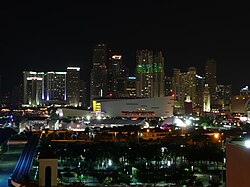
The park occupies a strategic position, bordered by I-395 and the former Miami Herald headquarters to the north, the American Airlines Arena and Bayside Marketplace to the south, Biscayne Boulevard to the west, and the scenic waters of Biscayne Bay to the east.
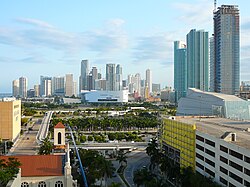
Key Facts
- Total Area: 30 acres (12 ha).
- Established: 1976 (originally as Bicentennial Park).
- Renamed: 2019 in honor of former Miami Mayor Maurice Ferré.
- Capacity: Can accommodate approximately 45,000 people for major events.
- Key Attractions: Pérez Art Museum Miami, Frost Museum of Science, and the Miami Science Barge.
- Transit Access: Served by Metrorail (Government Center) and Metromover (Museum Park, Eleventh Street, and Park West stations).
A Hub for Culture and Science
In recent years, the park underwent a $10 million renovation to better integrate its world-class institutions. This revamp introduced a new bay walk and a promenade stretching from Biscayne Boulevard to the bay, enhancing pedestrian access to the area's museums.
The park is now home to two architectural landmarks: the Pérez Art Museum Miami, which opened in December 2013, and the Phillip and Patricia Frost Museum of Science, which opened in May 2017. Further expanding its public appeal, the Dogs and Cats Walkway and Sculpture Gardens officially opened in January 2023.
Adding to its educational value is the Miami Science Barge. Opened in 2016, this floating marine laboratory and education platform focuses on marine ecology, conservation, alternative agriculture, and sustainability.
History and Evolution
The land now occupied by the park has a deep industrial history. From the early 1900s until the mid-1960s, it served as the Port of Miami. After the port relocated to Dodge Island, the site underwent extensive cleanup to remove industrial residue before being transformed into the city's second large downtown park.
Transportation access has also evolved. The Metromover's Omni Loop first reached the park in 1994, though the station closed in 1996 due to low ridership. It was later renovated by CNC Management Group and reopened as the Museum Park Station in 2013 to support the influx of visitors to the new museums.
A Legacy of Auto Racing
Beyond its role as a green space, the park has a storied history as a venue for motorsport. Between 1983 and 1995, a temporary street circuit hosted various racing series, including IMSA, the Trans-Am Series, and CART. The site returned to the racing world briefly in 2015 to host the FIA Formula E Miami ePrix.
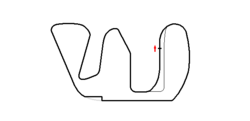
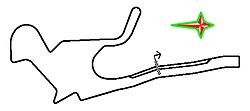
Historical Lap Records
The park's various circuit configurations produced several notable lap records over the decades.
| Circuit/Year | Category | Driver | Time | Vehicle |
|---|---|---|---|---|
| Formula E (2015) | Formula E | Nelson Piquet Jr. | 1:07.969 | Spark-Renault SRT_01E |
| Grand Prix w/ Chicane (1995) | CART | Scott Pruett | 1:05.982 | Lola T95/00 |
| Grand Prix (1986–1994) | IMSA GTP | P. J. Jones | 1:06.412 | Eagle MkIII |
| Grand Prix (1983–1985) | IMSA GTP | David Hobbs | 1:23.987 | March 83G |
Frequently Asked Questions
What was the park originally called?
The park was originally named Bicentennial Park when it opened in 1976 to celebrate the 200th anniversary of the United States.
Who is the park named after now?
In early 2019, the park was renamed Maurice A. Ferré Park in honor of the former Mayor of Miami, Maurice Ferré.
What major events are hosted at the park?
The park can hold approximately 45,000 people and hosts large-scale events such as the Ultra Music Festival, various rock concerts (including the Warped Tour), conventions, and boat tours.
What is the Miami Science Barge?
The Miami Science Barge is a floating marine laboratory and education platform that opened in 2016, focusing on sustainability, marine ecology, conservation, and alternative agriculture.
How can visitors access the park via public transit?
Visitors can use the Metrorail via Government Center Station or the Metromover via the Museum Park, Eleventh Street, or Park West stations.