Massachusetts Executive Branch Structure and Governance
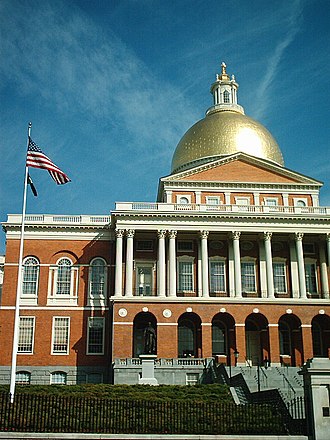
The executive branch of the Commonwealth of Massachusetts is a complex administrative network designed to manage the state's diverse needs. It comprises 151 departments or agencies and over 700 independent boards and commissions. While the Governor serves as the legal head of the branch, the system is balanced by officials who operate outside the Governor's direct control to ensure checks and balances.
The branch is divided into three primary categories: constitutional officers, independent agencies created by statute, and the Governor's cabinet. While the Governor exercises direct control over the cabinet, control over independent agencies is indirect, primarily managed through appointments.
Key Facts
- Total Agencies: 151 departments/agencies and 700+ independent boards and commissions.
- Leadership: Led by the Governor, who serves as both head of state and head of government.
- Constitutional Officers: Elected officials specified by the state constitution who operate independently of the Governor.
- Governor's Council: A body of eight elected councilors and the Lieutenant Governor providing advice and consent on judicial and public appointments.
- Cabinet: Consists of eleven secretaries supervising state agencies under the Governor's direct control.
Constitutional Officers
Constitutional officers are high-ranking officials elected by the people of Massachusetts. Because their positions are mandated by the state constitution, they maintain a level of autonomy from the Governor's office.
| Office | Incumbent | Key Responsibilities | Took Office |
|---|---|---|---|
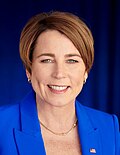
| Governor | Maura Healey | Head of state/government, Commander-in-chief of National Guard | January 5, 2023 |
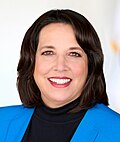
| Lieutenant Governor | Kim Driscoll | Deputy officer, Chair of the Governor's Council | January 5, 2023 |
| Secretary of the Commonwealth | William F. Galvin | Chief Elections Officer, Keeper of the Seal, Records officer | January 1, 1995 |
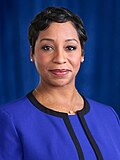
| Attorney General | Andrea Campbell | Chief legal officer | January 18, 2023 |
| Treasurer and Receiver-General | Deb Goldberg | State Treasurer, Chair of State Lottery and School Building Authority | January 21, 2015 |
| State Auditor | Diana DiZoglio | Auditor general | January 18, 2023 |
The Governor's Council
The Governor's Council is a unique body consisting of eight councilors elected from specific districts every two years, along with the Lieutenant Governor. The Governor serves as the nonvoting president of this council.
The council's primary role is to provide advice and consent for several critical state functions, including:
- Judicial appointments.
- Appointments of public officials, such as justices of the peace and notaries public.
- Pardons and commutations.
- Specific payments from the state treasury.
Cabinet and Government Agencies
The Governor manages the day-to-day operations of the state through a cabinet of eleven secretaries. These secretaries oversee various executive offices and their subordinate departments. Most of these agencies formulate regulations that are compiled in the Code of Massachusetts Regulations.
Major Executive Offices and Their Focus
- Administration and Finance: Manages the Department of Revenue, Civil Service Commission, and the State Library.
- Energy and Environmental Affairs: Oversees the Department of Environmental Protection, Fish and Game, and Public Utilities.
- Health and Human Services: Manages MassHealth, the Department of Public Health, and the Department of Children and Families.
- Economic Development: Supervises the Division of Banks, Insurance, and Professional Licensure.
- Labor and Workforce Development: Oversees Unemployment Assistance and Career Services.
- Public Safety and Security: Manages the State Police, Department of Correction, and the Parole Board.
- Education: Oversees Early Education and Care, as well as Higher Education and Public Colleges.
- Transportation: Manages the state's transportation infrastructure.
- Housing and Livable Communities: Oversees the Department of Housing and Community Development.

Other specialized offices include the Executive Office of Technology Services and Security, ensuring the state's digital infrastructure remains robust and secure.


Frequently Asked Questions
Who is the head of the Massachusetts Executive Branch?
The Governor is the legal head of the state's Executive Branch, serving as both the head of state and the head of government.
What is the difference between a constitutional officer and a cabinet secretary?
Constitutional officers are elected officials specified by the state constitution and operate independently of the Governor. Cabinet secretaries are appointed by the Governor and are under their direct control.
What does the Governor's Council do?
The Governor's Council provides advice and consent for judicial appointments, certain public official appointments, pardons, commutations, and specific treasury payments.
How many departments and agencies are in the Massachusetts Executive Branch?
There are 151 departments or agencies and over 700 independent boards and commissions.
Where are the regulations created by executive agencies stored?
Most regulations formulated by executive agencies are collected in the Code of Massachusetts Regulations.