Marshal: The Evolution of a Global Title in Military, Law, and Sport
The term marshal describes a wide array of official titles across various sectors of society. From the trusted courtiers of Medieval Europe to the highest echelons of modern military command and civilian law enforcement, the title has evolved into a symbol of authority, trust, and specialized duty.
While often associated with the American Old West or high-ranking generals, the role of a marshal varies significantly depending on the country, the branch of government, and the specific field of application.
Key Facts
- Military: In many nations, Marshal is the highest possible army rank.
- Law Enforcement: Roles range from federal agents in the US to the Koninklijke Marechaussee (military police) in the Netherlands.
- Sports: Track marshals are essential for safety and signaling in motorsports.
- History: The title originated in Medieval Europe, evolving from court positions to high-ranking military and police offices.
- Politics: In Poland, the term marszałek is used for specific regional executive leaders.
Military Ranks and Equivalents
In a military context, the rank of Marshal is typically the pinnacle of the army's hierarchy. Many countries maintain this rank, though its specific application varies.
Global Military Usage
Countries such as Russia, France, Italy, Poland, and Turkey utilize the rank of Marshal. In France, the Marshal of France (including the Marshal of the Empire) is equivalent to a six-star general. Conversely, some countries use the term for lower ranks; for example, the French Maréchal des logis is equivalent to a sergeant.
Other nations use equivalent titles that carry the same weight as a marshal, such as the Chom Phon in Thailand, Wonsu in North and South Korea, and Gensui in Japan. In the United States, the equivalent ranks are the General of the Army, Fleet Admiral, and General of the Air Force.
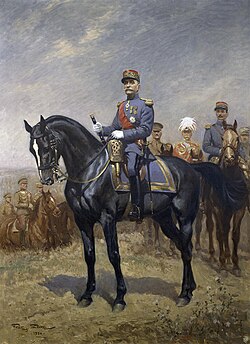
Military Police
The term is also central to military policing. A Provost Marshal is a common term for military police leaders globally, while the Provost Marshal General serves as the head of military police in the United States.
Law Enforcement and Civilian Roles
The transition of the marshal from a military figure to a law enforcement officer is most evident in the history of France and the United Kingdom.
European Law Enforcement
In France, the Maréchaussée (Marshalcy) was the precursor to the modern Gendarmerie. Originally created in 1337, it was tasked with protecting roads from highwaymen. Similarly, the Netherlands established the Koninklijke Marechaussee in 1814 to replace the French gendarmerie, serving as a separate military branch with both military and civilian police duties.
In England, the title was once held by the head of household security for the King. This evolved into the Earl Marshal, a Great Officer of State. Today, the City Marshal of London continues to serve as a peacekeeper to the Lord Mayor of London.
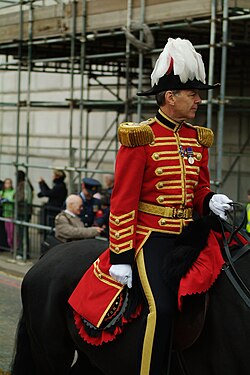
The American Marshal System
In the United States, the role is split between federal, state, and local levels. Historically, town or city marshals were the chief police officers of small communities. In contrast, U.S. Marshals operated across larger federal territories.
Modern applications vary by state:
- California: Fire marshals are sworn peace officers responsible for arson investigation and fire code enforcement.
- Connecticut: State marshals handle the service of process and evictions, while judicial marshals provide court security.
- New York City: City Marshals are appointed by the Mayor to enforce civil court judgments and carry out evictions.
- Indiana: The marshal serves as the chief police officer of a town.

Specialized Applications: Sports, Politics, and Games
Beyond the military and police, the term marshal is used in highly specific professional and recreational contexts.
Motorsports
In auto and motorcycle racing, track marshals are responsible for waving racing flags and assisting drivers during crashes. Pit marshals oversee pit lane procedures, and fire marshals respond to track fires. These roles are governed by general rules provided by the FIA.
Political and Gaming Roles
In Poland, the Marszałek Województwa is the leader of the executive for one of the 16 provinces (voivodeships). In the realm of gaming, the Marshal is the highest-ranking playing piece in the board game Stratego.
Summary of Marshal Roles
| Sector | Example Title | Primary Function |
|---|---|---|
| Military | Marshal of France | Highest army rank (6-star equivalent) |
| Law Enforcement | U.S. Marshal | Federal law enforcement and court security |
| Civilian/City | City Marshal of London | Peacekeeper to the Lord Mayor |
| Sports | Track Marshal | Race safety and signaling (FIA) |
| Politics | Marszałek Województwa | Regional executive leader in Poland |
Frequently Asked Questions
Is a marshal always a high-ranking military officer?
No. While it is the highest rank in many armies, it can also refer to lower ranks (like the French Maréchal des logis), civilian law enforcement officers, or sports officials.
What is the difference between a U.S. Marshal and a town marshal?
U.S. Marshals are federal officers with broad territorial jurisdiction, whereas town or city marshals are typically the chief police officers of a specific local community with powers limited to that area.
What does a track marshal do in racing?
Track marshals ensure safety by waving flags to communicate with drivers and providing assistance to vehicles that have crashed or broken down on the circuit.
How does the Polish political marshal differ from a military one?
The Marszałek Województwa is a political executive leader of a province, elected by a regional assembly, and does not hold military command.
What is the history of the French Gendarmerie in relation to marshals?
The Gendarmerie Nationale evolved from the Maréchaussée, a military corps originally under the command of the Constable of France and later the Marshals of France, tasked with protecting roads.