Maritime Losses and Shipwrecks of 1915
The year 1915 was a period of significant turmoil on the high seas. Between the escalating naval conflicts of World War I and the inherent dangers of early 20th-century navigation, numerous vessels were lost to war, weather, and mechanical failure. From the depths of the Baltic Sea to the coasts of Alaska and Australia, the maritime records of this era reveal a diverse array of lost ships, including warships, industrial dredges, and commercial schooners.
Key Facts
- Warfare Impact: World War I led to the loss of several vessels, including the scuttling of the British Empire and the loss of three Imperial German Navy submarines.
- Industrial Losses: The US Army Corps of Engineers lost two dredges, the Alexander Mackenzie and the Houston, resulting in seven total fatalities.
- Geographic Reach: Shipwrecks occurred globally, spanning the Northwest Territories of Canada, Southeast Alaska, the Dardanelles, and the coast of Australia.
- Survival and Recovery: Not all losses were permanent; the Kapitan Belli and the Leros were both salvaged and returned to service.
Naval Conflicts and World War I Losses
The Great War exerted immense pressure on global shipping. In the Mediterranean and Aegean theaters, the use of dummy battleships—vessels designed to deceive the enemy—was a notable tactic. The HMS Collingwood was beached in the Dardanelles and later scrapped after being shelled, while the HMS Oruba was scuttled to serve as a breakwater at Mudros, Lemnos, Greece.
Submarine warfare also claimed significant losses. The Imperial German Navy lost the SM U-26 in the Baltic Sea and the SM UB-3 in the Gulf of Izmir. Most tragically, the SM UC-9 vanished on patrol between October 20 and November 12, resulting in the deaths of all fourteen crew members.
Cargo and Auxiliary Vessels
Commercial shipping was equally vulnerable. The cargo ship British Empire was scuttled at İzmir in the Ottoman Empire, and the cargo vessel Leros was sunk by a British submarine while under Turkish control, though it was later raised and repaired.
Industrial and Commercial Maritime Accidents
Beyond the battlefield, environmental hazards and mechanical failures claimed many ships. The US Army Corps of Engineers suffered two major losses: the Alexander Mackenzie sank off the east coast, killing five crew members, and the Houston capsized during a major storm, likely off Galveston, Texas, resulting in two deaths.
In the remote waters of North America, the whaler A. T. Gifford sank off Coats Island in the Northwest Territories after catching fire. In Southeast Alaska, the motor vessels G. Thackle and Grubstake were wrecked along the coast and at California Rock, respectively.
Regional Wrecks in Australia and North America
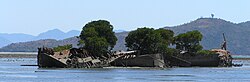
Australia saw several losses, including the auxiliary schooner Advance in Wreck Bay, New South Wales. One of the more notable incidents involved the City of Adelaide, a coal storage hulk that had previously been burned in a 1912 fire. It was wrecked at Cockle Bay, Magnetic Island, while being towed from Townsville.
In the United States, the 138.8-foot two-masted schooner Senator was abandoned at Sturgeon Bay, Wisconsin, in either 1914 or 1915 due to its advanced age and deteriorating hull condition.
Summary of 1915 Maritime Incidents
| Ship Name | Nationality/Affiliation | Fate | Location |
|---|---|---|---|
| A. T. Gifford | United States | Fire and Sinking | Coats Island, Canada |
| Alexander Mackenzie | United States | Sank under tow | US East Coast |
| City of Adelaide | Australia | Wrecked under tow | Magnetic Island, Australia |
| Kapitan Belli | Russia | Driven ashore (later refloated) | Cape Lisiy Nos |
| SM UC-9 | Imperial German Navy | Lost on patrol | Unknown |
| Senator | United States | Abandoned | Sturgeon Bay, Wisconsin |
Frequently Asked Questions
Which vessels were successfully salvaged?
The Kapitan Belli, an incomplete Orfey-class destroyer, was refloated and later entered service as the Karl Liebknecht in 1928. Additionally, the cargo vessel Leros was raised and repaired after being sunk by a British submarine.
What were dummy battleships used for?
Dummy battleships, such as the HMS Collingwood and HMS Oruba, were used as decoys to mislead enemy forces during World War I operations, particularly in the Dardanelles and Lemnos regions.
How many crew members were lost on the US Army Corps of Engineers dredges?
A total of seven crew members died: five on the Alexander Mackenzie and two on the Houston.
What caused the loss of the SM UC-9?
The SM UC-9, a Type UC I submarine, was lost while on patrol between October 20 and November 12, 1915, with all fourteen crew members perishing.
Why was the schooner Senator abandoned?
The Senator was abandoned at Sturgeon Bay, Wisconsin, because of its age and the poor condition of its hull.