Marine Protected Areas: Global Efforts and Regional Conservation Strategies
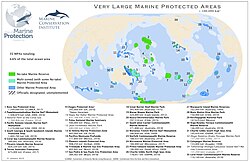
The health of our global oceans depends on the establishment of Marine Protected Areas (MPAs)—designated regions of the ocean where human activity is restricted to protect marine life, habitats, and biodiversity. While these "underwater parks" are essential for ecological resilience, the global network is still in its infancy. As of October 2010, approximately 6,800 MPAs covered only 1.17% of the global ocean area, far below the projected conservation goals of 20% to 30%.
A critical distinction within these areas is the no-take zone, where all resource extraction is prohibited. Despite the proliferation of MPAs, only 0.01% of the ocean is designated as a no-take zone. The gap between current coverage and global targets is largely driven by the high cost of management and conflicts between conservation needs and the human demand for marine resources.
Key Facts
- Global Coverage: As of 2010, MPAs covered 1.17% of the global ocean and 6.3% of territorial seas.
- No-Take Zones: Only 0.01% of the global ocean is strictly protected as a no-take zone.
- Regional Leaders: Countries like Palau (100%), Monaco (99.7%), and New Caledonia (96.3%) have protected the vast majority of their territorial waters.
- Economic Drivers: Some nations, such as the Seychelles, have used "debt-for-nature" swaps to fund the creation of new MPAs.
- Biodiversity Hotspots: Southeast Asia remains a global epicenter for marine diversity, with 12% of its coral reefs under protection.
Regional Conservation Efforts
Africa and South Africa
South Africa has implemented a robust system of 42 MPAs within its Exclusive Economic Zone (EEZ)—the sea zone over which a state has special rights regarding exploration and use of marine resources. These areas cover 15.5% of its EEZ, surpassing the 2020 target of 10%. While most are located off the continental coast, one significant MPA is located off the Prince Edward Islands in the Southern Ocean.
The Greater Caribbean and Latin America
The Greater Caribbean region, spanning 38 nations and 5.7 million square kilometers, operates under the Cartagena Convention (1983). By 2008, the region hosted roughly 500 MPAs, with a strong focus on coral reefs. Current initiatives include the Mesoamerican Barrier Reef System and the "Islands in the Stream" program in the Gulf of Mexico.
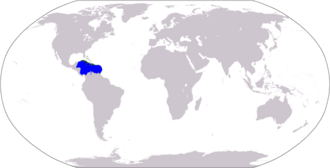
![The Gulf of Mexico region (in 3D) is encompassed[clarification needed] by the "Islands in the Stream" proposal.](/images/e6/a9/e6a9089b32189a1b6abcd7c4581e6f705f502a6133d0870808c992f8c5ebe1bf.jpg)
In contrast, Latin America's broader efforts have been more modest, with only 0.5% of its marine environment protected as of 2008, primarily through small, multiple-use MPAs.
Asia and the Pacific
In Asia, the Philippines and Indonesia leverage MPAs to protect coral reefs and seagrasses, often to support international tourism. China employs a dual system: Marine Natural Reserves (MNRs), which are strict no-take areas, and Special Marine Protected Areas (SMPAs), which allow sustainable resource use to reduce economic conflict for local fishermen.
The Pacific region features massive cross-national efforts, such as the Tropical Eastern Pacific Marine Corridor Network, covering 211 million square kilometers. In the Cook Islands, the Marae Moana Conservation Park utilizes spatial zoning to balance fishing needs with conservation.
Indian Ocean and Mediterranean Sea
The Indian Ocean has seen innovative funding and large-scale designations. The Seychelles created two MPAs (210,000 sq km) via a financial deal brokered by The Nature Conservancy. Australia has also expanded its protection, with 45% of its marine territory now protected following the creation of two national marine parks in 2021.
In the Mediterranean, the EU's Natura 2000 network provides a framework for protection. Research in MPAs like Scandola and Banyuls shows that proper protection allows slow-growing red coral to thrive in shallow waters, whereas colonies outside these zones remain small. However, a 2018 study indicated that trawling remains intense within some official EU sanctuaries.
North American and European Efforts
United States
As of June 2020, 26% of U.S. waters were designated as MPAs. However, only 3% are no-take zones, the majority of which are concentrated in the Papahānaumokuākea and Pacific Islands Heritage Marine National Monuments.
United Kingdom and Overseas Territories
The UK manages a vast amount of ocean through the Blue Belt Programme. Notable achievements include the Pitcairn Islands reserve (830,000 sq km) and the Tristan da Cunha Marine Protection Zone, the largest no-take zone in the Atlantic. Domestically, the UK uses Marine Conservation Zones, though concerns persist regarding the legality of industrial fishing within some of these areas.
Global MPA Coverage Summary
| Country | MPA % of Territorial Waters |
|---|---|
| Palau | 100.0% |
| Monaco | 99.7% |
| New Caledonia | 96.3% |
| Kazakhstan | 50.7% |
| France | 49.8% |
| Australia | 44.3% |
| United Kingdom | 44.1% |
| Chile | 41.4% |
| United States | 19.0% |
| South Africa | 15.5% |
| China | 5.5% |
| Philippines | 1.7% |
Frequently Asked Questions
What is the difference between an MPA and a no-take zone?
A Marine Protected Area (MPA) is a general term for any region where human activity is restricted to protect the environment. A no-take zone is a stricter type of MPA where all resource extraction, including fishing and mining, is completely prohibited.
Why are global MPA targets not being met?
The primary obstacles to reaching the 20%-30% protection goal are the high costs associated with managing these areas and the socio-economic conflicts that arise when protections limit human access to marine goods and services.
How does China's MPA system differ from traditional models?
China uses a two-tier system: Marine Natural Reserves (MNRs) for strict, comprehensive protection, and Special Marine Protected Areas (SMPAs), which allow for supervised, sustainable resource use to balance ecological needs with the livelihoods of coastal fishermen.
What is the "Great Blue Wall" initiative?
The Great Blue Wall is an initiative by ten countries in the Western Indian Ocean to create a network of linked MPAs. These areas generally follow IUCN category IV protection, which prohibits industrial exploitation but allows for local fishing.
Which country has the highest percentage of protected territorial waters?
Based on 2022 data, Palau has the highest percentage, with 100% of its territorial waters designated as Marine Protected Areas.