Marco van Basten: The Legacy of a Footballing Icon
Few players in the history of football have combined technical grace, physical presence, and clinical efficiency as seamlessly as Marco van Basten. A towering striker known for his intelligence on the pitch, the Dutch legend left an indelible mark on both the domestic leagues of the Netherlands and Italy, as well as the international stage.
Key Facts
- Full Name: Marcel van Basten
- Position: Striker
- Major Honors: 3x Ballon d'Or winner (1988, 1989, 1992)
- International Success: UEFA European Championship winner (1988)
- Club Career: Spent his professional years at Ajax and AC Milan
- Total Career Goals: 283 goals across all competitions (218 in league play)
The Rise at Ajax
Born in Utrecht on October 31, 1964, Van Basten developed his skills through youth ranks at EDO, UVV, and Elinkwijk before joining Ajax in 1981. He quickly established himself as a prolific goal-scorer in the Eredivisie (the top professional football league in the Netherlands).
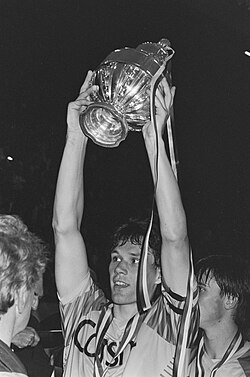
During his tenure at Ajax from 1981 to 1987, he secured three Eredivisie titles and three KNVB Cups. His dominance was evident in his scoring record, winning the Eredivisie Top Scorer award for four consecutive seasons between 1983 and 1987. One of the highlights of this era was winning the European Cup Winners' Cup in 1987 under the guidance of manager Johan Cruijff.
![Van Basten celebrates his goal for Ajax to give the team a 2–0 lead in an eventual 8–2 win against Feyenoord in September 1983, following Gerald Vanenburg's corner. Edo Ophof (Ajax), Felix Gasselich (Ajax), André Hoekstra (Feyenoord) and goalkeeper Joop Hiele (Feyenoord) are the other players in the picture. The average age of the Ajax team at the time was roughly 22+1⁄2 years.[12]](/images/b3/6b/b36b7a94790b870567c735fd2df1e5b56104549d0774072f6469ba0e9adb1303.jpg)
Global Dominance with AC Milan
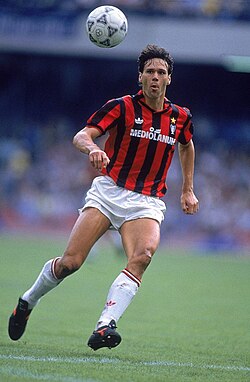
In 1987, Van Basten moved to Italy to join AC Milan, where he became a central figure in one of the most successful periods in the club's history. In Serie A, he won four league titles and became a feared marksman, earning the Capocannoniere (Serie A top scorer) title twice.
His success extended to Europe, where he helped Milan secure two European Cups (1988–89 and 1989–90), as well as two European Super Cups and two Intercontinental Cups. His ability to score spectacular goals from difficult angles cemented his reputation as one of the greatest strikers to ever play the game.
International Glory and the Netherlands
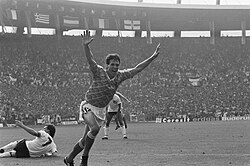
Van Basten was a cornerstone of the Netherlands national team, earning 58 caps and scoring 24 goals. His crowning achievement came during UEFA Euro 1988, where he was named the Most Valuable Player and Top Scorer with five goals, leading the Dutch to their first major international trophy.
Career Statistics Summary
| Team | Period | League Apps | League Goals | Total Apps | Total Goals |
|---|---|---|---|---|---|
| Ajax | 1981–1987 | 133 | 128 | 174 | 154 |
| AC Milan | 1987–1995 | 147 | 90 | 205 | 129 |
| Netherlands | 1983–1992 | - | - | 58 | 24 |
Transition to Management and Administration
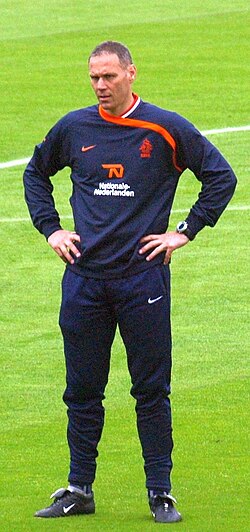
After retiring from playing, Van Basten transitioned into coaching. He managed the Netherlands national team from 2004 to 2008, achieving a win percentage of 67.31%. He also held managerial roles at Ajax, Heerenveen, and AZ Alkmaar.

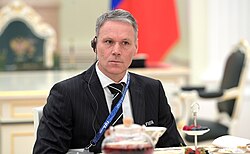
Beyond the touchline, he served as the FIFA technical director, a role that saw him engaging with global football leadership to improve the game's technical standards.
Frequently Asked Questions
How many Ballon d'Or awards did Marco van Basten win?
Marco van Basten won the Ballon d'Or three times, in 1988, 1989, and 1992.
Which clubs did he play for during his professional career?
He played for two professional clubs: Ajax in the Netherlands and AC Milan in Italy.
What was his biggest achievement with the Netherlands national team?
His biggest achievement was winning the UEFA European Championship in 1988, where he was also the tournament's top scorer and MVP.
Did he have a career in management?
Yes, he managed the Netherlands national team (2004–2008), Ajax (2008–2009), Heerenveen (2012–2014), and AZ (2014).
What administrative role did he hold at FIFA?
He served as the FIFA technical director.