Manufacturing Evolution: From Ancient Tools to Modern Industrial Systems
Manufacturing is the fundamental process of creating or producing goods through the application of equipment, labor, machinery, tools, and chemical or biological processing. As the core of the secondary sector of the economy, manufacturing encompasses a vast spectrum of human activity, ranging from traditional handicrafts to highly advanced high-tech production. Most commonly, the term refers to industrial design, where raw materials from the primary sector are transformed into finished goods on a large scale.
These finished products follow various paths: they may be sold to other manufacturers to create complex items like automobiles, aircraft, or household appliances, or they may be distributed through the tertiary sector (the service sector) to wholesalers, retailers, and ultimately, the end consumer.

The Science of Production: Manufacturing Engineering
At the heart of modern production lies manufacturing engineering. This specialized field focuses on designing and optimizing the manufacturing process—the specific sequence of steps required to transform raw materials into a final product. This lifecycle begins with meticulous product design and materials specification, ensuring that the chosen substances can be effectively modified to meet the desired end-use requirements.
In certain specialized industries, such as steel production or semiconductor manufacturing, the term fabrication is often used instead of manufacturing to describe the intermediary stages of producing and integrating components.
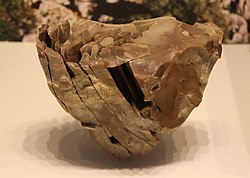
A Journey Through History
Prehistory and Ancient Foundations
The roots of manufacturing stretch back to prehistory. Early humans utilized stone cores to create essential tools, a practice that laid the groundwork for all future material transformation. As civilizations progressed into the Bronze Age, the ability to forge metal blades and tools marked a significant leap in human capability and technological complexity.
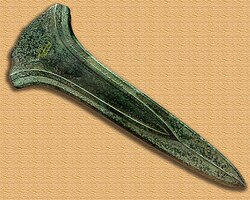
The Industrial Revolutions
The transition from hand production to mechanized systems changed the world forever. The First Industrial Revolution, occurring between 1760 and the 1830s in Europe and the United States, saw the rise of steam and water power, new chemical processes, and the birth of the mechanized factory system. The textile industry was the pioneer of this era, being the first to adopt modern production methods.
Following a period of economic maturation in the mid-19th century, the Second Industrial Revolution ignited rapid growth after 1870. This era introduced mass production, assembly lines, electrical grid systems, and advanced steel-making processes. Innovations like the incandescent light bulb revolutionized the workplace, allowing factories to operate through second and third shifts.
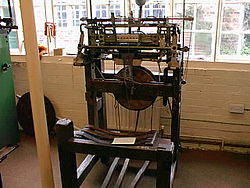
The 19th century also saw the mechanization of shoe production, sewing machines, and agricultural machinery. By the 1880s, even the mass production of bicycles had begun, signaling a new age of consumer goods.
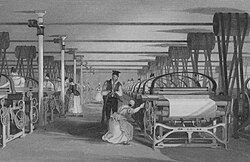
Modern Manufacturing and Lean Methodologies
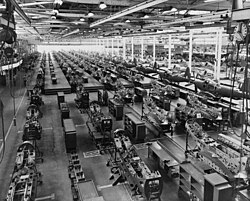
In the 20th century, the focus shifted toward efficiency and waste reduction. Lean manufacturing, also known as just-in-time manufacturing, was developed in Japan during the 1930s. This method aims to reduce production times and improve response times from both suppliers and customers. Originally gaining traction through the British Motor Corporation in Australia before being refined by Toyota, the methodology—often called the "Ohno system" after Taiichi Ohno—spread globally in the 1980s.
Global Manufacturing Trends and Economics
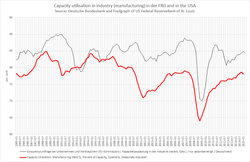
Today, manufacturing remains a critical driver of national economies, though it faces challenges regarding competitiveness and outsourcing. In the United States, for example, there have been significant shifts in the workforce, with millions of manufacturing jobs lost between 2000 and 2007. This has led to calls for industrial renewal to ensure economies do not rely solely on financial services and consumer spending.
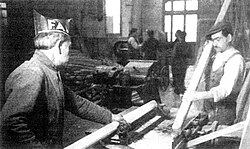
Modern manufacturing is characterized by diverse scales, from large-scale assembly plants to specialized worker cooperatives producing wood and steel products.
Key Facts
- Secondary Sector: Manufacturing is the essence of this economic sector.
- Lean Manufacturing: A Japanese-developed method focused on reducing production and response times.
- Textiles: The dominant industry during the First Industrial Revolution.
- Second Industrial Revolution: Characterized by mass production, assembly lines, and electricity.
- Fabrication: A term used specifically in industries like steel and semiconductors.
Manufacturing Output Comparison (2023)
| Country | Manufacturing Output (USD) | Workforce Share (%) |
|---|---|---|
| United States | $2.5 Trillion | 8.41% |
| Germany | $844.93 Billion | ~20.8% |
Frequently Asked Questions
What is the difference between manufacturing and fabrication?
While both involve creating goods, "fabrication" is a term specifically used in certain industries, such as semiconductor and steel manufacturing, to describe the intermediary stages of producing and integrating components.
How did the light bulb affect manufacturing?
The invention of the practical incandescent light bulb in the late 1870s allowed factories to operate more extended hours, enabling the implementation of second and third shifts.
What is lean manufacturing?
Lean manufacturing, or just-in-time manufacturing, is a production method designed to reduce time within the production system and improve response times to customers and suppliers.
What industries led the First Industrial Revolution?
The textile industry was the dominant force during the First Industrial Revolution, leading in terms of employment, capital investment, and value of output.
What is manufacturing engineering?
Manufacturing engineering is the field of engineering dedicated to designing and optimizing the processes used to transform raw materials into finished products.