Manganese: Properties, Industrial Applications, and Biological Role
Manganese is a silvery metallic transition metal that plays a critical role in both industrial metallurgy and biological systems. Often confused with magnesium due to the similarity in their names, manganese (symbol Mn, atomic number 25) is a distinct element located in Group 7 of the periodic table. From the prehistoric cave paintings of France to the high-strength steel used in combat helmets, manganese has been utilized by humans for millennia.
In its pure form, manganese is a hard metal, but it is most commonly encountered as compounds, such as manganese dioxide, which is abundant in nature. Its versatility stems from its wide range of oxidation states, allowing it to form a diverse array of chemical compounds with varying colors and properties.

Key Facts
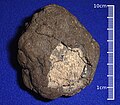
- Atomic Number: 25
- Standard Atomic Weight: 54.938 043
- Appearance: Silvery metallic solid
- Common Oxidation States: +2, +4, +7
- Primary Industrial Use: Steel alloying and alkaline batteries
- Biological Status: Essential trace element for human health
Physical and Chemical Properties
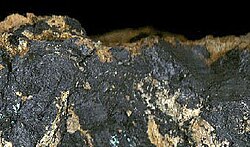
Manganese is characterized by its complex physical behavior. At standard temperature and pressure, it is a solid with a melting point of 1,246 °C (1,519 K) and a boiling point of 2,061 °C (2,334 K). It possesses a Mohs hardness of 6.0 and is paramagnetic in nature.
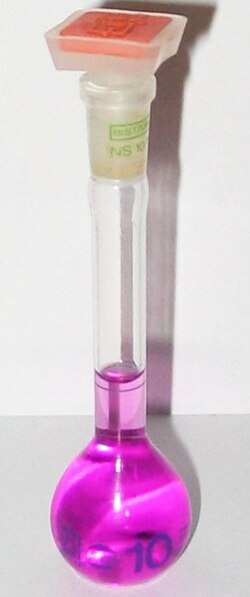
One of the most striking features of manganese is its chemical flexibility. It exhibits one of the widest ranges of oxidation states of any element, ranging from -3 to +7. This versatility is reflected in the colors of its salts: manganese(II) salts often appear pale pink, while manganese(VII) in permanganate solutions is a deep, vivid purple.
![Manganese(II) chloride crystals – the pale pink color of Mn(II) salts is due to a spin-forbidden 3d transition.[27]](/images/ea/19/ea1920231990f916e5a30e109df4e8ac7e2cdc81bbcda563a8f73db6bb3abfc7.jpg)
Allotropes and Structure
Manganese exists in several allotropes (different structural forms of the same element). For example, alpha-manganese (α-Mn) has a complex cubic structure, while delta-manganese (δ-Mn) forms when the metal is heated above 1,130 °C (1,406 K), adopting a body-centered cubic structure until it reaches its melting point.
![Phase diagram of manganese[18]](/images/c8/d4/c8d4a6962ab852faff0e91b6b94a1dc0de85ff5b7a7f1063736d03231f5f1e67.png)
Industrial Applications
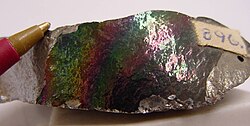
The most significant industrial use of manganese is in the production of steel. It is a vital component in Hadfield steel, a manganese alloy known for its extreme toughness and resistance to abrasion, which was historically used in the manufacturing of combat helmets.

Batteries and Electronics
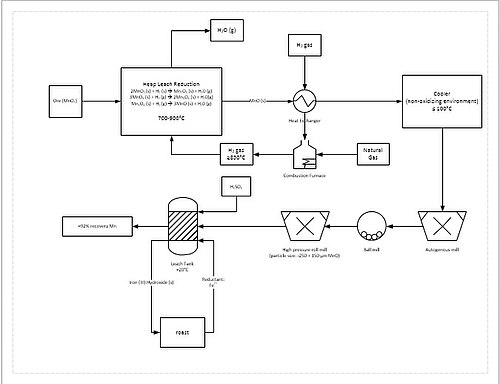
Manganese dioxide (MnO2) is a primary component in alkaline batteries. The chemical reaction involving MnO2 and water allows these cells to store and release electrical energy efficiently. In 2002 alone, over 230,000 tons of manganese dioxide were utilized for battery production.
Other Uses
- Aluminium Alloys: Used to enhance the properties of aluminium.
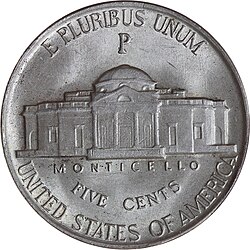
- Currency: Historically used in alloys for coins, such as the WWII-era US 5-cent coin.
- Agriculture: Employed as a fertilizer and feed additive.
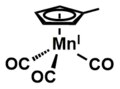
- Gasoline: Used in the form of methylcyclopentadienyl manganese tricarbonyl (MMT).
Biological Importance and Health
Manganese is an essential micronutrient required for the function of various enzymes, such as arginase. However, the body must maintain a strict balance, as both deficiency and excess can lead to health issues.
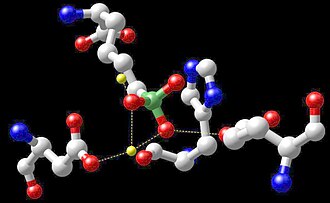
Dietary Requirements
The adequate intake (AI) of manganese varies by age and gender. For adult males, the recommended intake is 2.3 mg/day, while for adult females, it is 1.8 mg/day. Pregnant and lactating women require 2.0 mg/day and 2.6 mg/day, respectively.
Toxicity and Manganism
While essential in small amounts, excessive exposure to manganese—particularly through inhalation of manganese compounds in industrial settings—can lead to manganism. This is a neurodegenerative condition that presents symptoms similar to Parkinson's disease, affecting motor control and cognitive function.

Historical Context
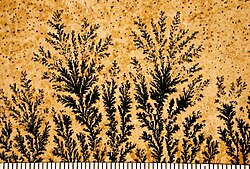
Manganese has been used by humans since prehistoric times. Evidence shows that cave paintings in Lascaux and Gargas, dating back 24,000 to 30,000 years, utilized manganese-based pigments for their dark hues.

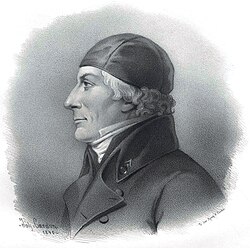
In modern chemistry, the discovery of manganese is attributed to Carl Wilhelm Scheele in 1774, while the first successful isolation of the pure metal is credited to Johan Gottlieb Gahn in the same year.
Summary of Manganese Properties
![Percentage of manganese output in 2006 by countries[61]](/images/64/6d/646d02a074c7061c4d3356a4ff2fea3e479996ce189861dc4b878755e35716ed.webp)
| Property | Value/Detail |
|---|---|
| Atomic Number | 25 |
| Atomic Weight | 54.938 u |
| Melting Point | 1,246 °C |
| Boiling Point | 2,061 °C |
| Density | 7.476 g/cm3 |
| Common Oxidation States | +2, +4, +7 |
| Crystal Structure (α-Mn) | Body-centered cubic (complex) |
Frequently Asked Questions
Is manganese the same as magnesium?
No. Manganese (Mn) and magnesium (Mg) are two entirely different elements with different chemical properties, atomic numbers, and biological roles.
What is Hadfield steel?
Hadfield steel is a manganese alloy developed by Robert Hadfield, prized for its high toughness and work-hardening properties, making it ideal for heavy-duty industrial and military applications.
What happens if a person has too much manganese in their system?
Excessive manganese exposure can lead to a condition called manganism, a neurodegenerative disease that mimics Parkinson's disease, characterized by tremors and difficulty in movement.
How is manganese used in batteries?
Manganese dioxide (MnO2) acts as a cathode material in alkaline batteries, facilitating the chemical reaction necessary to produce an electrical current.
Where does manganese occur naturally?
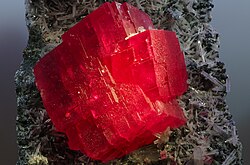
Manganese is a primordial element found in the Earth's crust in minerals like psilomelane and rhodochrosite, as well as in oceanic polymetallic nodules.