Malik-Shah I: The Zenith of the Great Seljuk Empire
Malik-Shah I (reigned 1072–1092) was the third sultan of the Seljuk Empire, a period during which the state reached the absolute peak of its power, territorial extent, and cultural influence. Known by titles such as Amir al-Mu'minin (Commander of the Faithful) and the "Father of Conquests," his reign transformed the Seljuk state into a dominant superpower of the medieval Islamic world.
Born in Isfahan on August 16, 1055, Malik-Shah was groomed for leadership from a young age. He spent his youth accompanying his father, Sultan Alp Arslan, on military campaigns. By the age of nine, he was already participating in expeditions to the Caucasus, guided by the empire's influential Persian vizier, Nizam al-Mulk. This partnership between the Sultan and his vizier would later define the administrative success of the empire.
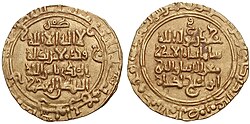
Key Facts
- Reign: December 15, 1072 – November 19, 1092.
- Peak Power: Under his rule, the Seljuk Empire reached its greatest territorial extent.
- Key Advisor: Nizam al-Mulk, the vizier who held near-absolute administrative power.
- Major Conquests: Expanded control over Transoxiana, the Caucasus, and parts of Anatolia.
- Religion: Sunni Islam.
Rise to Power and Early Life
Malik-Shah's path to the throne was established early. In 1064, he married Terken Khatun, the daughter of the Karakhanid khan Ibrahim Tamghach-Khan, cementing a strategic alliance. By 1066, Alp Arslan formally appointed him as his heir and granted him Isfahan as a fief.
The transition of power occurred in 1072 after Alp Arslan was fatally wounded during a campaign. Although Malik-Shah was crowned sultan, his succession was initially contested by his uncle, Qavurt. Despite the nominal authority of the Sultan, the empire's internal machinery was largely managed by Nizam al-Mulk, whose guidance helped Malik-Shah maintain stability while focusing on external expansion.
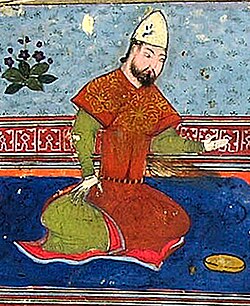
Military Campaigns and Territorial Expansion
Malik-Shah's reign was characterized by near-constant military activity aimed at securing borders and suppressing rebellions. His efforts were primarily focused on the East and the Northwest.
The Struggle for Anatolia
In 1088, Malik-Shah dispatched a massive army of 50,000 men under Emir Porsuk to Anatolia. Porsuk besieged Nicaea around 1090, forcing the Byzantine commander to retreat to Constantinople. However, the siege lasted three months without success. The conflict ended when the Byzantine Emperor Alexios sent a relief army; upon seeing the Emperor's banner, Emir Porsuk lifted the siege and retreated.
Dominance in Transoxiana
The Sultan faced significant challenges in Transoxiana, where Turkic tribes rebelled over the violation of traditional Turkish customs. Malik-Shah responded with a decisive campaign, conquering Samarkand for a second time and pursuing the rebel Yakub Tegin. By 1089, through a combination of military force and strategic deals with the Kara-Khanid dynasty, Malik-Shah brought the entire Turkistan region—extending to the borders of China—under Seljuk rule.
Other Notable Expeditions
Beyond these major theaters, Malik-Shah conducted numerous campaigns to maintain order, including expeditions to Georgia (1075-76 and 1078-79), Khorasan (1081 and 1086), and Northern Syria (1086). He also targeted the Qarmatians and the Marwanids to secure the empire's internal stability.
Administration and Family
The Seljuk court was a complex web of familial and political alliances. Malik-Shah had several wives and concubines, including Terken Khatun and Zubayda Khatun. His children, such as Berkyaruq, Muhammad I Tapar, and Ahmad Sanjar, would later play pivotal roles in the empire's subsequent history.
| Attribute | Details |
|---|---|
| Born | August 16, 1055 (Isfahan) |
| Died | November 19, 1092 (Baghdad) |
| Predecessor | Alp Arslan |
| Successor | Mahmud I |
| Burial Site | Tomb of Nizam al-Mulk, Isfahan, Iran |
| Primary Advisor | Nizam al-Mulk |
Death and Legacy
Malik-Shah I died in Baghdad in November 1092 at the age of 37. His death marked the beginning of the end for the empire's unified peak, as the succession was followed by internal strife among his sons. He is remembered as the ruler who presided over the zenith of the Great Seljuk Empire, blending military conquest with the sophisticated Persian administration provided by Nizam al-Mulk.
Frequently Asked Questions
Who was the most influential person in Malik-Shah I's government?
Nizam al-Mulk, the Persian vizier, held near-absolute power during Malik-Shah's reign, managing the administration and guiding the Sultan's political decisions.
What was Malik-Shah I's greatest territorial achievement?
His most significant expansion occurred in 1089, when he brought the entire Turkistan region, reaching the borders of China, under Seljuk control.
How did Malik-Shah I interact with the Byzantine Empire?
The relationship was primarily antagonistic, characterized by conflicts in Anatolia, most notably the failed siege of Nicaea by Emir Porsuk around 1090.
Who succeeded Malik-Shah I?
He was succeeded by Mahmud I, though his death led to significant instability and competition among his many sons, including Berkyaruq and Ahmad Sanjar.
Where is Malik-Shah I buried?
He is buried in the Tomb of Nizam al-Mulk in Isfahan, Iran.