Madras Engineer Group: The Legacy of the Madras Sappers
The Madras Engineer Group (MEG), widely known as the Madras Sappers, stands as the oldest of the three groups within the Corps of Engineers of the Indian Army. With a history spanning over two centuries, this elite unit of combat engineers has evolved from a small group of pioneers into a cornerstone of Indian military support, operating under the motto Sarvatra (Sanskrit for "Everywhere").
Headquartered in Bengaluru, Karnataka, the Madras Sappers are renowned for their resilience and technical expertise. Throughout their history, they have remained a constant presence in the Indian Army, surviving extensive reorganizations between 1862 and 1928 that saw other regiments disbanded or merged.
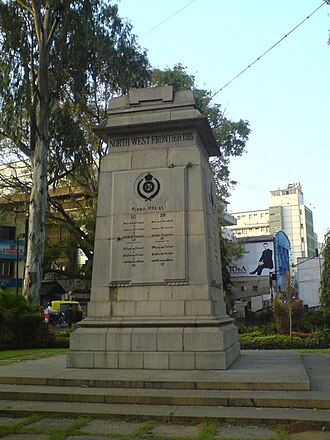
Key Facts
- Founded: September 30, 1780, at Madras Patnam.
- Role: Combat support and combat engineering.
- Motto: Sarvatra! (Everywhere).
- Headquarters: Bengaluru, Karnataka.
- Notable Invention: The Bangalore torpedo, a mine-clearing explosive device.
- Nickname: The troops are popularly known as thambis.
Origins and Evolution
The genesis of the Madras Engineer Group lies in the late 18th century, during a period of intense conflict between the East India Company, the French, and various native states including Mysore and the Marathas. The First Anglo-Mysore War revealed a critical shortage of combat pioneers—specialized soldiers trained to handle engineering tasks under fire.
To address this, two companies of Madras Pioneers were raised on September 30, 1780, at Fort St George. These pioneers were the precursors to the modern MEG. Their primary duties involved digging saps (deep trenches used to approach enemy fortifications safely) and mines (explosive charges placed under walls to create breaches).
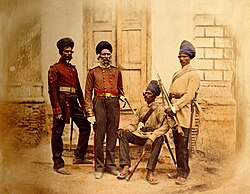
From Pioneers to Sappers
As their role expanded, the unit was renamed the Corps of Madras Sappers and Miners in 1831. In 1834, the headquarters moved to Bengaluru, where the group played a pivotal role in constructing both military and civilian infrastructure. By 1876, the regiment received the prefix "Queen's Own," and later, in 1903, it was renamed the 2nd Queen's Own Sappers and Miners as part of the Kitchener Reforms.
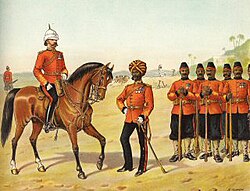
Combat History and Global Engagements
Recruiting tough, wiry men from South India, the Madras Sappers became legendary for their versatility. They did not merely build roads, bridges, and wells; they fought as infantry whenever the situation demanded. Their operational history is global, spanning campaigns in Egypt, China, Burma, and Afghanistan.
One of their most enduring contributions to military engineering is the Bangalore torpedo, an explosive device designed for rapid mine-clearing, invented at the Bengaluru center in the early 20th century.
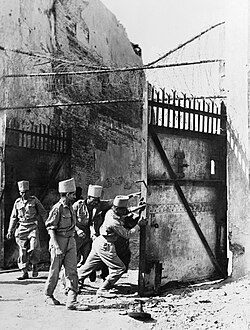
Summary of Major Engagements
| Era | Key Engagements |
|---|---|
| Pre-World War I | Seringapatam, Egypt (1801), Assaye, China, Abyssinia, Afghanistan, Boxer Rebellion |
| World War I | France & Flanders, Suez Canal, Mesopotamia, Palestine, East Africa |
| World War II | North Africa, Italy, Burma Campaign, Malaya, Iraq, Syria |
| Post-Independence | Zoji La (1948), Indo-Pak Wars (1947, 1965, 1971), Kargil War |
Symbols and Traditions
The Madras Engineer Group maintains a rich tradition of symbolism, with specific emblems commemorating their most significant victories:
- Sphinx: Commemorates the victory in Egypt (1801).
- Elephant: Represents the Battle of Assaye (1803).
- Dragon: Symbolizes the campaign in China (1840).
- Bighorn Sheep: Commemorates Zoji La (1948).
- Tank: Represents the victory at Basantar (1971).
Beyond the battlefield, the MEG is a point of national pride during the annual Republic Day Parade. Their precision and discipline have earned them the "Best Marching Contingent" award three times, in 1991, 1997, and 2017.
Frequently Asked Questions
What is the meaning of the motto "Sarvatra"?
Sarvatra is a Sanskrit word meaning "Everywhere." It is the Indian equivalent of the Royal Engineers' motto, "Ubique," reflecting the group's ability to deploy and operate in any environment.
What is the Bangalore torpedo?
The Bangalore torpedo is a mine-clearing explosive device invented by the Madras Sappers in Bengaluru during the early 20th century to help infantry breach obstacles and minefields.
Who are the "thambis"?
"Thambis" is the popular term used throughout India to refer to the troops of the Madras Sappers, who are recognized by their hallmark Shakos (military caps).
Where is the headquarters of the Madras Engineer Group located?
The headquarters of the Madras Engineer Group has been located in Bengaluru, Karnataka, since 1834.
Which was the first engagement that led to the creation of the Madras Pioneers?
The First Anglo-Mysore War highlighted a deficiency in combat pioneers, leading to the official raising of two companies of Madras Pioneers on September 30, 1780, at Fort St George.