MacTavish Cup: A Legacy of North Scotland Shinty
The MacTavish Cup is one of the most prestigious knock-out competitions in the sport of shinty—a traditional Scottish game played with sticks and a ball. Specifically contested by senior teams from the North of Scotland district, the cup holds a place of high honor as one of the five trophies that comprise the sport's elusive Grand Slam. Currently sponsored by cottages.com, the competition remains a focal point of the regional sporting calendar, with the final traditionally hosted at Bught Park in Inverness.
Key Facts
- Established: 1898 by Duncan MacTavish of Stratherrick.
- Format: Knock-out cup competition for North of Scotland senior teams.
- Most Successful Club: Newtonmore, with 42 titles.
- Venue: The final is habitually played at Bught Park, Inverness.
- Grand Slam Status: One of five trophies required for a shinty Grand Slam.
History and Evolution
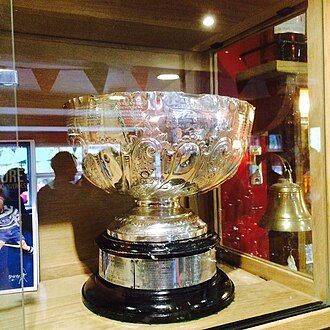
The competition began in 1898 when Duncan MacTavish presented a rose bowl as the trophy. The inaugural tournament that same year was won by Skye Camanachd. Over the decades, the tournament has evolved in its reach and presentation, notably becoming televised for the first time in 2009 via BBC Alba, with Newtonmore Camanachd—managed by Norman MacArthur—taking the title that year.
The competition has not been without its administrative challenges. In 2010, the Camanachd Association (the governing body for shinty) attempted to schedule opening rounds midweek to clear a backlog of fixtures. This move sparked significant controversy, leading to an official complaint from Skye Camanachd. Ultimately, the decision was reversed, and midweek fixtures were restricted to junior-level cups.
Another milestone occurred in 2014 with the introduction of the MacTavish Plate. This secondary competition was established for teams eliminated in the first round of the main cup. In the first Plate final held at Craigard, Invergarry, Fort William secured victory with a 2-1 win over Skye Camanachd.
Notable Matches and Dominant Eras
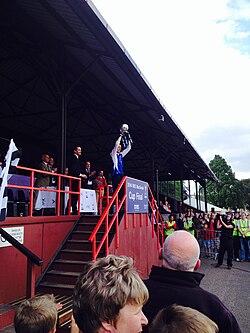
The history of the MacTavish Cup is defined by periods of intense dominance. Only five clubs have ever successfully retained the trophy. While Newtonmore is the most recent to do so (2016 and 2017), both Kingussie and Newtonmore have dominated the competition for long stretches. In the early era of the sport, Fort Augustus and Inverness also successfully defended their titles prior to the First World War.
Certain finals have become legendary for their quality. The 2010 final between Kingussie and Kilmallie—the latter having upset Fort William to reach the stage—ended in a thrilling 5-4 victory for Kingussie and was broadcast live on BBC 2 Scotland.
More recent history has seen a mix of established powerhouses and underdog stories. In 2015, Glenurquhart claimed their first-ever cup victory by defeating Newtonmore 3-1, a particularly sweet victory after losing two previous finals to Lovat and a 2008 final to Kingussie. In 2018, Newtonmore staged a comeback from a goal down to defeat the 2017 Premiership League champions, Kinlochshiel, 2-1 at Bught Park.
Summary of Success
| Club | Total Titles | Notable Winning Years |
|---|---|---|
| Newtonmore | 42 | 1902, 1970-1980, 2016-2019 |
| Kingussie | 32 | 1988-1995, 2022-2026 |
| Lovat | 8 | 1906, 1947, 2013, 2014 |
| Caberfeidh | 4 | 1932, 1934, 1935, 1937 |
| Kilmallie | 4 | 1959, 1961, 1967, 1969 |
Frequently Asked Questions
What is the MacTavish Cup?
The MacTavish Cup is a senior knock-out shinty competition for teams based in the North of Scotland district and is one of the five trophies that make up the shinty Grand Slam.
Which club has won the most MacTavish Cups?
Newtonmore is the most successful club in the competition's history, having won the trophy a total of 42 times.
Where is the final usually held?
The final is habitually played at Bught Park in Inverness.
What is the MacTavish Plate?
Established in 2014, the MacTavish Plate is a competition specifically for teams that are knocked out in the first round of the MacTavish Cup.
Who won the first-ever MacTavish Cup?
The first competition was held in 1898 and was won by Skye Camanachd.