M2-F3: The Evolution of Lifting Body Flight Technology
The M2-F3 represents a critical milestone in the history of aerospace engineering. As a heavyweight lifting body technology demonstrator, this unique aircraft played a vital role in validating the concepts necessary for piloted reentry from space. Developed by Northrop for NASA, the M2-F3 was not merely a new build, but a sophisticated redesign born from the lessons learned during earlier flight programs.
A lifting body is an aircraft design that derives lift from the shape of its fuselage rather than from traditional wings. This configuration was essential for researching how spacecraft might return to Earth safely.
Development and Redesign
The lineage of the M2-F3 traces back to the M2-F1 and M2-F2 models. While early testing validated the feasibility of piloted lifting body reentry, the M2-F2 suffered a crash at the Dryden Flight Research Center on May 10, 1967. The accident resulted in significant damage to the external skin, internal structure, and the loss of a left fin and landing gear.
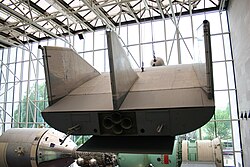
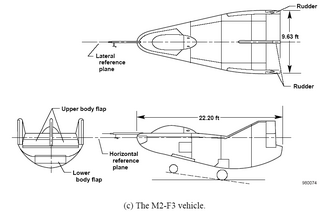
In response to the crash and feedback from NASA pilots regarding lateral control issues, engineers at the Flight Research Center, Ames Research Center, and the Air Force collaborated on a redesign. Northrop performed the reconstruction, resulting in the M2-F3. The most significant modification was the addition of a third vertical fin, centered between the existing tip fins, to improve stability and eliminate the high risk of pilot-induced oscillation (PIO)—a phenomenon where pilot inputs inadvertently reinforce aircraft oscillations.
Operational History and Achievements
The M2-F3 took its first flight on June 2, 1970, piloted by Bill Dana. Following three unpowered glide flights to test the new stability characteristics, the vehicle completed its first powered flight on November 25, 1970. Throughout its operational life, the M2-F3 served as a flying laboratory for several advanced technologies:
- Reaction Control Thruster (RCT) system: A system similar to those used on orbiting spacecraft to research effective vehicle control.
- Rate command augmentation control system: An advanced flight control evaluation.
- Side control stick: A precursor to the side-stick controllers used in many modern aircraft.
The M2-F3 completed 27 missions before its retirement on December 20, 1972. During its tenure, it achieved remarkable performance metrics, including a top speed of Mach 1.6 (1,064 mph) and a maximum altitude of 71,500 feet.
Key Facts
- Manufacturer: Northrop
- Primary User: NASA
- First Flight: June 2, 1970
- Total Missions: 27 flights
- Top Speed: 1,064 mph (Mach 1.6)
- Highest Altitude: 71,500 feet
- Current Location: Smithsonian Institution (Steven F. Udvar-Hazy Center)
Technical Specifications
| Category | Specification |
|---|---|
| Crew | 1 |
| Length | 22 ft 2 in (6.76 m) |
| Wingspan | 9 ft 8 in (2.95 m) |
| Empty Weight | 5,071 lb (2,300 kg) |
| Powerplant | 1 × Reaction Motors XLR-11 liquid-fuelled rocket motor |
| Thrust | 8,000 lbf (36 kN) |
| Service Ceiling | 71,500 ft (21,800 m) |
Frequently Asked Questions
What does the name M2-F3 stand for?
In the designation, the "M" refers to the "manned" version of the vehicle, and the "F" refers to the "flight" version.
How did the M2-F3 differ from the M2-F2?
The M2-F3 was rebuilt from the damaged M2-F2 and featured a third vertical fin placed in the center to improve lateral stability and control characteristics.
Who were the primary pilots of the M2-F3?
The most frequent pilot was William H. Dana, who flew 19 missions. Other pilots included John A. Manke (4 flights), Cecil W. Powell (3 flights), and Jerauld R. Gentry (1 flight).
Where can I see the M2-F3 today?
The aircraft was donated to the Smithsonian Institution and is currently on display at the Steven F. Udvar-Hazy Center.
What was the M2-F3's fastest recorded speed?
The M2-F3 reached its fastest speed of 1,064 mph (Mach 1.6) during flight number 26 on December 13, 1972.