Lunfardo: The Vibrant Slang of the Río de la Plata
In the bustling port cities of Buenos Aires and Montevideo, a unique linguistic tapestry emerged at the turn of the 20th century. Known as Lunfardo, this colorful argot—a specialized vocabulary used by a particular group—is more than just slang; it is a living record of the massive European immigration that shaped the Río de la Plata region. What began as a secretive code has evolved into a defining characteristic of Argentine and Uruguayan identity.
Key Facts
- Origin: Developed in the late 19th and early 20th centuries among the lower classes of Buenos Aires and Montevideo.
- Influences: Primarily driven by Italian and Spanish immigrants, with additional contributions from French and Portuguese.
- Cultural Link: Deeply intertwined with the lyrics and history of tango music.
- Linguistic Feature: Uses vesre, a word-play technique where syllables are reversed.
- Current Status: Now used across all social strata in Argentina and Uruguay, often synonymous with the "Porteño" (Buenos Aires) accent.
The Origins and Etymology of Lunfardo
The term "Lunfardo" is believed to be a deformation of lombardo, referring to inhabitants of Lombardy, Italy. Around 1870, the word was frequently used to denote an "outlaw." While some historians argue that Lunfardo began as a prison slang designed to prevent guards from understanding inmates, others point to earlier prototypes of the dialect in mid-19th century literature, such as Esteban Echeverría's The Slaughter Yard (El matadero).
Scholar Oscar Conde suggests that Lunfardo is not merely criminal slang, as the majority of its vocabulary is unrelated to crime. Instead, he views it as a vernacular of popular speech—an interlanguage variety born from the mixture of Italian dialects and Spanish spoken by immigrants.
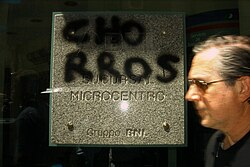
Linguistic Characteristics and Word Play
One of the most fascinating aspects of Lunfardo is that it does not alter the grammar or pronunciation of Rioplatense Spanish; rather, it inserts specific words into the normal flow of conversation. This makes it accessible to Spanish speakers, who often only need a few translations to understand a conversation or a tango song.
The Art of Vesre
A hallmark of Lunfardo is vesre (from al revés, meaning "backward"). This involves reversing the syllables of a word, similar to back slang in English. For example, café (coffee) becomes feca, and tango becomes gotán.
Metaphors and Derivations
Lunfardo frequently employs creative metaphors. For instance, bobo ("dumb") is used to describe the heart because it "works all day long without being paid," while bufoso ("snorter") refers to a pistol. Some terms are derived from existing Spanish verbs, such as abarajar (to stop a situation), which relates to barajar (to shuffle cards).
Lunfardo in Modern Society
Today, Lunfardo is no longer restricted to the lower classes. It has permeated all social levels, largely due to its presence in tango lyrics and its adoption as a symbol of local identity. In modern Argentina, almost any widely accepted neologism is categorized as a Lunfardo term by default.
There is an ongoing debate among traditionalists regarding modern additions. Some argue that true Lunfardo must link to the old underworld or racetrack slang, while others believe the evolving colloquial speech of Buenos Aires is Lunfardo by definition. Modern terms often emerge from the arts scene, psychoanalysis, or screenwriting.
Influence of Cocoliche
Lunfardo was heavily influenced by Cocoliche, a pidgin (a simplified language that develops between two or more groups) used by Italian immigrants. Many Cocoliche words, such as yeta (bad luck) and laburar (to work), transitioned directly into the Lunfardo lexicon.
| Term | Meaning | Origin/Note |
|---|---|---|
| Laburo | Work | From Italian lavorare |
| Mina | Woman/Girl | From Italian femmina or Portuguese menina |
| Guita | Money | Popular slang |
| Pibe | Kid/Boy | From Italian pivello |
| Fiaca | Laziness | From Italian fiacca |
| Chochamu | Young man | Vesre for muchacho |
| Trucho | Fake/Counterfeit | From Arabic turjeman |
Frequently Asked Questions
Is Lunfardo a separate language?
No, Lunfardo is an argot or slang. It uses the grammar and pronunciation of Spanish but incorporates a specialized vocabulary derived from various languages, primarily Italian.
What is the relationship between Lunfardo and Tango?
Tango lyrics served as a primary vehicle for disseminating Lunfardo. While some songs use it sparingly, others employ it heavily, immortalizing the slang and helping it spread across different social classes.
What does "vesre" mean in the context of Lunfardo?
Vesre is a linguistic technique where the syllables of a word are reversed. For example, the word amigos (friends) becomes gomías.
Where is Lunfardo spoken today?
It is most prominent in the Río de la Plata region, specifically in Buenos Aires (Argentina) and Montevideo (Uruguay), though many of its terms are now used throughout all of Argentina.
How did Italian immigration influence the slang?
The massive influx of Italian immigrants in the late 19th century brought various dialects that mixed with Spanish. This created both Cocoliche (a pidgin) and Lunfardo, leading to many Italian-derived words for work, family, and daily life.