Luminescence: The Science of Cold Light
Luminescence is the emission of light that is not caused by heat, distinguishing it from incandescence. While incandescence occurs when a material glows because it is hot, luminescence is often referred to as "cold light." This phenomenon occurs through various mechanisms, such as atomic electron transition—where tightly-bound core electrons create discrete spectra—or recombination, where free electrons in conduction or valence bands produce continuous spectra, common in plasmas and semiconductor devices.
Key Facts
- Luminescence is light emission not caused by incandescence.
- It can be triggered by chemical reactions, electrical fields, mechanical stress, or radiation.
- Bioluminescence is a form of chemiluminescence occurring in living organisms.
- Fluorescence is nearly instantaneous, while phosphorescence involves a delayed emission of light.
- Modern technology relies heavily on electroluminescence, specifically in LEDs and lasers.
Types of Luminescence by Energy Source
Chemical and Biological Sources
Chemiluminescence occurs when a chemical reaction releases energy in the form of light. Common examples include glow sticks and the use of luminol in forensics. When this process happens within a living organism, it is called bioluminescence.
Bioluminescence is found in a vast array of species, including fireflies, deep-sea anglerfish, lanternfish, and various fungi like Panellus stipticus and foxfire. Other examples include Antarctic krill, phytoplankton, and the sea pansy coral.
Electrical and Electronic Sources
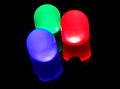
Electroluminescence is light produced by an electric field acting on a gas or solid. This is the foundation for many modern lighting technologies, including Light-emitting diodes (LEDs) and Organic LEDs (OLEDs).
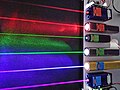
Lasers (Light Amplification by Stimulated Emission of Radiation) are a specialized form of electroluminescence. They range from gas lasers (such as ion or metal-vapor lasers) to solid-state lasers (like the ruby laser) and semiconductor lasers (such as quantum dot or quantum well lasers).
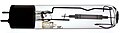
Another form of electrical light is electric discharge, where current passes through gases to create a plasma. This is seen in nature as lightning or St. Elmo's fire, and in technology as high-intensity discharge lamps, neon lamps, and xenon arc lamps.
Light and Radiation Sources
Photoluminescence occurs when a material absorbs photons and then re-emits them. This is categorized into two main types based on the electron transition:
- Fluorescence: An "allowed" transition from an excited singlet state to a ground singlet state, occurring almost instantly (typically within 10 nanoseconds). Examples include fluorescent lamps and high-visibility clothing.
- Phosphorescence: A "forbidden" transition involving a change in spin multiplicity (triplet state to singlet state), resulting in a delayed glow. Examples include strontium aluminate and zinc sulfide.
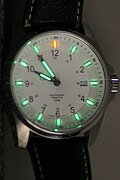
Radioluminescence (or scintillation) is similar to photoluminescence but is triggered by high-energy particles or ionizing radiation. This is observed in the Aurora Borealis, radium dials, and scintillation counters used to measure radiation.
Specialized and Rare Forms of Luminescence
Mechanical and Thermal Triggers
- Mechanoluminescence: Light produced by mechanical stress on a solid, including triboluminescence (friction) and fractoluminescence (fracturing). Examples include quartz and certain hard candies.
- Thermoluminescence: Light released when heating a material that has previously trapped energy from radiation, seen in minerals like fluorite and calcite.
- Cryoluminescence: Luminescence that occurs only at very low temperatures, such as in wulfenite.
Other Unique Phenomena
Sonoluminescence is the emission of light induced by sound waves, often caused by the implosion of bubbles in liquid, a phenomenon associated with the pistol shrimp and mantis shrimp. Candoluminescence occurs when materials, such as gas mantles or limelight, emit light at high temperatures with an intensity higher than standard blackbody emission.
Additionally, some light is produced by the acceleration of charged particles. This includes Cherenkov radiation, which occurs when a particle travels faster than the speed of light in a specific medium, and synchrotron radiation.
Luminescence Summary Table
| Type | Energy Source | Key Example |
|---|---|---|
| Bioluminescence | Chemical (Biological) | Fireflies |
| Electroluminescence | Electric Field | LEDs |
| Fluorescence | Photons (Instant) | Fluorescent Lamps |
| Phosphorescence | Photons (Delayed) | Glow-in-the-dark paint |
| Radioluminescence | Ionizing Radiation | Tritium lights |
| Sonoluminescence | Sound Waves | Pistol shrimp |
Frequently Asked Questions
What is the difference between fluorescence and phosphorescence?
The primary difference is the timing and the electronic transition. Fluorescence is an "allowed" transition that happens almost instantly after the energy source is removed. Phosphorescence involves a "forbidden" transition that delays the release of light, allowing the material to glow for a longer period.
How does bioluminescence differ from chemiluminescence?
Bioluminescence is actually a specific type of chemiluminescence. While chemiluminescence is any light produced by a chemical reaction, bioluminescence refers specifically to those reactions occurring within living organisms.
What is the role of a semiconductor in electroluminescence?
In semiconductor devices like LEDs, electroluminescence occurs when electrons recombine with holes in the valence or conduction bands, releasing energy in the form of photons.
What is Cherenkov radiation?
Cherenkov radiation is a unique form of luminescence that occurs when a charged particle travels through a medium (not a vacuum) at a speed greater than the phase velocity of light in that medium.
Can heat cause luminescence?
Generally, luminescence is defined as light not caused by heat (incandescence). However, thermoluminescence occurs when heat is used to release energy that was previously trapped in a material from a different source.