Luftwaffe: The Rise and Fall of Nazi Germany's Air Force
The Luftwaffe was the aerial warfare branch of the Wehrmacht, the unified armed forces of Nazi Germany. Founded in 1935 and disbanded in 1946, it played a central role in the aggressive expansion of the Third Reich. While often romanticized in military lore, the Luftwaffe's history is one of rapid mobilization, tactical brilliance in the early years, and eventual systemic collapse under the weight of strategic failures and war crimes.
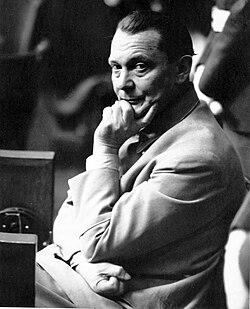
Throughout its existence, the air force was dominated by the personality of its first Supreme Commander, Reichsmarschall Hermann Göring, who shaped the organization to serve the whims of Adolf Hitler.
Key Facts
- Operational Period: 1935–1946.
- Total Aircraft Produced: 119,871.
- Total Personnel: Approximately 3,400,000 served between 1939 and 1945.
- Aerial Victories: German pilots claimed roughly 70,000 victories.
- Major Losses: Over 75,000 aircraft were destroyed or damaged, with nearly 40,000 lost entirely.
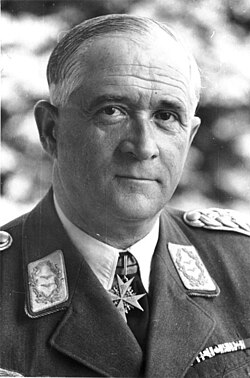
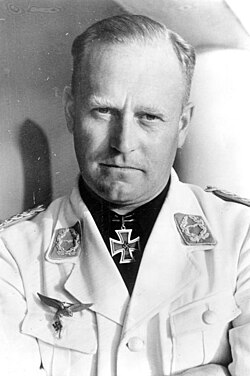
- Commanders-in-Chief: Hermann Göring (1935–1945) and Robert Ritter von Greim (April–May 1945).
Origins and Strategic Evolution
The Wever Era (1933–1936)
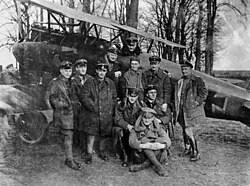
In the early years of the regime, Walther Wever, Chief of the Luftwaffe General Staff, envisioned a strategic air force. His goal was to paralyze enemy nations by targeting armaments factories and production centers. Wever advocated for the development of "Ural bombers"—long-range strategic aircraft capable of striking deep into enemy territory.
Shift in Doctrine
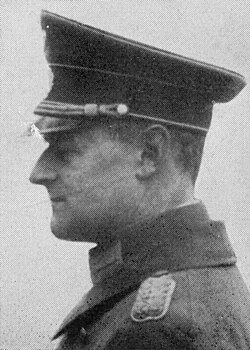
Following Wever's death in a 1936 aviation accident, the Luftwaffe lost its clear strategic direction. The air force shifted toward a flexible support role, designed to provide the ground forces with the conditions necessary for a decisive victory. Contrary to the myth that it was purely a tactical force, only 15% of its aircraft were devoted to ground support at the outbreak of war; however, the lack of a dedicated strategic mission would later prove fatal.
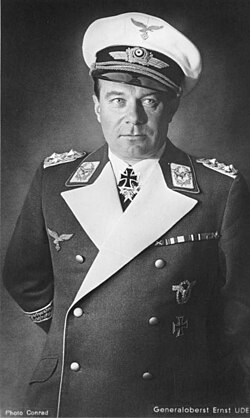
The Luftwaffe in World War II
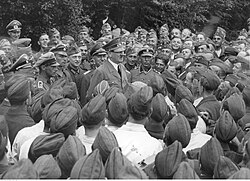
The Battle of Britain and the Blitz
In the summer of 1940, the Luftwaffe engaged the Royal Air Force (RAF) in an attempt to secure air superiority for a planned invasion of Britain. Despite inflicting severe damage, the Luftwaffe failed to achieve its goal. The subsequent "Blitz"—the bombing of British cities—failed to break civilian morale, and the RAF maintained a kill ratio of over two to one against German planes.
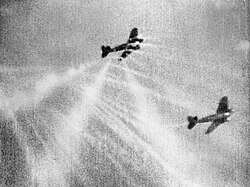
Operation Barbarossa and the Eastern Front
In June 1941, Germany invaded the Soviet Union. While the Luftwaffe destroyed thousands of Soviet aircraft in the opening stages, it could not eliminate the Red Air Force entirely. The absence of the strategic bombers Wever had requested years earlier meant Germany could not consistently strike Soviet production centers. Over time, the attrition of men and material at the Battle of Stalingrad (1942) and the Battle of Kursk (1943) led to a steady decline in strength.
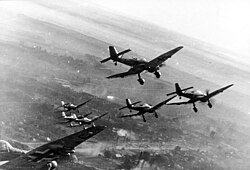
Technological Peaks and Failures
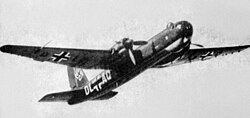
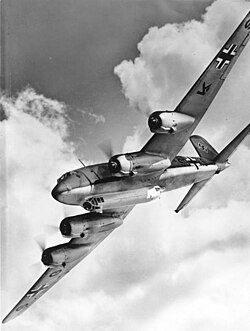
The Luftwaffe introduced cutting-edge technology, such as the Messerschmitt Me 262 jet fighter, which was credited with approximately 745 victories. However, these successes were offset by production failures and flawed designs. The He 177A Greif heavy bomber became one of the most troublesome aircraft in service, plagued by development issues.
Furthermore, the neglect of naval aviation in the western theatre between 1939 and 1941 is regarded as one of the air force's greatest tactical failures.
Organization and Personnel
The Luftwaffe was a massive organization that extended beyond pilots. Its personnel strength included a diverse array of units:
| Unit Type | Personnel Strength |
|---|---|
| Flying Units | 500,000 |
| Anti-aircraft (Flak) Units | 500,000 |
| Air Signal Units | 250,000 |
| Construction Units | 150,000 |
| Landsturm Units | 36,000 |
By 1942, surplus personnel were used to form Luftwaffe Field Divisions, which served as infantry. In 1943, the air force also established the Fallschirm-Panzer Division 1 Hermann Göring, an armored division that later expanded into a Panzerkorps.
War Crimes and Human Rights Abuses
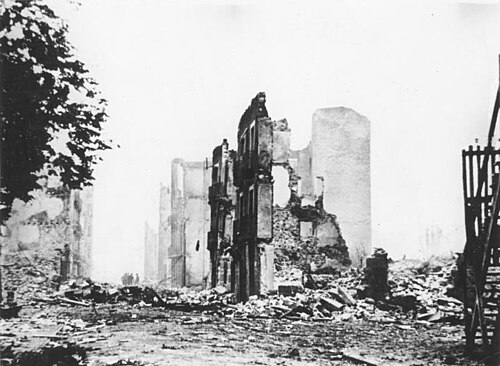
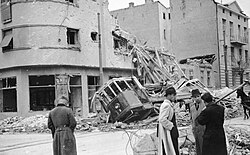
The Luftwaffe was deeply complicit in the atrocities of the Nazi regime. This included the bombing of non-military targets, most notably during the Battle of Britain, which killed over 22,000 civilians and wounded 30,000 more. Other examples include the bombing of Belgrade in 1941 and the ruins of Guernica during the Spanish Civil War.
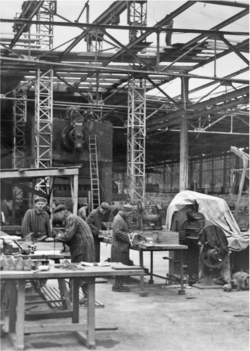
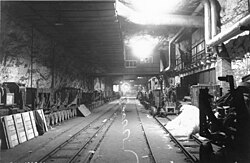
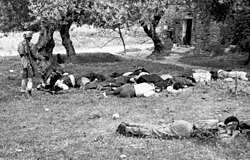
The air force also utilized forced labour. Concentration camp prisoners were coerced into working at aircraft factories, and the production of V-1 cruise missiles and V-2 rockets in the Mittelwerk tunnels resulted in more than 12,000 deaths. Additionally, Luftwaffe paratroopers were involved in massacres, such as those in Kondomari, Crete.
The End of the Luftwaffe
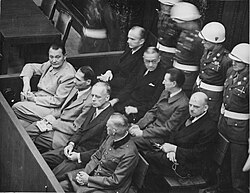
As the Third Reich collapsed, the Luftwaffe was unable to defend German airspace from Allied bombing. Following the surrender of Germany, the organization was officially disbanded in 1946. Many of its leaders, including Hermann Göring, were tried for war crimes during the Nuremberg trials.
Frequently Asked Questions
Who were the commanders-in-chief of the Luftwaffe?
The Luftwaffe had only two commanders-in-chief: Reichsmarschall Hermann Göring, who led for most of its existence, and Generalfeldmarschall Robert Ritter von Greim, who served for the final two weeks of the war.
What was the "Ural bomber" concept?
Proposed by Walther Wever, the Ural bomber was a concept for a long-range strategic bomber designed to strike deep into the Soviet Union to destroy industrial production centers.
How many aircraft did the Luftwaffe lose during WWII?
Over 75,000 Luftwaffe aircraft were destroyed or significantly damaged, with nearly 40,000 of those being total losses.
Did the Luftwaffe have ground troops?
Yes. Starting in 1942, the Luftwaffe formed Field Divisions to serve as infantry, and later established the Fallschirm-Panzer Division 1 Hermann Göring, an armored unit.
What role did the Me 262 play?
The Messerschmitt Me 262 was a pioneering jet fighter. While it arrived late in the war, it was highly effective, with an estimated 745 aerial victories attributed to the type.