LTE Technology: The Evolution of Wireless Broadband and 4G Standards
In the rapidly evolving landscape of telecommunications, Long Term Evolution (LTE) stands as a pivotal standard for wireless broadband communication. Designed for cellular mobile devices and data terminals, LTE serves as a high-speed bridge between older generations and the modern era of connectivity. Often described as a "transitional" 4G technology—sometimes referred to as 3.95G—it represents a significant leap above 3G capabilities.
By utilizing a specialized radio interface and significant core network improvements, LTE enhances the capacity and speed of previous 2G GSM/EDGE and 3G UMTS/HSPA standards. It has become the industry's primary upgrade path for carriers operating on both GSM/UMTS and CDMA2000 networks.

Key Facts
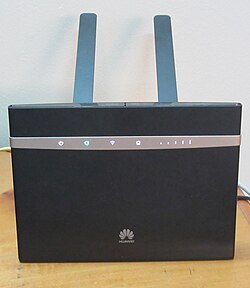
- Standard Type: A transitional 4G wireless broadband standard.
- Successor: LTE Advanced (LTE+), defined as "true" 4G.
- Current Status: Being supplemented and replaced by 5G NR in the 2020s.
- Core Technologies: Based on 2G GSM/EDGE and 3G UMTS/HSPA.
- Primary Modes: Operates via LTE-FDD and LTE-TDD.
The History and Development of LTE
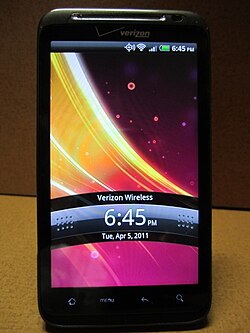
The journey toward standardized high-speed mobile data involved several groundbreaking demonstrations by global technology leaders. In February 2007, Ericsson achieved a world first by demonstrating LTE with bit rates reaching 144 Mbit/s. Shortly after, in September 2007, NTT Docomo demonstrated data rates of 200 Mbit/s while maintaining a power level below 100 mW.
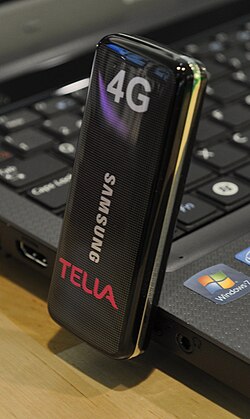
As the technology matured, hardware capabilities expanded. By 2008, LG Electronics and Nortel demonstrated LTE speeds of 50 Mbit/s while traveling at 110 km/h. The following year, Infineon showcased a single-chip 65 nm CMOS RF transceiver capable of providing 2G, 3G, and LTE functionality, signaling the move toward integrated mobile hardware.
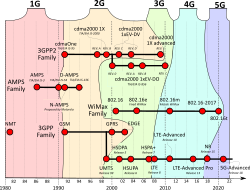
3GPP Standard Development Timeline
The development of LTE is closely tied to the 3GPP (3rd Generation Partnership Project) standards. The evolution progressed from early demonstrations to commercial deployment, eventually leading to the more robust LTE Advanced. While LTE paved the way, the industry is now transitioning toward 5G New Radio (NR) to meet even higher data demands.
LTE Deployment and Global Adoption
Commercial adoption of LTE began to accelerate in the early 2010s. One of the earliest milestones occurred in May 2010, when the Russian operator Scartel announced the launch of an LTE network in Kazan. As the technology became more stable, countries across the globe saw rapid penetration rates.
| Rank | Country/Territory | Penetration (%) |
|---|---|---|
| 1 | South Korea | 97.5% |
| 2 | Japan | 96.3% |
| 3 | Norway | 95.5% |
| 4 | Hong Kong | 94.1% |
| 5 | United States | 93.0% |
| 6 | Netherlands | 92.8% |
| 7 | Taiwan | 92.8% |
| 8 | Hungary | 91.4% |
| 9 | Sweden | 91.1% |
| 10 | India | 90.9% |
Technical Variations: LTE-FDD and LTE-TDD
LTE is implemented using two primary duplexing methods: Frequency Division Duplexing (FDD) and Time Division Duplexing (TDD). FDD uses separate frequency bands for uploading and downloading, whereas TDD uses a single frequency band and alternates between upload and download via time slots.
Trials for LTE-TDD began as early as 2010 in India with Reliance Industries and Ericsson. By 2013, the landscape was diverse; of the 156 commercial 4G LTE networks existing at that time, 142 were LTE-FDD and 14 were LTE-TDD. China has been a significant player in TDD deployment, with major operators receiving licenses for commercial services in late 2013.
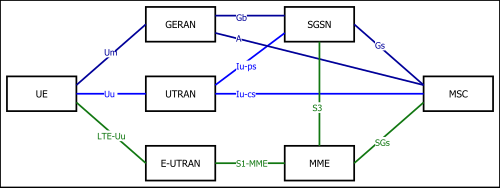
Voice Services and Enhanced Features
One of the most significant advancements brought by LTE is the handling of voice calls over a data-centric network. Traditionally, voice was handled via circuit-switched networks, but LTE introduced several methods to maintain connectivity:
- Voice over LTE (VoLTE): Allows voice calls to be carried as data packets over the LTE network, providing higher quality.
- Circuit-Switched Fallback (CSFB): A mechanism that drops the connection to a 2G or 3G network to complete a voice call when VoLTE is unavailable.
- Simultaneous Voice and LTE (SVLTE): Enables users to use data and voice at the same time.
- Single Radio Voice Call Continuity (SRVCC): Ensures a seamless transition from LTE to a circuit-switched network during a call.

Frequency Bands and Global Usage
LTE operates across a wide variety of frequency bands to accommodate different regional regulatory requirements and propagation needs. Below is a summary of common bands used across different continents:
- Europe: 450, 700, 800, 900, 1500, 1800, 2100, 2300, 2600, 3500, 3700 MHz.
- Asia: 450, 700, 800, 850, 900, 1500, 1800, 1900, 2100, 2300, 2500, 2600, 3500 MHz.
- Africa: 700, 800, 850, 900, 1800, 2100, 2300, 2500, 2600 MHz.
- Oceania: 700, 850, 900, 1800, 2100, 2300, 2600 MHz.

Frequently Asked Questions
What is the difference between LTE and LTE Advanced?
While LTE is considered a transitional 4G technology (sometimes called 3.95G), LTE Advanced (also known as LTE+) is officially defined by the ITU as "true" 4G technology due to its higher performance capabilities.
How does VoLTE improve voice calls?
VoLTE, or Voice over LTE, allows voice calls to be transmitted as data packets over the LTE network, which enables enhanced voice quality compared to older circuit-switched methods.
What is CSFB in cellular networks?
Circuit-Switched Fallback (CSFB) is a process where a device temporarily switches from the LTE network to a 2G or 3G network to handle a voice call if the network does not support VoLTE.
Is LTE being replaced?
Yes, in the 2020s, LTE and LTE Advanced networks are being supplemented and increasingly replaced by 5G NR (New Radio) technology.
What are LTE-FDD and LTE-TDD?
These are two ways of managing data transmission. LTE-FDD uses different frequencies for uploading and downloading, while LTE-TDD uses the same frequency but switches between uploading and downloading at different times.