Louis Armstrong House: A Historic Sanctuary of Jazz in Queens
Nestled in the Corona neighborhood of Queens, New York, the Louis Armstrong House stands as a profound testament to the life and legacy of one of the most influential figures in jazz history. From 1943 until his passing in 1971, this residence served as the private sanctuary for Louis Armstrong and his wife, Lucille Wilson. Today, it is more than just a former home; it is a vibrant museum and cultural campus dedicated to preserving the spirit of the legendary musician.
The transition from a private residence to a public treasure began with Lucille Wilson, who gifted the property to the city of New York to ensure her husband's legacy would be celebrated through a dedicated museum.
Key Facts
- Location: 34 - 56 107th Street, Corona, Queens, New York.
- Residence Period: Louis and Lucille Armstrong lived here from 1943 to 1971.
- Architectural Origin: Built in 1910 by Thomas Daly, designed by Robert W. Johnson.
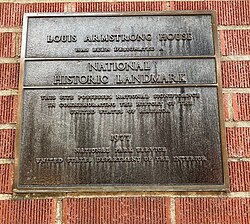
- Major Honors: Designated as a National Historic Landmark (1976) and a New York City Landmark (1988).
- Recent Accolade: Winner of the 2024 National Medal for Museums and Library Service.
The Architecture and Evolution of the Home
The house is a brick structure originally designed by architect Robert W. Johnson and constructed by Thomas Daly in 1910. When the Armstrongs moved in, they personalized the space to suit their needs and tastes. One significant structural change involved the removal of the front porch, which allowed the living room to be expanded.
The couple also added a garage and carefully curated the surrounding garden. Inside, the home underwent renovations that included the addition of a kitchen and ornate bathrooms. The interior serves as a visual diary of Armstrong's global influence; the walls, shelves, and dressers are adorned with paintings and souvenirs gifted to him during his extensive tours across Africa, Asia, and Europe.
Landmark Status and Administration
Recognizing its cultural significance, the house has received multiple prestigious designations. It was added to the National Register of Historic Places (NRHP) and declared a National Historic Landmark on May 11, 1976. It later joined the New York State Register of Historic Places in 1980. Following a 1985 hearing by the New York City Landmarks Preservation Commission, it was officially designated as an individual New York City Landmark on December 13, 1988.
The administration of the site is a collaborative effort. After Lucille Armstrong's death in 1983, the Louis Armstrong Educational Foundation transferred the house to the New York City Department of Cultural Affairs. The City University of New York (CUNY), Queens College, assists in administration, while the non-profit Louis Armstrong House Museum manages the programming and operations.
The Expanding Museum Campus
The site has evolved into a three-building campus comprising the historic home, Selma's Place, and the state-of-the-art Louis Armstrong Center. In September 2025, the museum further integrated into the city's cultural fabric by joining the Cultural Institutions Group, a partnership of educational and cultural entities.
The Louis Armstrong Center
Opened in 2023 following a 2017 groundbreaking, the Louis Armstrong Center is located across the street from the original house. It houses the largest archives for any jazz musician, containing over 60,000 items. The center features a 75-seat performance space and a multimedia exhibition titled Here to Stay, curated by Jason Moran.
The center also fosters new creativity through Armstrong Now, an artist residency program. This program has hosted multidisciplinary artists such as Esperanza Spalding, Immanuel Wilkins, and Daniel J. Watts. Additionally, the center's garden and jazz room have seen performances by renowned artists including Jimmy Heath, Nikki Giovanni, Jon Faddis, Bria Skonberg, and Wendell Brunious.
Growth continues for the campus, with city plans announced in 2025 to invest $3.5 million in renovating a neighboring property—formerly owned by the Heraldo family—to provide additional community space and offices.
Summary of Historic Designations
| Designation | Date Granted | Reference/ID Number |
|---|---|---|
| National Register of Historic Places (NRHP) | May 11, 1976 | 76001265 |
| National Historic Landmark (NHL) | May 11, 1976 | N/A |
| New York State Register of Historic Places (NYSRHP) | June 23, 1980 | 08101.006403 |
| New York City Landmark (NYCL) | December 13, 1988 | 1555 |
Frequently Asked Questions
Who owned the house before it became a museum?
The house was the home of Louis Armstrong and his wife, Lucille Wilson, from 1943 until Louis's death in 1971. Lucille later gave ownership to the city of New York to establish the museum.
What can visitors find at the Louis Armstrong Center?
The center houses an archive of over 60,000 items—the largest for any jazz musician—along with a 75-seat performance space and the Here to Stay multimedia exhibition.
How was the original house modified by the Armstrongs?
The Armstrongs removed the front porch to expand the living room, constructed a garage, developed the garden, and renovated the interior to include a kitchen and ornate bathrooms.
What is the "Armstrong Now" program?
Armstrong Now is an artist residency program hosted at the Louis Armstrong Center for multidisciplinary artists to create and perform.
Is the museum part of any larger city organization?
Yes, as of September 2025, the Louis Armstrong House Museum became part of New York City's Cultural Institutions Group.