Los Abuelos de la Nada: The Evolution of Argentine Rock Legends
Founded in the vibrant cultural landscape of Buenos Aires, Los Abuelos de la Nada (The Grandparents of Nothingness) stand as one of the most influential pillars of Argentine rock. Led by the visionary singer-songwriter Miguel Abuelo, the band navigated multiple incarnations, blending genres from funk and new wave to reggae and jazz fusion to create a sound that defined an era of Latin American music.
Key Facts
- Origin: Buenos Aires, Argentina.
- Founder: Miguel Abuelo.
- Core Genres: Rock, Funk Rock, New Wave, Reggae, and Jazz Fusion.
- Major Hits: "Mil horas", "Costumbres argentinas", and "Himno de mi corazón".
- Active Periods: 1967–1969, 1981–1985, and 1986–1988.
The Early Years: From La Cueva to Europe (1967–1971)
The story begins in the mid-1960s at La Cueva, a legendary club in Barrio Norte that served as the epicenter for rock and roll in Buenos Aires. During this time, artists were experimenting with Spanish-language lyrics, breaking away from the English-dominated trends of the era. It was here that Miguel Peralta—who later adopted "Abuelo" as his artistic surname—entered the scene.
In a bold move to secure a recording contract with the label Mandioca, Abuelo claimed he already had a band ready for the studio. He subsequently assembled the first version of Los Abuelos de la Nada, featuring musicians like Claudio Gabis and the Lara brothers. Their debut single, "Diana Divaga," showcased the psychedelic influences prevalent in the late 60s. However, internal shifts occurred when guitarist Norberto Napolitano (Pappo) steered the group toward the blues, leading to Abuelo's departure.
Following a brief stint with the band El Huevo, Abuelo moved to Barcelona, Spain, in 1971. He spent a decade in Europe refining his craft before being convinced to return to Argentina by session musician Cachorro López to revive the project.
The Golden Era: Comeback and Commercial Peak (1981–1985)
The second incarnation of the band was a powerhouse of talent, featuring Abuelo on vocals, Cachorro López on bass, Andrés Calamaro on keyboards and vocals, Gustavo Bazterrica on guitar, Daniel Melingo on saxophone, and Polo Corbella on drums. This lineup coincided with the 1982 Falklands War, a period where English-language music was largely banned from Argentine radio, creating a vacuum that local rock bands quickly filled.
Under the mentorship of rock icon Charly García, the band achieved massive success. Their 1982 debut album and the subsequent 1983 release, Vasos y besos, produced hits like "Chala-man" and the timeless "Mil horas." The band's appeal spanned from hardcore rockers to pop audiences, with Calamaro emerging as a major idol for the youth.
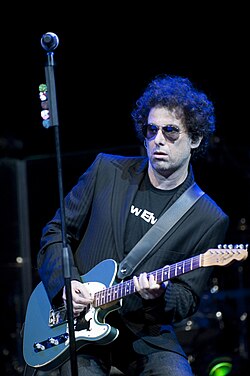
The band reached an international breakthrough with the 1984 album Himno de mi Corazón, recorded in Ibiza. However, the peak of their success was marred by internal strife, including Bazterrica's struggle with cocaine addiction and a growing rivalry for leadership between Abuelo and Calamaro.
The dissolution of the group was marked by a chaotic final performance in October 1985 at the José Amalfitani Stadium. Amidst heavy rain and poor sound quality, the crowd's frustration boiled over, and Miguel Abuelo was struck in the face by a bottle, leaving him bleeding on stage. Shortly after, the band disbanded.
Final Revival and the Legacy of Miguel Abuelo (1986–1988)
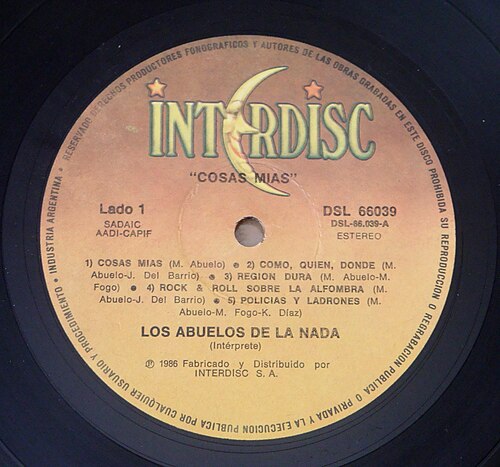
Miguel Abuelo attempted one final revival in 1986, forming a new lineup with Kubero Díaz, Marcelo "Chocolate" Fogo, and Juan del Barrio. This era produced the album Cosas mías, which saw moderate commercial success. However, tragedy struck in 1987 when Abuelo was diagnosed with AIDS following gallbladder surgery. He passed away from cardiac arrest shortly after his 42nd birthday.
The death of Miguel Abuelo marked the definitive end of the band. In the following years, former members pursued diverse paths: Andrés Calamaro became a superstar in Spain and Argentina, Cachorro López became a prominent Sony Music producer, and Daniel Melingo transitioned into a tango artist.
The band's enduring influence is evident today; their tracks "Lunes por la madrugada" and "Himno de mi corazón" were featured in the 2022 cinematic production Argentina, 1985.
Summary of Discography and Members
| Category | Details |
|---|---|
| Studio Albums | Los Abuelos de la Nada (1982), Vasos y besos (1983), Himno de mi corazón (1984), Cosas mías (1986) |
| Live Albums | Los Abuelos en el Ópera (1985) |
| Key Members | Miguel Abuelo, Andrés Calamaro, Cachorro López, Gustavo Bazterrica, Daniel Melingo |
| Notable Singles | "Mil horas", "Costumbres argentinas", "Sin Gamulán", "Diana Divaga" |
Frequently Asked Questions
How did the band get its name?
The name "Los Abuelos de la Nada" (The Grandparents of Nothingness) was taken from a passage in the novel El banquete de Severo Arcángelo by Leopoldo Marechal.
What role did Andrés Calamaro play in the band?
Calamaro provided vocals and keyboards and was a prolific songwriter for the group, penning some of their biggest hits, including "Mil horas" and "Costumbres argentinas."
Why did the band break up in 1985?
The breakup was caused by a combination of factors, including Gustavo Bazterrica's drug addiction and a power struggle for top billing between Miguel Abuelo and Andrés Calamaro.
What happened to the band after Miguel Abuelo's death?
The band officially ended with Abuelo's death in 1987. While some members reunited for occasional performances, such as a 1997 show featuring Abuelo's son Gato, the group never reformed as a permanent entity.
Which of their songs are still culturally relevant today?
Songs like "Himno de mi corazón" and "Lunes por la madrugada" remain classics, recently gaining new visibility through their inclusion in the 2022 film Argentina, 1985.