Lordship of the Isles: The Norse-Gaelic Legacy of Clan Donald
The Lordship of the Isles (Scottish Gaelic: Triath nan Eilean) represents one of the most powerful and autonomous entities in medieval Scottish history. With roots extending beyond the formal borders of the Kingdom of Scotland, this title of nobility governed a vast maritime empire of islands and coastal territories. At their zenith, the Lords of the Isles were the most influential landowners in the region, surpassed only by the monarchs of England and Scotland.
The lordship was defined by its unique Norse-Gaelic culture, a fusion of Irish Gaelic and Scandinavian influences. This hybrid identity allowed the lords to wield immense sea-power, maintaining independence for centuries while acting as nominal vassals to the kings of Norway, Ireland, or Scotland.
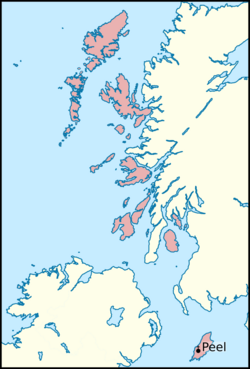
Key Facts
- Origin: Established by Somerled in the 12th century.
- Territory: Included the Hebrides, Islay, Arran, Bute, the Isle of Man, and the Kintyre peninsula.
- Military Power: Based on fleets of birlinns (clinker-built galleys).
- Administrative Seat: Finlaggan on the island of Islay.
- Current Holder: Prince William, Duke of Rothesay.
Historical Origins and the Norse Influence
The region of present-day western Scotland saw a complex shift in power starting in the 4th century with the arrival of Gaels from Ireland. By the 8th and 9th centuries, Viking invasions from Norway transformed the area into Innse-Gall, or the "Islands of the Foreigners."
Following the unification of Norway under King Harald Fairhair around 875 AD, Norwegian jarls (princes) sought refuge in the islands. Although Harald eventually conquered the Hebrides, Man, Shetland, and Orkney, the region remained a site of constant dispute between Scotland and Norway. This tension set the stage for the rise of a localized, independent dynasty.
The Rise of Somerled and the Founding Dynasties
The true foundation of the lordship began with Somerled (also known as Sumarlidi Höld), a figure of mixed Celtic and Norse descent. Starting in 1135, Somerled seized control of the Isles, eventually becoming the King of the Hebrides and King of Mann.
Somerled's legacy was divided among his descendants after his death in 1164. While his realm was split between his sons and brother-in-law, the line of Donald Mor McRanald gave rise to Clan Donald. This clan would eventually consolidate power over Islay, Jura, Kintyre, and Knapdale, establishing the dominant MacDonald lordship.
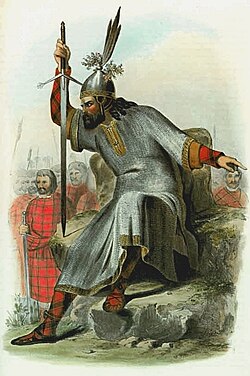
Maritime Supremacy: The Birlinn
The power of the Lords of the Isles was rooted in their naval superiority. They utilized birlinns—clinker-built galleys featuring square sails and oars. Somerled is credited with developing the stern rudder in the mid-12th century, which provided these vessels with significantly greater maneuverability than the steering oars used by the Vikings.
Governance and the Council of the Isles
The Lordship was not a simple autocracy but was supported by a structured advisory body known as the Council of the Isles. This council met at Finlaggan on Islay, the administrative and spiritual heart of the lordship.
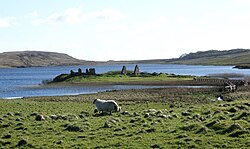
According to 16th-century accounts, the Council was organized into four distinct ranks:
- Royal Blood: Four great men lineally descended from Clan Donald.
- Nobles: Four high-ranking lords (including the Macleans and Macleods).
- Thanes: Four men of lesser estate.
- Freeholders: Men holding lands in factory.
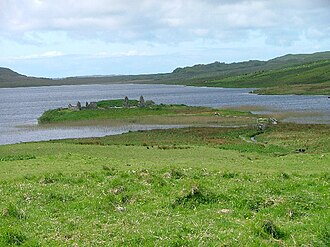
The Fall of the MacDonald Lords
The independence of the Lords of the Isles eventually clashed with the centralizing ambitions of the Scottish Crown. In 1462, John MacDonald II entered into a treaty with Edward IV of England to conquer Scotland. This act of treason was discovered in 1493, leading King James IV of Scotland to seize the ancestral lands, estates, and titles of the MacDonalds.
Despite subsequent rebellions, such as Dubh's Rebellion, the independent political power of the MacDonalds was broken. The title was absorbed into the Scottish Crown. Since the creation of the Kingdom of Great Britain, the title "Lord of the Isles" has been granted to the eldest son and heir apparent of the monarch, typically the Duke of Rothesay.
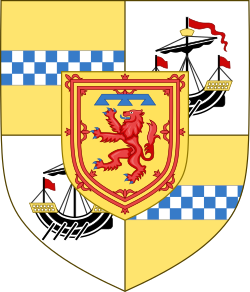
Summary of the Lordship of the Isles
| Feature | Details |
|---|---|
| Founder | Somerled (12th Century) |
| Primary Clan | Clan Donald (MacDonald) |
| Capital/Seat | Finlaggan, Islay |
| Key Technology | Birlinns (Galleys) with stern rudders |
| End of Independence | 1493 AD (Seized by James IV) |
| Current Titular Holder | Prince William |
Frequently Asked Questions
Who is the current Lord of the Isles?
The current titular Lord of the Isles is Prince William, who holds the title as the Duke of Rothesay and heir apparent to the British throne.
What was a birlinn?
A birlinn was a clinker-built galley used by the Lords of the Isles for transport and warfare. These ships combined Norse longship design with a stern rudder for improved maneuverability.
Where was the seat of power for the Lords of the Isles?
The seat of power was Finlaggan on the island of Islay, where the Council of the Isles met to advise the Lord.
Why did the MacDonalds lose the Lordship?
The lordship was forfeited in 1493 after King James IV of Scotland discovered that John MacDonald II had signed a treaty with Edward IV of England to attempt the conquest of Scotland.
What was the cultural background of the Lords of the Isles?
They were Norse-Gaelic, meaning their culture, language, and lineage were a blend of Gaelic (from Ireland and Scotland) and Norse (from Scandinavia) influences.