Lord Craig of Radley: A Legacy of Royal Air Force Leadership
Marshal of the Royal Air Force David Brownrigg Craig, Baron Craig of Radley, stands as one of the most distinguished figures in British military history. From his early days as a fast jet pilot in the 1950s to his tenure as the highest-ranking officer in the British Armed Forces, his career spanned four decades of strategic evolution and global conflict. Today, he holds the unique distinction of being the last living officer to have held a five-star rank while on active service.
Key Facts
- Highest Rank: Marshal of the Royal Air Force (five-star rank).
- Top Commands: Served as both Chief of the Air Staff and Chief of the Defence Staff.
- Conflict Experience: Provided strategic leadership during the Gulf War.
- Political Role: Life peer and member of the House of Lords since 1991.
- Education: Degree in mathematics from Lincoln College, Oxford.
Early Life and Education
Born on September 17, 1929, in Dublin, Ireland, David Craig was the son of Major Francis Brownrigg Craig and Olive Craig. He moved to Britain in 1943 to attend Radley College, where he excelled both academically and athletically, captaining the school's first rugby team and serving as Head of School. He later pursued higher education at Lincoln College, Oxford, where he earned a degree in mathematics and honed his passion for aviation by joining the Oxford University Air Squadron.
The Ascent Through the Royal Air Force
Craig's professional military journey began on September 19, 1951, when he was commissioned as a pilot officer. After completing his pilot's course at No. 7 Flying Training School at RAF Cottesmore, he earned his "wings" in April 1952. His early career was marked by rapid progression through various specialized roles, including serving as a jet conversion instructor at the 209 Advanced Flying School at RAF Weston Zoyland.
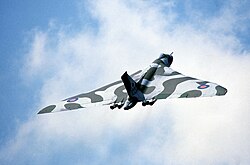
By 1955, he joined No. 247 squadron at RAF Odiham during its transition from Meteors to Hunters. His expertise expanded into guided weapons following a course at the RAF Technical College at Henlow. In January 1963, he took command of No. 35 Squadron at RAF Coningsby, where he flew the Vulcan B2, a strategic bomber aircraft.
Command and Strategic Leadership
Throughout the 1960s and 70s, Craig held several pivotal leadership positions. He served as Station Commander at RAF Cranwell (1968–70) and later at RAF Akrotiri in Cyprus (1972–74). His rise continued through the ranks of Air Vice-Marshal and Air Marshal, eventually leading him to become the Commander-in-Chief of RAF Strike Command in 1982.
Chief of the Air Staff and Chief of the Defence Staff
In October 1985, Craig was appointed Chief of the Air Staff. In this capacity, he played a critical role in shaping the future of British air power, advising the government on the procurement of the Boeing Airborne early warning and control system (AEW&C) and the development of the European Fighter programme.
His career culminated in his appointment as Chief of the Defence Staff on December 9, 1988, having been promoted to Marshal of the Royal Air Force. During this tenure, he was responsible for the strategic deployment of 45,000 British servicemen and women during the Gulf War.
Post-Military Career and Public Service
Upon retiring from active service in 1991, David Craig was granted a life peerage as Baron Craig of Radley. He entered the House of Lords as a crossbencher (a member not affiliated with any political party). Between 1999 and 2004, he served as the Convenor of the Crossbench Peers.
Beyond politics, he contributed to the private and charitable sectors, serving as a Director of ML Holdings plc and Chairman of the Council of King Edward VII's Hospital. In recognition of his contributions, he was awarded an honorary DSc from Cranfield University in 1988.
Summary of Career Milestones
| Period/Year | Role/Achievement | Key Detail |
|---|---|---|
| 1951 | Commissioned | Pilot Officer, RAF |
| 1963–1965 | Officer Commanding | No. 35 Squadron (Vulcan B2) |
| 1982–1985 | C-in-C RAF Strike Command | Promoted to Air Chief Marshal |
| 1985–1988 | Chief of the Air Staff | Advised on European Fighter programme |
| 1988–1991 | Chief of the Defence Staff | Led deployment for the Gulf War |
| 1991–Present | Life Peer | Baron Craig of Radley, House of Lords |
Frequently Asked Questions
What is the significance of Lord Craig's rank?
Lord Craig is the last living officer in the British Armed Forces to have held a five-star rank (Marshal of the Royal Air Force) while on active service. Since 1997, such appointments have been honorary.
Which major conflict did Lord Craig oversee as Chief of the Defence Staff?
He served as Chief of the Defence Staff during the Gulf War, where he advised the British Government on the deployment of 45,000 personnel.
What aircraft did Lord Craig fly during his time with No. 35 Squadron?
During his time as Officer Commanding No. 35 Squadron in the early 1960s, he flew the Vulcan B2.
What is Lord Craig's role in the House of Lords?
He is a life peer who sits as a crossbencher, meaning he is independent and not aligned with any specific political party. He also served as the Convenor of the Crossbench Peers from 1999 to 2004.
What were his primary contributions as Chief of the Air Staff?
He provided critical government advice regarding the ordering of the Boeing Airborne early warning and control system and the development of the European Fighter programme.