Lonely Planet: The Evolution of a Global Travel Empire
From a modest 94-page stapled booklet to a global powerhouse in travel media, Lonely Planet has redefined how millions of people explore the world. Founded on the spirit of adventure and budget travel, the company has evolved from a niche publishing house into a multi-platform digital and print entity, printing over 150 million books since its inception.
Key Facts
- Founded: 1973 in Australia by Tony and Maureen Wheeler.
- Current Owner: Red Ventures.
- Global Reach: Over 150 million books printed.
- Headquarters: Fort Mill, South Carolina, U.S.
- Current CEO: Paul Yanover (as of December 2024).
- Workforce: Employs 450 writers.
The Origins of a Travel Icon
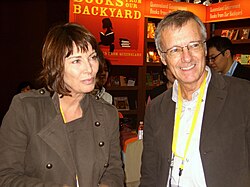
The story of Lonely Planet began in 1972 when married couple Maureen and Tony Wheeler embarked on an overland journey from Europe and Asia to Australia. Following the route of the Oxford and Cambridge Far Eastern Expedition, their experiences led to the creation of their first guide, Across Asia on the Cheap. Written in their own home and published in 1973, the original print run consisted of simple booklets with pale blue cardboard covers.
The company's unique name was born from a misunderstanding; the founders misheard the lyrics "lovely planet" in a song by Matthew Moore. By 1975, the Wheelers expanded their offerings with a more comprehensive guide to the overland trip to Asia.
Expansion and the "Geoffness" Era
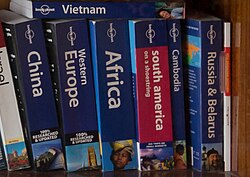
Throughout the late 20th century, Lonely Planet expanded its scope from Asia to the rest of the world, including a dedicated India guide in 1981. A significant part of the brand's early success is attributed to writer Geoff Crowther, whose distinct, opinionated style—later termed "Geoffness"—became a hallmark of the guides. By 1999, the company had sold 30 million copies, leading to a period of significant prosperity for its authors and staff in the Melbourne office.
Corporate Transitions and Digital Evolution
The 21st century brought major shifts in ownership and business strategy. In 2007, the Wheelers and John Singleton sold a 75% stake in the company to BBC Worldwide for approximately £63 million. While the BBC initially struggled with losses, the company eventually pivoted toward digital growth. By 2010, non-print revenues rose to 22%, and the company expanded into television production and mobile applications.

In 2011, BBC Worldwide acquired the remaining 25% of the company. However, by March 2013, the BBC sold Lonely Planet to Brad Kelley's NC2 Media for US$ 77.8 million. The company later transitioned to its current owner, Red Ventures, in December 2020. Under Red Ventures, Lonely Planet has continued to modernize, acquiring the expert trip-design website Elsewhere in 2022 (renamed Lonely Planet Journeys in 2025).
Diverse Product Offerings
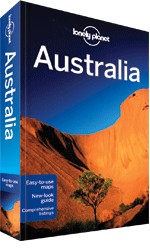
While best known for its physical books, Lonely Planet has ventured into various media formats:
- Digital Communities: The Thorn Tree, a travel forum created in 1996 and named after a message-board tree in Nairobi, Kenya, served as a hub for travelers until its closure in 2021.
- Periodicals: Lonely Planet Traveller, a monthly magazine launched in 2009, ceased publication in April 2020.
- Television: The company produced several series, including Globe Trekker, Lonely Planet Six Degrees, and Lonely Planet: Roads Less Travelled.
Controversies and Cultural Impact
The immense influence of Lonely Planet means that a single recommendation can drive massive tourist traffic to a specific location, a phenomenon exemplified by the "Banana Pancake Trail" in Southeast Asia. This influence has occasionally led to controversy.
In 1996, the company faced boycott calls from the National League for Democracy (NLD) and Aung San Suu Kyi for publishing a guide to Myanmar during a military government campaign. Lonely Planet maintained that providing information helped travelers make informed decisions. Additionally, in 2019, the company apologized for a misleading Facebook video that falsely attributed the creation of the Banaue Rice Terraces in the Philippines to the Chinese.
The company's internal processes have also been scrutinized. In 2008, writer Thomas Kohnstamm published a memoir detailing research shortcuts used in guidebooks, though Lonely Planet's publisher at the time stated that no inaccuracies were found in the resulting texts.
Company Overview
| Category | Details |
|---|---|
| Parent Company | Red Ventures |
| Founded | 1973 (Australia) |
| Key Products | Books, Mobile Apps, Video |
| Distribution Partners | Grantham Book Service (UK), Hachette Book Group (NA), United Book Distributors (AU) |
| Global Offices | Dublin, Nashville, New Delhi |
Frequently Asked Questions
How did Lonely Planet get its name?
The name came from a misunderstanding of the lyrics "lovely planet" in a song written by Matthew Moore.
Who founded Lonely Planet?
The company was founded by Tony and Maureen Wheeler in 1973 after they traveled overland through Europe and Asia to Australia.
What happened to the Thorn Tree forum?
The Thorn Tree was locked in read-only mode in April 2020 during the COVID-19 pandemic and was officially shut down in September 2021.
Who currently owns Lonely Planet?
Lonely Planet is currently owned by Red Ventures, which acquired the company from NC2 Media in December 2020.
Does Lonely Planet still publish in China?
No, in 2024, Lonely Planet announced its withdrawal from the Chinese market and stopped publishing guides in simplified Chinese.