London's Defensive History: From Roman Walls to the Ring of Steel
For nearly two millennia, the city of London has evolved from a frontier outpost of the Roman Empire into a global metropolis. Throughout this transformation, the city's survival has depended on its ability to adapt its defences. From the massive stone walls of antiquity to the invisible electronic surveillance of the modern era, London's fortifications reflect the shifting nature of warfare and the persistent need for security.
The Roman Foundations of Londinium
The story of London's defences begins with Londinium, founded around 50 AD. While the city had a fort from its early days, the first comprehensive defensive wall was constructed around 200 AD. This wall incorporated the existing fort's north and west walls, which were thickened and heightened to integrate into the new perimeter.
This Roman wall served as the city's primary shield for over a millennium, notably defending against Saxon raids in 457. Access to the city was controlled through six primary Roman gates: Ludgate, Newgate, Aldersgate, Cripplegate, Bishopsgate, and Aldgate. In the medieval period, a seventh entrance, Moorgate, was added between Cripplegate and Bishopsgate.
Medieval Fortifications and the Norman Conquest
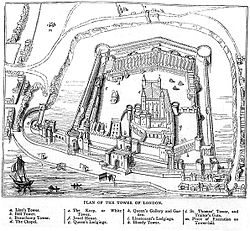
Following the Norman conquest in 1066, the nature of London's defences shifted. The Normans built new fortifications not only to ward off external invaders but also to protect themselves from the local population of the City of London. King William commissioned two major structures: the White Tower (the first part of the Tower of London), built in 1078, and Baynard's Castle near the River Fleet.
Additionally, Gilbert de Monfichet, a relative of William, constructed Montfichet's Castle to the northwest. As the medieval period progressed, the existing city walls were upgraded with bastions and crenellations (the notched battlements atop walls that allow defenders to fire while remaining protected).
The Role and Ritual of the City Gates
The city gates were more than simple entrances; they were multi-storey complexes featuring archways, gates, and portcullises (heavy vertical sliding grilles). These structures served several civic functions, acting as prisons or sites for the public display of executed criminals. Traitors often had their heads spiked on London Bridge, with their quartered bodies distributed among the various gates.
Daily life was governed by the gates' schedule. They closed at dusk or 9:00 PM (marked by the bells of St Mary le Bow) and reopened at sunrise or 6:00 AM. Beyond security, the gates functioned as checkpoints for collecting tolls to maintain the walls, leading some historians to suggest the wall's primary purpose may have eventually become tax collection rather than military defence.
By 1660, the gates lost their military utility and were kept as symbols of prestige. Most were demolished around 1760 to alleviate traffic congestion, though their locations are still marked by the names of the roads that replaced them.
Fortifying the Thames: Old London Bridge
London Bridge was a critical strategic point and was heavily fortified. The Southwark end featured the Great Stone Gate, completed around 1209. A second line of defence consisted of a drawbridge between the seventh and eighth piers, protected by the Drawbridge Gate (or New Stone Gate) built between 1426 and 1428.
This drawbridge served a dual purpose: it blocked land attacks from the south and regulated river traffic, allowing merchant ships to reach the Queenhithe dock while preventing enemy vessels from attacking the city from the rear.
Civil War and 19th Century Contingencies
During the English Civil War (1642–1643), Parliament commissioned the Lines of Communication to protect the capital from the Royalist armies of Charles I. These were demolished by 1647 once the threat subsided.
![A model of the fortifications built around London during the English Civil War viewed from the east.[2]](/images/9f/54/9f54b99a9986db37fff5a85ce3cac60d82f7078df718933d951d654e3f7add8c.jpg)
In the 1880s, the London Defence Positions were planned to counter a potential foreign invasion from the south coast. This scheme involved a series of entrenchments supported by thirteen redoubts (small, enclosed forts) known as London Mobilisation Centres. These centres, stretching 70 miles from Guildford to the Darenth valley, were sold off in 1907, though Fort Halstead remains in use today as a Ministry of Defence explosives research facility.
The World Wars and the Cold War
World War I saw a revival of the 19th-century defence positions to create a "stop line" against German invasion, extending the line to Broxbourne in the north and Halling in the south.
World War II brought more intensive preparations. The GHQ Line was the most significant anti-tank stop line, stretching from Bristol, wrapping around London, and heading north through Essex. Within this, concentric rings (Lines A, B, and C) were planned. General Edmund Ironside initiated the construction of pillboxes and anti-tank defences in June 1940, though his successor, General Alan Brooke, halted the work in favour of mobile warfare.
To protect command and control, the government built the Cabinet War Rooms and the Admiralty Citadel.
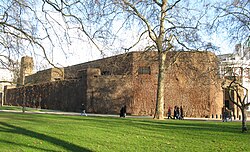
During the Cold War, the city developed hardened underground defences to protect leadership, including the PINDAR facility and the Kingsway telephone exchange.
Modern Security: The Ring of Steel
In the late 20th century, the threat shifted from invading armies to terrorism. Following IRA bombings at the Baltic Exchange (1992) and Bishopsgate, the Corporation of the City of London implemented the Ring of Steel. This system involves altered road layouts and manned checkpoints to prevent truck bombs from entering the financial district.
While most of London lacks such overt barriers, high-profile targets like Whitehall and the Palace of Westminster use concrete barriers and extensive CCTV monitoring to maintain security.
Key Facts
- Roman Origin: The first city wall was built around 200 AD, 150 years after the founding of Londinium.
- The Seven Gates: The original six Roman gates were joined by Moorgate in the medieval period.
- Norman Influence: The White Tower (1078) was built partly to protect the Normans from London's own citizens.
- Strategic Bridge: Old London Bridge used a drawbridge to control both land and river access.
- WWII Defences: The GHQ Line served as the primary anti-tank barrier protecting the industrial heartland.
- Modern Era: The "Ring of Steel" was a direct response to IRA truck bombings in the early 1990s.
| Era | Primary Defence Type | Key Structures/Systems |
|---|---|---|
| Roman | Stone City Wall | Londinium Wall, 6 original gates |
| Medieval | Castles & Bastions | White Tower, Baynard's Castle, Moorgate |
| 17th Century | Civil War Forts | Lines of Communication |
| 19th Century | Mobilisation Centres | London Defence Positions, Fort Halstead |
| World Wars | Stop Lines & Bunkers | GHQ Line, Admiralty Citadel, Pillboxes |
| Modern | Traffic Control & Surveillance | Ring of Steel, CCTV, Concrete Barriers |
Frequently Asked Questions
Why were the city gates demolished in the 18th century?
Most of the gates were demolished around 1760 because they caused significant traffic congestion as the city grew.
What was the purpose of the "Ring of Steel"?
The Ring of Steel consists of road layout changes and checkpoints designed to prevent truck bombs from entering the City of London, implemented after IRA attacks in 1992 and 1993.
How did the drawbridge on Old London Bridge work?
It acted as a land barrier against attacks from the south and could be lowered to allow merchant ships to reach Queenhithe while blocking enemy ships from entering the city from the rear.
What happened to the London Mobilisation Centres?
Most were sold off in 1907 after being deemed obsolete, with the exception of Fort Halstead, which is still used by the Ministry of Defence.
Who was responsible for the WWII anti-tank defences?
General Edmund Ironside directed the construction of the concentric anti-tank rings in 1940, though the work was later stopped by General Alan Brooke.