Lochaber History: From Pictish Settlements to the Highland Clearances
Lochaber, a region of rugged beauty and deep historical significance in the Scottish Highlands, first appears in written records around 690 AD in the Life of Columba, authored by Adomnán, the Abbot of Iona Abbey. For centuries, this land has served as a crossroads of cultures, shifting from the influence of the Picts and migrating Irish clans to the dominance of powerful Scottish clans and the eventual upheaval of the Clearances.
Early Settlements and Cultural Boundaries
In the early medieval period, Lochaber sat at a cultural divide. While no Pictish stones remain in the area, Ardnamurchan Point is believed to have marked the boundary between the Picts to the north and east and the migrating Irish clans of Dál Riata (an early Gaelic kingdom) to the south.
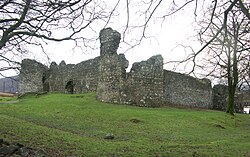
Archaeological evidence suggests that Inverlochy Castle was constructed upon the site of an earlier Pictish settlement. The historian Hector Boece noted in 1526 that this site was once a bustling city frequented by merchants from Spain and France before it was destroyed by Viking raids. While no early monasteries have been found, the prevalence of placenames beginning with "Kil-" or "Cille-" indicates the presence of early Christian sites between 600 and 900 AD. Additionally, the term "annat" near Corpach points to the location of an early mother church.
Viking influence is also evident in the placenames of Ballachulish and Morvern, though these settlements did not extend north or east of Fort William.
The Rise of the Provincial Lordship
By the early 12th century, Lochaber was part of the Province of Moray. It evolved into a provincial lordship, likely granted to Walter Comyn by King Alexander II in 1229, as evidenced by a 1234 charter. Lochaber was one of seven lordships created within Moray by approximately 1230, alongside others such as Badenoch, The Aird, and Strathbogie.
The lordship comprised the parishes of Kilmonivaig and Kilmallie, with its administrative center, or caput, located at Inverlochy Castle. Over time, the administrative functions of these lordships were absorbed by the shires; Lochaber became part of Inverness-shire, governed by the Sheriff of Inverness.
Clan Dominance and Royal Grants
The ownership of Lochaber shifted through royal favor and kinship. King Robert the Bruce granted the territory to Angus Òg Macdonald, Lord of the Isles, in recognition of his support during the First Scottish War of Independence and the Battle of Bannockburn in 1314. This led to the establishment of several influential branches of the MacDonald clan:
- Clan MacDonald of Ardnamurchan: Founded by Iain Sprangach MacDonald.
- Clan MacDonald of Glencoe: Founded by Iain Fraoch MacDonald.
- Clan MacDonald of Keppoch: Founded by Alistair Carragh Macdonald.
Despite the influence of the MacDonalds, Clan Cameron emerged as the principal and dominant clan in the region during the Middle Ages, alongside the MacIntosh, MacMillan, and MacDonell of Glengarry clans.
Conflict and Religious Secrecy (17th – 18th Centuries)
While some parts of the Highlands were relatively peaceful in the late 17th century, Lochaber was often viewed by government officials as a haven for thieves and cattle raiders. The Camerons, MacGregors, and the MacDonalds of Glencoe and Keppoch were frequently cited in these accounts. Tensions peaked in September 1688 when James VII outlawed the Keppoch MacDonalds following the Battle of Mulroy.
The region also became a sanctuary for the underground Catholic Church. From 1740, Fr. Alexander Cameron, a nobleman of Clan Cameron and a Jesuit priest, operated a secret vicariate from a hidden residence beneath a boulder at Brae of Craskie in Glenannich. Alongside Frs. John and Charles Farquarson, he provided illegal religious services to the people of Lochaber and Strathglass.
The Jacobite Risings and the Great Diaspora
Lochaber was heavily involved in the Jacobite Rising of 1745. Following the defeat at the Battle of Culloden, government reprisals were so severe that the period is remembered in the Highlands as Bliadhna nan Creach, or the "Year of the Pillaging."
This trauma was compounded by the Highland Clearances and voluntary emigration. Notable figures, such as the poet Ailean a' Ridse MacDhòmhnaill, left for Nova Scotia in 1816. Others were forced out during the Highland Potato Famine by Laird Ranald George Macdonald. Many of these displaced Gaels settled in the Colony of Victoria, Australia, specifically in Belmont and Little River.
Interestingly, the Lochaber dialect of Scottish Gaelic found a second life overseas. By 1879, observers noted that the accent and purity of the language were better preserved in Cornwall and Glengarry County, Ontario, than in Lochaber itself.
Summary of Lochaber's Historical Evolution
| Period | Key Influence/Event | Significant Figures/Groups |
|---|---|---|
| Early Medieval | Pictish & Dál Riata boundary | Picts, Irish clans |
| 13th Century | Establishment of Lordship | Walter Comyn, Alexander II |
| 14th Century | Lordship of the Isles | Robert the Bruce, Angus Òg Macdonald |
| Middle Ages | Clan Dominance | Clan Cameron, Clan MacDonald |
| 18th Century | Jacobite Risings & Reprisals | Fr. Alexander Cameron, Jacobites |
| 19th Century | Clearances & Emigration | Laird Ranald George Macdonald |
Key Facts
- First Record: Mentioned c. 690 AD in the Life of Columba.
- Administrative Center: Inverlochy Castle served as the caput of the provincial lordship.
- Clan Power: Clan Cameron was the dominant force in the Middle Ages.
- Religious History: A secret Catholic vicariate operated from Brae of Craskie in the mid-18th century.
- Global Diaspora: Forced emigration led to significant Gaelic-speaking communities in Ontario, Canada, and Victoria, Australia.
- Modern Status: A 2023 bid to establish a National Park including Ben Nevis was unsuccessful.
Frequently Asked Questions
What was the significance of Inverlochy Castle?
Inverlochy Castle served as the caput, or administrative center, of the provincial lordship of Lochaber. It is believed to have been built on the site of an earlier Pictish settlement that was once a merchant hub before being destroyed by Vikings.
Which clans were most prominent in Lochaber?
Clan Cameron was the principal and dominant clan during the Middle Ages. Other influential groups included the MacDonalds of Keppoch, Glencoe, and the Isles, as well as the MacIntosh, MacMillan, and MacDonell of Glengarry clans.
What was the "Year of the Pillaging"?
Known in Gaelic as Bliadhna nan Creach, this refers to the period of severe reprisals inflicted by government troops on the local population following the Battle of Culloden after the Jacobite Rising of 1745.
How did the Highland Clearances affect Lochaber?
The Clearances, combined with the Highland Potato Famine, led to a massive reduction in the local population. Many residents were forced or encouraged to emigrate to Canada and Australia, specifically to areas like Nova Scotia, Ontario, and Victoria.
Is the Lochaber dialect of Gaelic still spoken?
While the population in Scotland declined, the dialect was remarkably well-preserved in emigrant communities. In the late 19th century, it was noted that the accent in Glengarry County and Cornwall, Ontario, was more authentic than that found in Lochaber itself.