LoanDepot Park: Miami's Modern Architectural Marvel
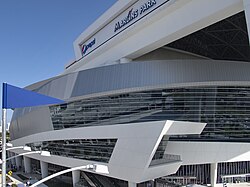
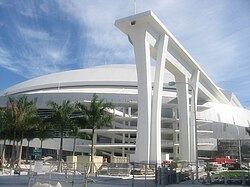
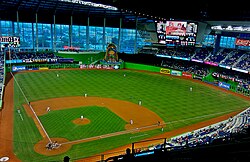
Located in the heart of Little Havana, LoanDepot Park serves as a striking example of contemporary sports architecture. As the home of Major League Baseball's Miami Marlins, this retractable roof stadium was designed to blend the high energy of professional sports with the vibrant, artistic spirit of Miami. Situated on the former site of the Miami Orange Bowl, the park is a cornerstone of the city's athletic landscape.
Since its opening in 2012, the facility has evolved from its original identity as Marlins Park into a multi-purpose venue capable of hosting everything from international soccer matches to professional ice hockey. Its design prioritizes both the fan experience and environmental sustainability, making it one of the most unique ballparks in the United States.
Key Facts
- Location: 501 Marlins Way, Miami, Florida (Little Havana).
- Capacity: 36,742 (up to 37,442 with standing room).
- Cost: Approximately US$634 million.
- Sustainability: LEED certified as the greenest MLB park in 2012.
- Surface: Transitioned from natural grass (2012–2019) to Shaw Sports B1K synthetic turf (2020–present).
- Roof: One of only six MLB stadiums featuring a retractable roof.
Design and Architecture
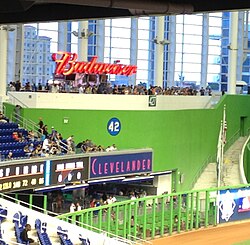
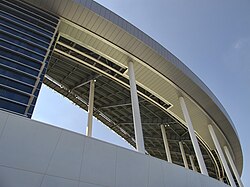
The architecture of LoanDepot Park is described as "contemporary," moving away from the retro-style ballparks common in previous decades. The design emphasizes the local culture of Miami, incorporating artistic elements that reflect the city's diversity and flair.
Artistic Integration
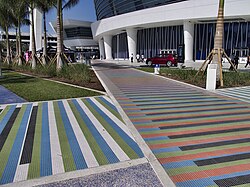
The stadium is more than just a sports venue; it is a gallery of public art. The front plaza features tiled walkways created by kinetic-op artist Carlos Cruz-Diez, while the four main parking garages are adorned with pastel, Miami-Deco-influenced wall tiles that connect the massive facility to the smaller scale of the surrounding Little Havana neighborhood.

Technological Innovations
To combat the intense Florida heat, the stadium utilizes a rubber membrane lining the roof to reduce the heat-island effect (the phenomenon where urban areas experience higher temperatures than surrounding rural areas). During night games, the stadium's super columns are illuminated by a coordinated LED show, adding to the visual spectacle.
The Home Run Sculpture
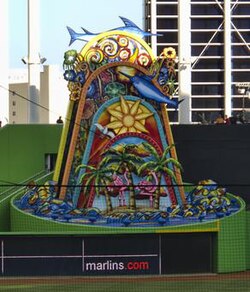
One of the park's most famous features is the $2.5 million home run sculpture. This artistic installation serves as a focal point for fans, though it was historically noted for creating a "Bermuda Triangle" quirk in the outfield fence between 2012 and 2016.
Stadium History and Evolution
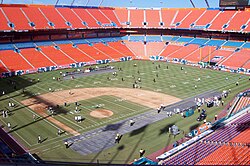
The journey to the current facility began with a ceremonial groundbreaking on July 18, 2009. Before moving to LoanDepot Park, the Marlins played at what was then Dolphin Stadium, a venue primarily designed for football that often required gridlines to be painted over the baseball diamond.
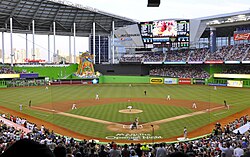
The stadium officially opened for high school baseball on March 5, 2012, followed by a regular-season debut on April 4, 2012. Over the years, the park has undergone several modifications to improve playability. In 2016, fences were lowered and moved in, and in 2020, the team replaced the natural grass with synthetic turf to better manage the challenges of maintaining a living surface under a retractable roof.
A Versatile Event Hub
While primarily a baseball stadium, LoanDepot Park is a versatile venue that hosts a wide array of international and domestic events.
Major Baseball Tournaments
The park has become a preferred site for the World Baseball Classic (WBC), hosting pools and championship games in 2013, 2017, and 2023, with further games scheduled for 2026. It also hosted the 2017 MLB All-Star Game.
Beyond Baseball
- College Football: The Miami Beach Bowl was hosted here from 2014 to 2016.
- International Soccer: The venue has hosted friendly matches for national teams including Nigeria, Mexico, and Colombia.
- Ice Hockey: In a historic first, the stadium hosted the 2026 NHL Winter Classic between the New York Rangers and Florida Panthers, marking the NHL's southernmost outdoor game.
- Entertainment: Major concerts have been held at the venue, featuring artists such as Beyoncé, Guns N' Roses, and Pink.
Stadium Specifications Summary
| Feature | Detail |
|---|---|
| Owner | Miami-Dade County |
| Operator | Miami Marlins LP |
| Architect | Populous |
| Total Acreage | 17 acres (928,000 sq ft) |
| Record Attendance | 37,446 (2017 World Baseball Classic) |
| Public Transit | Free City of Miami Trolley & Marlins Shuttle |
Frequently Asked Questions
What is the seating capacity of LoanDepot Park?
The stadium has an official seating capacity of 36,742, which can expand to 37,442 when including standing room. For football events, the capacity is approximately 34,000.
Why did the stadium switch from grass to synthetic turf?
The transition to Shaw Sports B1K synthetic turf in 2020 was made to address the difficulties of maintaining natural grass in a retractable roof environment, where sunlight and airflow are limited.
Is LoanDepot Park environmentally friendly?
Yes, the stadium was LEED certified as the greenest MLB park in 2012 and features a rubber membrane roof lining to reduce the urban heat-island effect.
What other sports are played at LoanDepot Park?
In addition to baseball, the park has hosted college football (Miami Beach Bowl), international soccer friendlies, and professional ice hockey (NHL Winter Classic).
Where is the stadium located?
It is located at 501 Marlins Way in the Little Havana neighborhood of Miami, Florida, approximately two miles west of Downtown Miami.