Lithium: The Essential Element Powering Modern Technology
Lithium is a lightweight, silvery-white metal that has transitioned from a scientific curiosity to one of the most strategically important elements on Earth. As the lightest metal and the least dense solid element, lithium plays a critical role in everything from the smartphones in our pockets to the aerospace alloys used in cutting-edge rockets.
Named after the Greek word lithos, meaning "stone," lithium is a member of the alkali metals—a group of highly reactive elements found in Group 1 of the periodic table. Its unique chemical properties make it indispensable for energy storage and various industrial applications.

Key Facts
- Atomic Number: 3
- Symbol: Li
- Appearance: Silvery-white metal
- Primary Use: Batteries (approximately 88% of global usage)
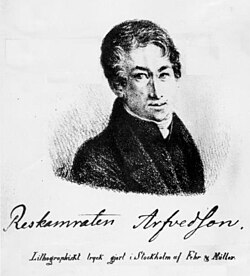
- Discovery: Credited to Johan August Arfwedson in 1817
- Physical State: Solid at standard temperature and pressure (STP)
- Density: 0.5334 g/cm³ (at 20°C), making it the least dense metal
Physical and Atomic Properties
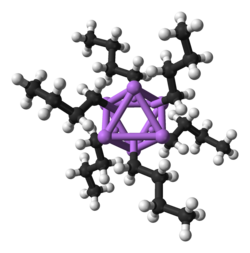
Lithium is characterized by its low atomic weight (approximately 6.94) and a simple electron configuration ([He] 2s). Because it has only one valence electron, it is highly reactive and typically exhibits a +1 oxidation state.
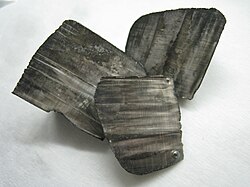
Physically, lithium is a soft metal with a Mohs hardness of 0.6. It has a melting point of 180.50°C and a boiling point of 1344°C. Due to its extreme reactivity, pure lithium quickly develops a thin layer of black nitride tarnish when exposed to air.
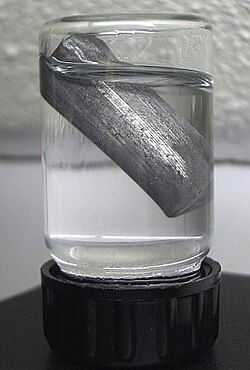
One of its most striking physical characteristics is its buoyancy; lithium is so light that it can float in oil.
Isotopes of Lithium
Lithium occurs naturally as a mixture of two stable isotopes:
- Lithium-7 (7Li): The most abundant, making up between 92.2% and 98.1% of natural lithium.
- Lithium-6 (6Li): Comprising between 1.9% and 7.8% of natural lithium.
Occurrence and Production
Lithium is a primordial element, meaning it has existed since the early stages of the universe. It has been detected in stellar novae, such as Nova Centauri 2013, highlighting its presence beyond Earth.
![Nova Centauri 2013, a stellar nova from which lithium was detected[31]](/images/af/15/af1572ef021a00bc307d158c0c44db65a003a98a97b2156163eb69c4589a4b47.jpg)
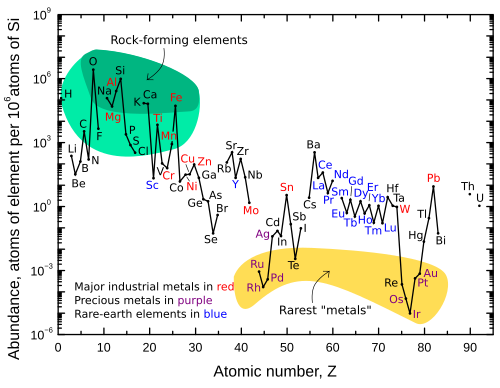
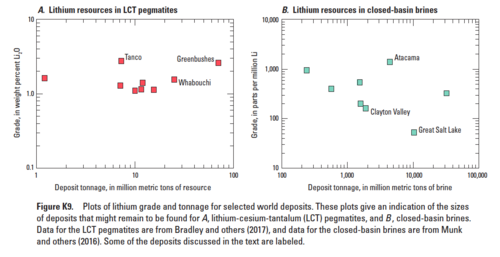
On Earth, lithium is found in the upper continental crust with a frequency similar to that of chlorine on a per-atom basis. It is primarily extracted from two types of sources: brines (salty water found in salt flats) and hard-rock deposits (such as spodumene ore).
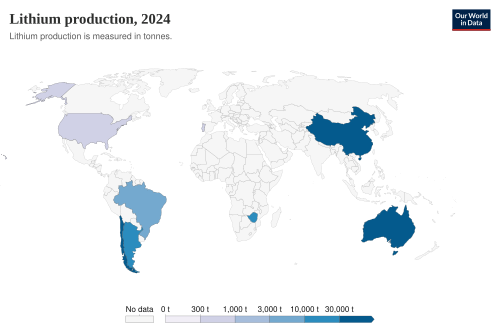
Global Production and Reserves
Production is concentrated in a few key regions, with Australia, Chile, and China leading the global supply. The "Lithium Triangle" in South America holds some of the world's largest brine reserves.
| Country | Production (tonnes) | Reserves (tonnes) | Resources (tonnes) |
|---|---|---|---|
| Australia | 91,700 | 7,000,000 | 8,900,000 |
| Chile | 41,400 | 9,300,000 | 11,000,000 |
| China | 35,700 | 3,000,000 | 6,800,000 |
| Argentina | 8,630 | 4,000,000 | 23,000,000 |
| United States | 870 | 1,800,000 | 14,000,000 |
Applications of Lithium
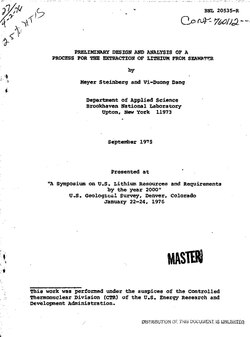
The versatility of lithium allows it to be used across a wide spectrum of industries, from heavy machinery to medicine.
Energy Storage and Batteries
The most dominant use of lithium today is in lithium-ion batteries, which account for 88% of global consumption. These batteries are prized for their high energy density and rechargeability, powering electric vehicles and portable electronics.
Industrial and Aerospace Uses
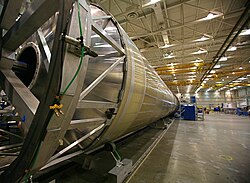
Lithium is alloyed with aluminum to create materials that are both strong and lightweight. A prominent example is the SpaceX Falcon 9 booster, which utilizes an aluminum-lithium alloy to reduce weight without sacrificing structural integrity.
Other industrial applications include:
- Ceramics and Glass: Used to lower melting temperatures and improve strength.
- Lubricating Greases: Lithium-based greases are highly stable and widely used in automotive and industrial machinery.
- Pyrotechnics: Lithium produces a characteristic rose-red flame, making it ideal for flares and fireworks.
![Lithium is used in flares and pyrotechnics is due to its rose-red flame.[182]](/images/fe/1d/fe1d2bca69a940caa2b4a611159dd10dcf64f21472e67abf10f1fcea547aa2de.png)
Military and Nuclear Applications
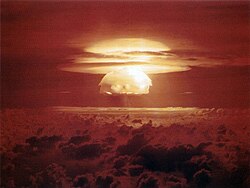
In the military sector, lithium is used as fuel for torpedoes. In nuclear physics, lithium deuteride has been employed as fuel in thermonuclear devices, such as the Castle Bravo nuclear device.

Medicine
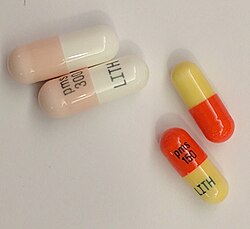
Lithium carbonate is used in psychiatric medicine, primarily as a mood stabilizer for the treatment of bipolar disorder.
Environmental and Safety Considerations
The surge in demand for lithium has led to significant environmental and social challenges. Extraction from brines can deplete local water tables, leading to protests in regions like Serbia and Zimbabwe.

From a safety perspective, lithium is classified as a hazardous material. It is highly flammable and corrosive, as indicated by its NFPA 704 diamond rating, which warns of its reactivity and potential for fire.

Frequently Asked Questions
Who discovered lithium?
Johan August Arfwedson is credited with the discovery of lithium in 1817, though it was first isolated by William Thomas Brande in 1821.
Why is lithium used in batteries?
Lithium is used because it is the lightest metal and has a very high electrochemical potential, allowing batteries to store a large amount of energy in a small, lightweight package.
Is lithium found in nature in its pure form?
No, lithium is too reactive to be found as a pure metal in nature. It is always found in compounds, typically within minerals like spodumene or dissolved in brines.
What are the main environmental concerns regarding lithium mining?
The primary concerns include the massive amount of water required for brine extraction, which can lead to water scarcity for local communities, and the ecological impact of hard-rock mining.
What does lithium look like?
In its pure form, lithium is a soft, silvery-white metal. However, it quickly tarnishes to a black or grey color when exposed to air due to the formation of lithium nitride.