Link Wray: The Architect of the Power Chord and Distortion
Few musicians have left as indelible a mark on the sonic landscape of modern music as Link Wray. An American guitarist, songwriter, and vocalist, Wray didn't just play rock and roll; he fundamentally altered how the electric guitar sounded. By pioneering the use of distortion and tremolo, he provided the raw, aggressive blueprint that would eventually lead to the birth of punk, heavy metal, and hard rock.
From his early days in Virginia to his final years in Denmark, Wray's career was defined by a rebellious spirit and a refusal to conform to the corporate music machine. His influence is recognized globally, with Rolling Stone ranking him as one of the 100 greatest guitarists of all time and the Rock and Roll Hall of Fame inducting him in 2023 for his immense musical influence.
Key Facts
- Claim to Fame: Credited with inventing the power chord and pioneering guitar distortion.
- Signature Hit: The 1958 instrumental "Rumble," which reached the US top 20.
- Hall of Fame: Inducted into the Rock and Roll Hall of Fame in 2023 (Musical Influence category).
- Versatility: Spanned genres including rockabilly, surf, garage rock, swamp rock, and hard rock.
- Resilience: Continued his career despite the removal of a lung due to tuberculosis during the Korean War.
Early Life and Overcoming Adversity
Born Fred Lincoln Wray Jr. on May 2, 1929, Wray spent much of his early adulthood in Portsmouth, Virginia. Between 1942 and 1955, he balanced a grueling schedule, driving cabs by day and performing in nightclubs by night. He formed his first musical groups, The Lucky Wray Band and The Palomino Ranch Gang, alongside his brothers Ray, Doug, and Vernon.
Wray's journey was nearly cut short during his service in the U.S. Army during the Korean War (1950–53). He contracted tuberculosis, leading to a year of hospitalization and the surgical removal of a lung. At the time, doctors predicted he would never be able to sing again, yet Wray persevered to become one of the most influential voices in instrumental rock.
The "Rumble" Era and Musical Innovation
In 1958, Wray released "Rumble" under the name "Link Wray & His Ray Men." The track was a sonic revolution, utilizing distortion (a gritty, overdriven sound) and tremolo (a rapid variation in volume) to create an atmosphere of tension and power. The song was so provocative that it was banned in New York and Boston due to fears it would incite teenage gang violence, as "rumble" was slang for a street fight.
This innovation didn't just create a hit; it laid the groundwork for future genres. Music historians credit "Rumble" with facilitating the emergence of punk and heavy rock, providing the "blueprints" for thrash and heavy metal.
A Career of Independence and Evolution
Wray's relationship with the music industry was often strained. After stints with major labels like Epic and Swan, he grew tired of the corporate structure. In a move of true independence, he converted an old chicken coop on his father's property in Accokeek, Maryland, into a three-track recording studio. It was here that he recorded the 1971 LP Link Wray, an album that expressed his personal frustrations and featured tracks later covered by the Neville Brothers.
Throughout the 1970s, Wray expanded his reach. While living in the San Francisco Bay Area, he collaborated with John Cipollina and performed at legendary venues like Bill Graham's Winterland Ballroom. He also toured and recorded with retro-rockabilly artist Robert Gordon in the late 1970s.
His later years saw a resurgence of interest in his work. He released new albums such as Shadowman (1997) and Barbed Wire (2000), and collaborated with French rocker Alain Bashung in 1994. Even after his death, newly discovered recordings like "Son of Rumble" (recorded in the late 50s) and "Whole Lotta Talking" (1970) were released in 2018, proving the timelessness of his sound.
Personal Life and Legacy
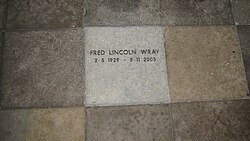
Wray's personal life was as expansive as his discography. He fathered eight children across three marriages before relocating to Denmark in the early 1980s. There, he married Olive Poulsen, who also served as his manager. Wray passed away from heart failure in Copenhagen on November 5, 2005, at the age of 76.
His legacy lives on through the countless guitarists he influenced. Bob Dylan referenced him in the song "Sign Language," and both Dylan and Bruce Springsteen performed "Rumble" in concert as tributes following his death. In 2007, he was posthumously inducted into the Native American Music Hall of Fame.
| Category | Details |
|---|---|
| Active Years | 1955–2005 |
| Primary Instruments | Guitar, Steel Guitar, Bass, Vocals |
| Key Genres | Rock and Roll, Rockabilly, Surf, Garage Rock, Hard Rock |
| Major Achievement | Invention of the power chord; pioneer of distortion |
| Notable Albums | Link Wray (1971), Shadowman (1997), Barbed Wire (2000) |
Frequently Asked Questions
What is Link Wray's most famous song?
His most famous song is the 1958 instrumental "Rumble," which is celebrated for its early use of distortion and was once banned in several U.S. cities for fear of inciting gang violence.
What musical innovation is Link Wray credited with?
Link Wray is widely credited with inventing the power chord and pioneering the use of distortion on the electric guitar, which became foundational elements of rock, punk, and heavy metal.
How did Link Wray's health affect his music?
During the Korean War, Wray contracted tuberculosis and had a lung removed. Despite doctors claiming he would never sing again, he successfully pursued a career as a vocalist and guitarist.
When was Link Wray inducted into the Rock and Roll Hall of Fame?
Link Wray was inducted into the Rock and Roll Hall of Fame in 2023 under the Musical Influence category.
Where did Link Wray spend his final years?
Wray relocated to Copenhagen, Denmark, in the early 1980s, where he lived and worked until his death in 2005.