Linguistic Landscape: How Public Signs Reveal Societal Power and Culture
Walk through any major city, and you will notice that the walls, storefronts, and street signs speak more than just directions. They reveal the history, politics, and social hierarchies of the people who live there. This phenomenon is known as the linguistic landscape—the visibility and salience of languages on public and commercial signs within a specific territory or region.
Linguistic landscape research sits at a fascinating junction of sociolinguistics, sociology, social psychology, geography, and media studies. By analyzing how languages are visually displayed, scholars can determine which languages hold power, which are being marginalized, and how a society organizes itself through public communication.

Key Facts
- Definition: The study of how languages appear on public and commercial signage in a given area.
- Purpose: To identify locally relevant languages and understand the sociopolitical hierarchy of a region.
- Legal Influence: In some regions, such as Quebec or Jerusalem, the languages used on signs are mandated by law.
- Evolution: The field has moved from simple quantitative counting of signs to qualitative, ethnographic analysis.
- Interdisciplinary Nature: It combines elements of geography, media studies, and social psychology.
The Evolution of Linguistic Landscape Studies

While the observation of signs is as old as writing itself, the formal study of linguistic landscapes is a relatively recent academic pursuit. The field has evolved rapidly, though it lacks a single, rigid theoretical core. Its growth is marked by a series of high-profile academic contributions, including special issues in the International Journal of Multilingualism (2006), World Englishes (2012), and the International Journal of the Sociology of Language (2014).
The academic community's commitment to the subject culminated in 2015 with the launch of Linguistic Landscape: An International Journal by John Benjamins, alongside the creation of a comprehensive, searchable bibliography for researchers.
Multilingualism vs. Monolingualism in Public Spaces
Public signs serve as a mirror for local demographics. They indicate which languages are currently relevant or are becoming so. In many multilingual societies, diverse signage is a practical tool for merchants to attract a broader customer base.
However, signage is often a tool of language policy—the official rules governing language use. For example:
- Quebec: Under Bill 101 (Charte de la langue française), signs cannot be exclusively in English; they must include French.
- Jerusalem: Law requires that 50% of a business's sign be in Hebrew.
- Texas: Certain safety warnings, such as those regarding alcohol consumption during pregnancy, are required to be in both English and Spanish.

Analytical Approaches: From Counting to Context
Early research in the field relied heavily on quantitative data—essentially counting how many signs appeared in a certain language. Modern scholars have rejected this "first wave" approach in favor of more nuanced methods:
Geosemiotics
Based on the framework by Scollon and Scollon (2003), geosemiotics analyzes the physical placement and relative size of signs to determine the social importance of the languages used.
Ethnographic Linguistic Landscape Analysis (ELLA)
Developed by Jan Blommaert (2013), ELLA emphasizes ethnography. It views signs not as static data points, but as traces of multimodal communicative practices—meaning they are part of a larger, complex system of social and historical communication.
Integrated Approaches
The most recent research, such as the 2024 work by Feddersen and colleagues, combines both geosemiotics and ELLA. This allows researchers to analyze both the spatial-material aspects (where the sign is) and the ethnographic aspects (who is using it and why).
Global Examples of Linguistic Landscapes
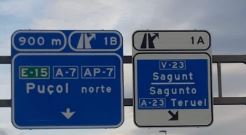
The linguistic landscape often captures the tension between historical legacy and current reality. In some cases, a language appears on a sign to convey an "aura" or historical link rather than for actual communication, such as French signs in certain US restaurants or Louisiana landmarks.
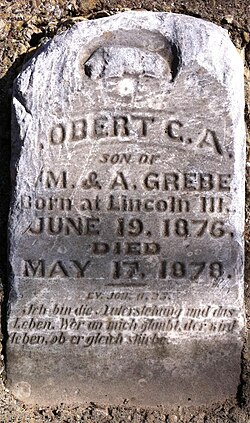
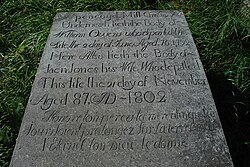
In other cases, signs act as historical markers. A gravestone might feature a language that is no longer spoken in that city, serving as a silent witness to a vanished community.
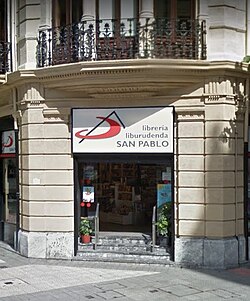
In the Basque Country (Euskadi), the landscape reflects a struggle for revitalization. As of 2009, only about 35% of the population spoke Euskera (a non-Indo-European language isolate). To address this, Decree 179/2019 granted local councils the power to decide how to organize the use of both Basque and Spanish in public relations.
| Location | Languages Present | Context/Purpose |
|---|---|---|
| Seattle, USA | English, Chinese, Vietnamese, Spanish | Public waste management/accessibility |
| Nunavut, Canada | Trilingual, Biscriptal | Official government communication |
| Macau | Chinese, Portuguese | Street naming and colonial history |
| Algeria | Arabic, Berber (Tifinagh), French | Trilingual and triscriptal public signage |
| Yellowknife, Canada | 11 Official Languages | Government-run eye clinic |

Frequently Asked Questions
What exactly is a linguistic landscape?
It is the visibility of languages on public and commercial signs in a specific region, used by researchers to understand the social and political status of those languages.
Why do some signs use languages that locals don't speak?
Some signs are used to create a specific atmosphere (such as a "French aura" in a restaurant) or to maintain a historical link to the past, even if the language is no longer widely spoken in the area.
How does law affect the linguistic landscape?
Governments often pass laws to protect national or regional languages. For example, Quebec requires French on signs, and Jerusalem requires a specific percentage of Hebrew on business signage.
What is the difference between the "first wave" and modern LL research?
The first wave was primarily quantitative, focusing on counting signs. Modern research is qualitative and ethnographic, looking at the size, placement, and social context of the signs.
What is Euskera and why is it significant in linguistic studies?
Euskera is the Basque language, a non-Indo-European language isolate. Its presence on signs in the Basque Country is a key indicator of language revitalization efforts and local political autonomy.