Liberal Democrats
The Liberal Democrats (commonly known as the Lib Dems) are a centrist to centre-left political party in the United Kingdom. Founded on the principles of liberalism and social liberalism, the party advocates for individual liberty, constitutional reform, and a strong relationship with Europe. With a membership of approximately 60,000 as of December 2024, the party continues to play a significant role in British parliamentary democracy.
Key Facts
- Founded: 3 March 1988, through the merger of the Liberal Party and the Social Democratic Party.
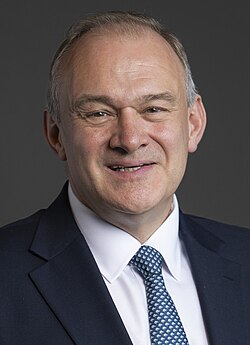
- Current Leader: Ed Davey.
- Core Ideology: Social liberalism and Pro-Europeanism.
- Current Parliamentary Strength: 71 seats in the House of Commons and 74 in the House of Lords.
- International Affiliations: Alliance of Liberals and Democrats for Europe Party and Liberal International.
- Slogan: "For a fair deal".
History and Evolution
Origins and Foundation (1977–1992)
The party emerged from the merger of the Liberal Party and the Social Democratic Party (SDP) in 1988. This unification aimed to create a viable third force in British politics to challenge the dominance of the Conservative and Labour parties.
Growth and Consolidation (1992–2007)
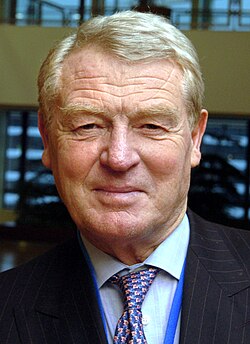
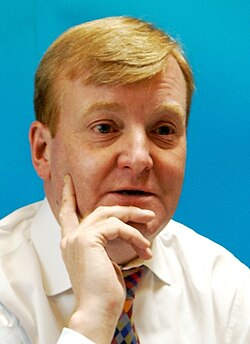
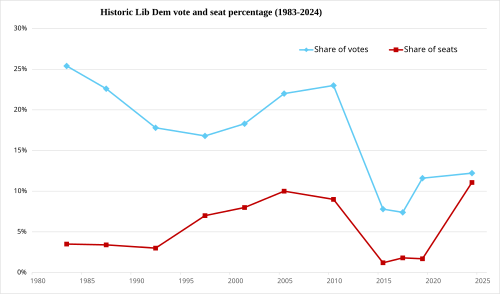
Under the leadership of Paddy Ashdown from 1988 to 1999, the party began to consolidate its position, seeing a significant increase in seats during the 1997 general election. This growth continued under Charles Kennedy, who led the party from 1999 to 2006, reaching a peak of 62 seats in 2005.
The Coalition Years (2007–2015)
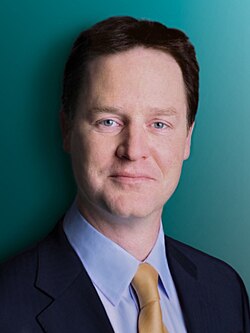
Nick Clegg took over the leadership in 2007. In 2010, the Liberal Democrats entered into a historic coalition government with the Conservative Party, with Clegg serving as Deputy Prime Minister. While this gave the party unprecedented influence, it also led to a significant electoral backlash in the following years.
Brexit and Modern Revival (2015–Present)
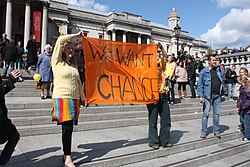
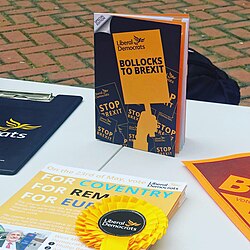
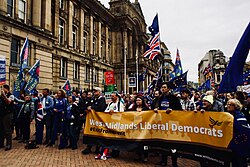
Following the 2015 general election, the party suffered a severe collapse in seats. However, they found a new focal point during the 2016 EU referendum, campaigning vigorously against Brexit with the "Bollocks to Brexit" campaign. After a period of instability, the party has seen a revival under the current leadership of Ed Davey, regaining significant ground in the 2024 general election with 72 seats.
Ideology and Policy Platform
The Liberal Democrats are rooted in social liberalism—a political philosophy that emphasizes the need for government to ensure social justice and equal opportunity while protecting individual freedoms.
Core Pillars
- Constitutional Reform: Advocating for changes to the UK's governing structures to increase accountability and fairness.
- Pro-Europeanism: A steadfast commitment to maintaining close ties with the European Union.
- Human Rights: A strong emphasis on individual liberty and the protection of civil liberties.
- Environmentalism: Integrating sustainable practices into economic and social policy.
Organisation and Structure
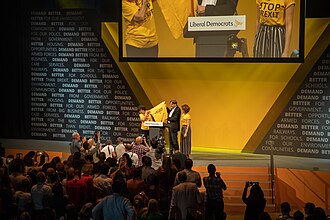
The party is governed by a Federal Board and maintains several specialized wings, including the Young Liberals (youth), Liberal Democrat Women, and LGBT+ Liberal Democrats. It also operates through devolved branches in Scotland, Wales, and Northern Ireland.


Electoral Performance Summary
| Election Year | Leader | Vote Share (%) | Seats Won | Position |
|---|---|---|---|---|
| 1997 | Paddy Ashdown | 16.8% | 46 | 3rd |
| 2005 | Charles Kennedy | 22.0% | 62 | 3rd |
| 2010 | Nick Clegg | 23.0% | 57 | 3rd (Coalition) |
| 2015 | Nick Clegg | 7.9% | 8 | 4th |
| 2024 | Ed Davey | 12.2% | 72 | 3rd |

Frequently Asked Questions
How was the Liberal Democrats party formed?
The party was formed on 3 March 1988 through the merger of the Liberal Party and the Social Democratic Party (SDP).
What is the party's position on the European Union?
The Liberal Democrats are strongly pro-European and campaigned against the UK's departure from the European Union following the 2016 referendum.
Who is the current leader of the party?
The current leader is Ed Davey, who has led the party since 2020.
What are the party's primary colors?
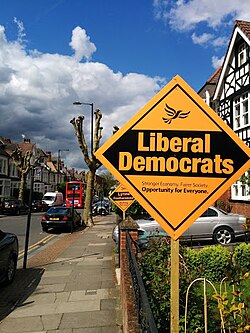
The party has traditionally used yellow, but is transitioning to orange from 2025.
What is the party's current strength in the House of Commons?
As of the most recent data, the party holds 71 seats in the House of Commons.