Levallois Technique: The Sophisticated Art of Paleolithic Stone Knapping
Long before the advent of metalworking, early humans developed complex methods to shape stone into precise tools. Among the most advanced of these is the Levallois technique, a distinctive method of stone knapping that emerged between 250,000 and 400,000 years ago during the Middle Paleolithic period. Named after the Levallois-Perret suburb of Paris where these tools were first identified in the 19th century, this method represents a significant leap in cognitive planning and manual dexterity.
Unlike simpler methods of smashing rocks to create sharp edges, the Levallois technique is a form of lithic reduction—the process of removing flakes from a stone core to create a specific tool. This approach was utilized by Neanderthals across Europe and by early modern humans in regions such as the Levant and North Africa.
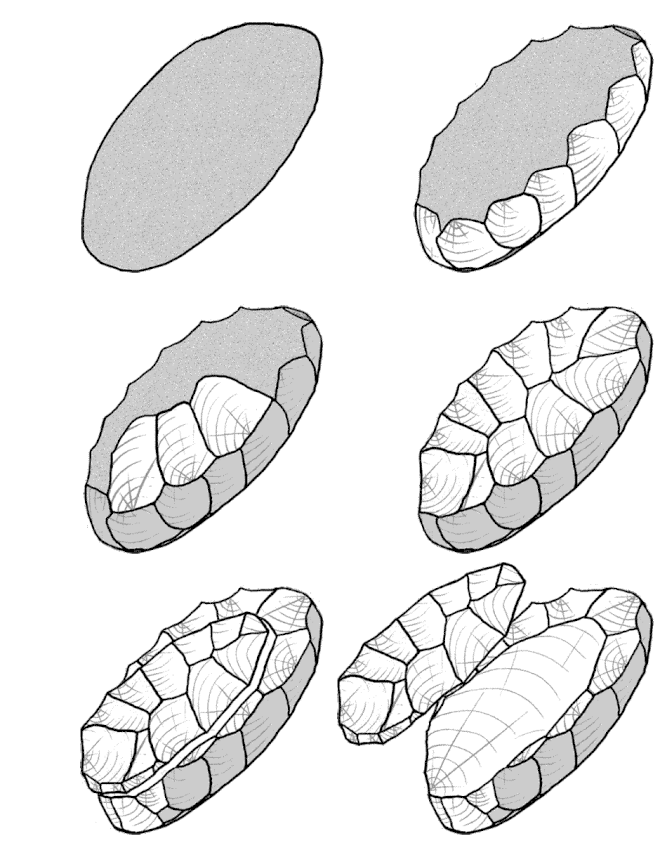
How the Levallois Technique Works
The brilliance of the Levallois technique lies in the preparation of the stone. Rather than simply striking a rock and hoping for a useful shard, the knapper carefully shapes a lithic core to predetermine the size and shape of the final flake.
The Process of Core Preparation
- Platform Formation: The knapper first creates a striking platform at one end of the core.
- Edge Trimming: The edges of the core are trimmed by flaking off small pieces around the outline of the intended tool.
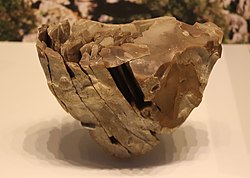
- The Tortoise Core: This trimming creates a domed shape known as a tortoise core, so named because the resulting scars and rounded form resemble a tortoise's shell.
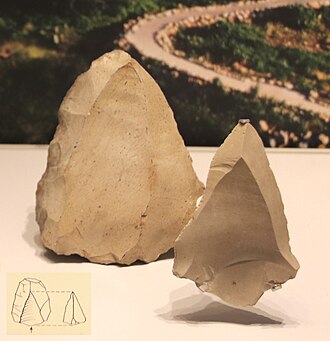
- The Final Strike: Once the core is prepared, a final, precise blow to the striking platform separates a lithic flake with a plano-convex profile.
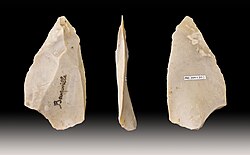
Because of the prior trimming, the resulting flake emerges with sharpened edges, ready to be used immediately as a knife or scraper, or further refined into Levallois points for projectiles.
Key Facts
- Timeframe: Developed approximately 250,000 to 400,000 years ago.
- Users: Employed by Neanderthals (Europe) and anatomically modern humans (Levant, Africa).
- Classification: Considered a Mode 3 technology, which is more advanced than the Lower Paleolithic Acheulean complex.
- Efficiency: Produces the longest cutting edge per weight unit of raw material.
- Cognitive Demand: The counterintuitive nature of the process suggests it may have required language or structured teaching to transmit.
Evolution and Economic Advantage
Archaeologists once believed the Levallois technique indicated a single, wide-ranging culture expanding out of Africa. However, modern evidence suggests that this technology likely evolved independently among different populations. This indicates that various groups of early humans arrived at the same sophisticated solution to maximize their resources.
Research by Lycett and Eren (2013) highlights the economic efficiency of this method. By analyzing Texas Chert nodules, researchers found that the Levallois technique optimizes raw material usage. This efficiency would have granted prehistoric people greater mobility, allowing them to travel further distances without the constant need to find new sources of high-quality stone.
Defining the Levallois Standard
Because some other knapping methods produce similar-looking tools, archaeologists use a strict set of geometric criteria to define true Levallois technology:
- The use of two intersecting planes (the striking platform and the primary reduction surface).
- A hierarchical relationship where the platform supports the removal of the primary flake.
- A pre-determined product morphology based on the convexities of the surface.
- A fracture plane that runs sub-parallel to the intersection of the two surfaces.
- A striking platform adjusted via retouching or faceting to ensure the correct angle of removal.
Global Distribution of Levallois Tools
| Region | Notable Sites/Locations | Key Findings |
|---|---|---|
| Africa | Kenya (Kapthurin Formation), Morocco (Jebel Irhoud), Egypt (Nile terraces) | Some of the earliest examples (400k years ago in Kenya; 315k in Morocco). |
| Asia | India (Attirampakkam), Iran (Zagros region), China (Guanyindong Cave, Shuidonggou), Pakistan (Soan Valley) | Evidence of Mode-3 complexes and early blade production in North-east Asia. |
| Southern Caucasus | Armenia (Nor Geghi) | Coexistence of bifacial and Levallois tools (325k–335k years ago). |
Frequently Asked Questions
Who invented the Levallois technique?
It was not invented by a single group but was used by both Neanderthals in Europe and anatomically modern humans in Africa and the Levant. Evidence suggests it may have evolved independently in different populations.
Why is it called a "tortoise core"?
The term refers to the shape of the stone core after the edges have been trimmed. The resulting rounded, scarred surface looks very similar to the shell of a tortoise.
What makes this technique better than earlier methods?
It provides much greater control over the size and shape of the final tool and is more material-efficient, producing more cutting edge per pound of stone than previous methods.
Did early humans need language to learn this?
Because the process is counterintuitive, some scientists believe language was a prerequisite for teaching it. However, experimental research has shown that the technique can be taught non-verbally with similar effectiveness.
How old are the oldest known Levallois tools?
Some of the earliest examples have been found in Kenya's Kapthurin Formation, dating back approximately 400,000 years.