Leopoldo Marechal: The Visionary Poet and Novelist of Argentina
Leopoldo Marechal (1900–1970) stands as one of the most influential figures in twentieth-century Argentine literature. A polymath of letters, Marechal navigated the boundaries between poetry, prose, and drama, creating a body of work that blended avant-garde experimentation with classical rigor. Though his recognition fluctuated during his lifetime due to the volatile political climate of Argentina, his legacy as a master of the Spanish language remains undisputed.
Key Facts
- Born: June 11, 1900, in Buenos Aires, Argentina.
- Major Work: Adam Buenosayres, often cited as a fundamental novel of Argentine literature.
- Literary Movement: Associated with the Martín Fierro journal and the vanguardist movement of the 1920s.
- Philosophy: Believed all literary genres—epic, dramatic, or lyrical—were essentially forms of poetry.
- International Reach: His seminal novel has been translated into English, French, and Italian.
Early Life and the Vanguardist Era
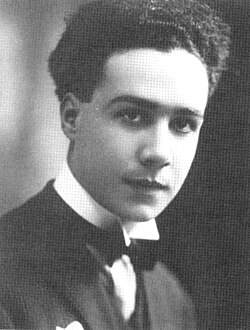
Born into a family of French and Basque descent in Buenos Aires, Marechal overcame significant economic hardships to earn his degree and work as a primary school teacher and high school professor. In the 1920s, he became a central figure among the poets surrounding the literary journal Martín Fierro, a hub for the era's avant-garde (vanguardist) movements.
His early poetic output reflected this experimental spirit. While Los aguiluchos (1922) and Días como flechas (1926) leaned toward the vanguard, his later collection, Odas para el hombre y la mujer, balanced novelty with a classical style. This work earned him the prestigious Premio Municipal de Poesía of Buenos Aires in 1929.
The Parisian Influence and the Birth of a Masterpiece
Marechal's intellectual horizon expanded during two pivotal trips to Europe. In 1926, he encountered giants of modern art and thought, including Pablo Picasso and Antonio Berni. During a second stay in Paris in 1929, he settled in Montparnasse, immersing himself in a circle of artists such as Raquel Forner and the sculptor José Fioravanti.
It was during this second Parisian experience that Marechal began writing the first two chapters of Adam Buenosayres. This novel, though not published until 1948, drew inspiration from his real-life friends in the Martín Fierro group. Notable figures like Jorge Luis Borges and Xul Solar served as the basis for characters such as Luis Pereda and the astrologer Schultze.
Political Turbulence and Literary Reception
Upon returning to Buenos Aires, Marechal's personal life was marked by both achievement and tragedy. He won the Premio Municipal de Poesía again in 1940 for Sonetos a Sophia, but suffered the loss of his wife, María Zoraida Barreiro, in 1947.
When Adam Buenosayres was finally published in 1948, it did not receive the immediate acclaim it deserved. This was largely attributed to Marechal's open support for the government of Juan Domingo Perón. While the novel found a champion in Julio Cortázar, who published a critical study of the work in 1949, other literary peers—including Borges—remained distant due to the political divisions of the Peronist era.
A Legacy Redefined
Despite being widely categorized as a novelist, Marechal viewed himself primarily as a poet. He argued that all literary genres were extensions of poetry, citing Aristotle's Poetics as his foundation. His reputation saw a major resurgence following a 1965 reprint of Adam Buenosayres and the publication of his second novel, El banquete de Severo Arcángelo.
In his later years, Marechal's influence extended to Cuba, where he served on the international jury for the Casa de las Américas prize in 1967. Today, his work continues to be promoted by a foundation established by his daughters, ensuring his influence on Argentine fiction and poetry persists.
Summary of Literary Contributions
| Genre | Notable Titles | Key Dates/Notes |
|---|---|---|
| Novels | Adam Buenosayres, El banquete de Severo Arcángelo, Megafón | 1948, 1965, 1970 |
| Poetry | Odas para el hombre y la mujer, Sonetos a Sophia, Heptamerón | 1929, 1940, 1966 |
| Plays | Antígona Vélez, Don Juan, Alijerandro | 1951, 1978, 2012 (posthumous) |
| Essays | Historia de la calle Corrientes, Cuaderno de navegación | 1937, 1966 |
Frequently Asked Questions
What is the significance of the novel Adam Buenosayres?
It is considered by many critics to be the fundamental novel of Argentine literature, blending autobiographical elements with a complex structure that reflects the intellectual atmosphere of the Martín Fierro group.
How did politics affect Marechal's literary career?
His sympathies for Juan Domingo Perón led to a period of isolation from some of his literary contemporaries, which likely hindered the initial reception and popularity of his major works.
Did Marechal consider himself a novelist or a poet?
Although famous for his novels, Marechal identified first and foremost as a poet. He believed that all literary forms, including the novel and drama, were essentially types of poetry.
In which languages has his work been translated?
His most famous work, Adam Buenosayres, has been translated into French, Italian, and English.
Who were some of the real-life inspirations for his characters?
Characters in Adam Buenosayres were based on his friends, including Jorge Luis Borges (Luis Pereda), Xul Solar (Schultze), and Jacobo Fijman (Samuel Tesler).