Leo I: The Eastern Roman Emperor Who Bridged Antiquity and the Middle Ages
Leo I, often remembered as Leo the Great to distinguish him from his grandson, ruled the Eastern Roman Empire from 457 to 474. Born around 401 in the province of Dacia Aureliana or Thracia, Leo rose through the military ranks to become comes rei militaris before ascending to the throne. His reign was a pivotal era of transition, marked by a shift in imperial administration and a desperate attempt to stabilize the crumbling Western Roman Empire.
Leo is historically significant not only for his political maneuvers but for his cultural legacy. He was the first Eastern Emperor to issue legislation in Koine Greek—the common Greek dialect of the era—rather than the traditional Late Latin, signaling the empire's gradual shift toward a more Greek-centric identity.
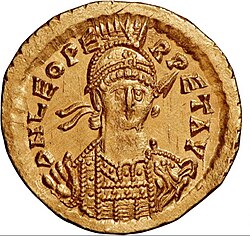
Key Facts
- Reign: February 7, 457 – January 18, 474.
- Origin: Native of Dacia Aureliana/Thracia.
- Religious Legacy: Venerated as a saint in both the Eastern Orthodox and Catholic Churches.
- Political Shift: Transitioned imperial law from Latin to Koine Greek.
- Military Ambition: Launched a massive, though failed, expedition against the Vandals in 468.
The Rise to Power and the Struggle with Aspar
Leo's path to the throne was orchestrated by Aspar, an Alan and commander-in-chief of the army. Aspar intended for Leo to be a puppet ruler, but Leo proved far more independent than anticipated. This tension defined much of Leo's early reign, eventually leading to a violent rupture.
To break Aspar's grip on power, Leo formed a strategic alliance with the Isaurians. This pact was sealed through the marriage of Leo's daughter to the Isaurian leader Tarasicodissa (who would later reign as Emperor Zeno). This alliance provided Leo with the leverage needed to eliminate Aspar and his son, Ardabur, the latter of whom was killed by palace eunuchs in 471 following a plot against the emperor.
A New Tradition: The Christian Coronation
Leo I introduced a profound change to the imperial coronation ritual on February 7, 457. While he followed the traditional Roman ceremony at Hebdomon, he added a distinct Christian element: he deposited his crown at the altar of the Hagia Sophia, only for the Patriarch of Constantinople to place it back on his head.
This act symbolized the transformation of Roman imperial authority into a Medieval Christian framework, creating a precedent for coronation rituals that would be adopted by European courts for centuries to come.
Military Campaigns and Western Ambitions
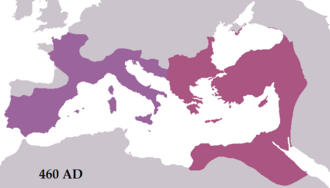
Much of Leo's foreign policy focused on aiding the faltering Western Roman Empire. In 467, he appointed Anthemius as the Western Emperor to strengthen ties and coordination between the two halves of the empire.
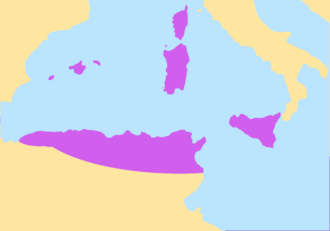
The most ambitious project of his reign was the expedition against the Vandals in 468. This massive operation involved 1,113 ships and 100,000 men. However, due to the poor leadership of Leo's brother-in-law, Basiliscus, the campaign ended in a catastrophic defeat. The financial toll was staggering; estimates of the cost range from 65,000 pounds of gold and 750,000 pounds of silver to as much as 130,000 pounds of gold.
Internal Challenges and Religious Edicts
Domestically, Leo faced raids from the Huns and the Ostrogoths. The latter were led by Theodoric the Great, a young chief who had actually been raised at Leo's court in Constantinople. Despite these threats, the reinforced walls of Constantinople, built under Theodosius II, kept the city secure.
Leo also took a hard line against paganism. In 472, he issued an edict decreeing that high-ranking officers who allowed pagan sacrifices on their land would be demoted and stripped of their possessions, while lower-ranking offenders faced torture and forced labor in the mines.
Family and Succession
Leo was married to Verina, and together they had three children. Their eldest daughter, Ariadne, and younger daughter, Leontia, both played roles in the political marriages of the era. A son born in 463 died only five months after birth. Some historical accounts, such as the Georgian Chronicle, suggest a third daughter, Helena, who married Vakhtang I of Iberia, though this is not universally accepted by historians.
![Probable portrait head of Ariadne on an antique but unrelated bust, Museo della Basilica di S. Giovanni in Laterano[31]](/images/dd/8b/dd8b5adfff48cba92b98225c202fa9d148d0b3f1462db0d24f16e8a804d97251.jpg)
| Category | Details |
|---|---|
| Full Regnal Name | Imperator Caesar Flavius Leo Augustus |
| Dynasty | Leonid |
| Religion | Chalcedonian Christianity |
| Predecessor | Marcian |
| Successor | Leo II |
| Death | January 18, 474 (Dysentery, aged 73) |
Frequently Asked Questions
Why is Leo I called "the Great"?
The epithet "the Great" (Magnus) was likely used to distinguish him from his grandson and co-emperor, Leo II, who was referred to as "the Small" (ho Mikrós).
What was Leo I's most significant administrative change?
Leo I was the first Eastern Roman Emperor to legislate in Koine Greek instead of Late Latin, reflecting the cultural shift of the empire.
How did Leo I deal with the influence of Aspar?
Leo formed an alliance with the Isaurians, marrying his daughter to their leader, which gave him the military and political support necessary to assassinate Aspar and his son.
What happened during the Vandal expedition of 468?
It was a massive military failure involving 100,000 men and over 1,100 ships. Due to poor leadership by Basiliscus, the expedition was defeated, resulting in a massive loss of gold and silver for the empire.
Is Leo I recognized as a saint?
Yes, he is commemorated as a saint in both the Eastern Orthodox and Catholic Churches, with his feast day observed on January 20.