Left-Wing Politics: Ideologies, History, and Evolution
Left-wing politics, often referred to as leftism, encompasses a broad spectrum of political ideologies dedicated to achieving social equality and egalitarianism—the doctrine that all people are equal and deserve equal rights and opportunities. At its core, leftism typically opposes social hierarchies, whether in their entirety or in specific forms, viewing them as unjustified barriers to human flourishing.
Adherents of left-wing thought generally focus on the needs of those perceived as disadvantaged within society. They believe that systemic inequalities must be reduced or abolished, often advocating for radical changes to the fundamental nature of society to ensure a fairer distribution of power and resources.
Key Facts
- Core Goal: The pursuit of social equality and the dismantling of unjustified social hierarchies.
- Historical Origin: The terms "Left" and "Right" became established during the mid-19th century, particularly around the era of the 1848 revolutions.
- Central Theory: Marxism introduced the concept of class struggle, predicting a proletarian revolution to overthrow bourgeois capitalism.
- Diverse Branches: Includes a wide range of ideologies from moderate social democracy and modern liberalism to democratic socialism and anarchism.
- Global Reach: Influenced major historical movements, including the French Revolution, the rise of the Soviet Union, and Indian independence struggles.
The Historical Evolution of the Left
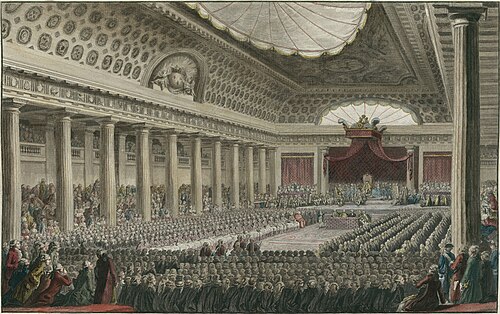
In the mid-19th century, the French Left was characterized by a blend of nationalism, socialism, democracy, and anti-clericalism (opposition to religious authority). Following Napoleon III's coup in 1851 and the start of the Second Empire, Marxism emerged as a powerful rival to utopian socialism and radical republicanism.
The publication of the Communist Manifesto by Karl Marx and Friedrich Engels during the 1848 revolutions asserted that human history is defined by the struggle between classes. They envisioned a future where a proletarian revolution would replace capitalism with a communist society that was stateless, moneyless, and classless.
The Rise of Internationals
The movement sought global coordination through several "Internationals." The International Workingmen's Association (1864–1876), or the First International, attempted to unite diverse views on achieving a classless society. However, ideological rifts occurred, notably between supporters of Marx and Mikhail Bakunin, leading anarchists to form the International Workers' Association (IWA–AIT).
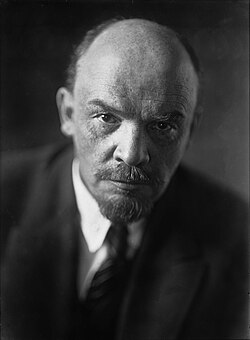
The Second International (1888–1916) eventually fractured over the outbreak of World War I. Figures such as Vladimir Lenin and Rosa Luxemburg, who opposed the war, positioned themselves further to the left of the mainstream movement.
Variations and Modern Interpretations
The definition of "the left" varies significantly by region and era. In the United Kingdom during the 1980s, a distinction emerged between the hard left (supporters of Tony Benn and Trotskyist groups) and the soft left (moderates who accepted Keynesianism—an economic theory advocating for government intervention to manage demand).
Under Tony Blair and Gordon Brown, the Labour Party adopted the "Third Way," rebranding as New Labour. This approach sought to accommodate neoliberalism (a policy model favoring free-market capitalism and deregulation) and move away from traditional social democracy. While subsequent leader Ed Miliband attempted to distance the party from the Third Way, voting records suggest a continuation of the Blair-Brown trajectory until the election of Jeremy Corbyn, who steered the party back toward democratic socialism and an end to austerity measures.
Global Perspectives
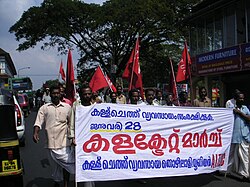
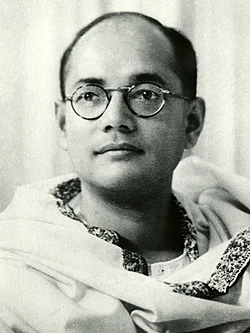
Left-wing politics have manifested differently worldwide. In India, prominent figures like Subhas Chandra Bose integrated left-wing politics into the struggle for national liberation.
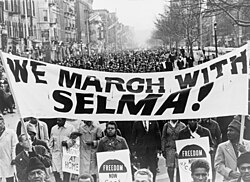
In the United States, the term "liberal" is frequently used to describe the left wing of the Democratic Party, occupying a left-of-center position in the traditional political spectrum.
Intersection with Environment and Society
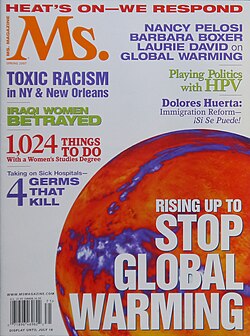
Modern leftism often intersects with environmentalism. Many left-leaning voters and parties, such as the Green parties in Europe, link ecological sustainability with social justice, arguing that environmental degradation disproportionately affects the disadvantaged.
| Orientation | Primary Focus | Economic Approach | View on Hierarchy |
|---|---|---|---|
| Social Democracy | Welfare state & social safety nets | Regulated Capitalism / Keynesianism | Reformist reduction of inequality |
| Democratic Socialism | Social ownership & democratic control | Rejection of Neoliberalism | Structural transformation of society |
| Marxism-Leninism | Vanguard party & state control | Planned Economy / Communism | Overthrow of bourgeois class |
| Anarchism | Absolute individual & collective liberty | Stateless cooperation | Total abolition of all coercive hierarchy |
Frequently Asked Questions
What is the primary goal of left-wing politics?
The primary goal is to achieve social equality and egalitarianism, typically by reducing or eliminating unjustified social hierarchies and supporting disadvantaged groups.
How did the term "left wing" originate?
The term became common in the mid-19th century, specifically during the period of the 1848 revolutions in Europe, to distinguish between different political positions.
What is the difference between the "hard left" and "soft left"?
The "hard left" generally refers to those advocating for radical, fundamental changes to society (such as Trotskyists), while the "soft left" refers to moderates who seek reform within existing systems, often accepting Keynesian economic policies.
What is the "Third Way" in politics?
The Third Way is a centrist political position that attempts to reconcile right-wing economic policies (neoliberalism) with left-wing social goals, as seen in the New Labour era of the UK.
How does Marxism differ from general leftism?
While general leftism is a broad range of ideologies, Marxism is a specific theory asserting that all history is a result of class struggle and predicting that capitalism will inevitably be replaced by a classless, stateless communist society.