Lee Surname: History, Clans, and the Legacy of Korea's Second Most Common Name
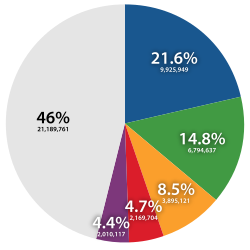
The surname Lee (or Yi) holds a position of immense historical and cultural significance on the Korean peninsula. As the second-most common surname in South Korea, trailing only Kim, it represents a massive portion of the national identity. According to the 2015 South Korean census, approximately 7,306,828 people—or 14.7% of the population—bear this name.
While the name is widely recognized globally, its linguistic roots and the complex web of family lineages known as bon-gwan (ancestral seats) reveal a deep history spanning several dynasties.
Key Facts

- Rank: Second-most common surname in South Korea.
- Population: 14.7% of South Koreans (as of 2015 census).
- Primary Hanja: 李 (meaning "plum").
- Major Clans: Jeonju Yi and Gyeongju Yi are the most prominent.
- Romanization: While "Yi" is the recommended systemic transcription, "Lee" is used by 98.5% of passport holders.
Linguistic Evolution and Romanization
The pronunciation of the name is typically [ iː ] or [ ɾiː ]. Historically, the Hanja character 李 was written as Ni (니) in Korea. However, following the establishment of the initial sound rule (두음 법칙) in 1933, the spelling formally transitioned to I (이).
In North Korea, the McCune–Reischauer romanization system is used, resulting in the spelling Ri (리). This is because modern Korean does not distinguish between the alveolar liquids /l/ and /r/ in the same way other languages might.
When translating the name into the Latin alphabet, there is significant variation. Although the National Institute of the Korean Language recommended Yi in 2001 to avoid the difficulties of one-letter surnames in foreign travel, most South Koreans continue to use Lee. Data from 2007 passport applications showed that 98.5% of individuals used "Lee," while only 1.0% used "Yi." Other historical or personal variations include Rhee, Rieh, and occasionally Ye.
| Hanja | Hangul/Romanization | Meaning |
|---|---|---|
| 李 | 이 / Yi (Lee) | Plum |
| 異 | 이 / Yi | Different |
| 伊 | 이 / Yi | That |
The Clan System: Bon-gwan
In Korean tradition, surnames are organized into patrilineal clans based on their bon-gwan, or ancestral seat. These lineages are generally not related to one another, even if they share the same surname. This system was highly influential during the yangban (aristocratic) era of the Joseon Dynasty and remains a vital part of Korean genealogy today. There are approximately 241 recognized clans for the Yi surname.
The Jeonju Yi Clan
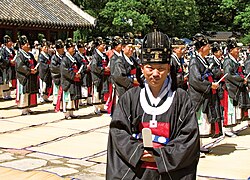
The Jeonju Yi clan is perhaps the most historically significant. Its founder, Yi Han, was a native of Baekje who became a high-ranking official in the Silla Kingdom. His 22nd-generation descendant, Yi Seong-gye, founded the Joseon Dynasty, which ruled Korea for 518 years (1392–1910).
The House of Yi was responsible for establishing many of the cultural, scientific, and linguistic foundations of modern Korea, including the entrenchment of Confucian ideals. While many families claim descent from this royal lineage, few can prove it. Notable figures include South Korea's first president, Syngman Rhee, who claimed descent from this line.

The Gyeongju Yi Clan
The Gyeongju Yi clan traces its origins to Yi Al-pyeong, a village headman who assisted in choosing the first King of Silla. According to the Samguk Sagi, the Yi name was officially bestowed upon the family by King Yuri around 9 CE. As of the 2000 census, this clan numbered over 1.4 million individuals.
Notable Yi Clans and Their Legacies
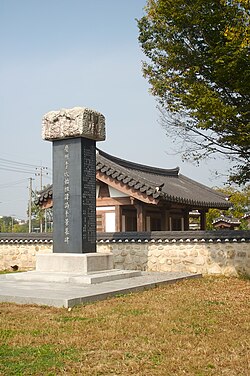
Beyond the two largest clans, several other lineages have produced influential figures in Korean history:
- Deoksu Clan: A prominent yangban clan that produced the legendary Admiral Yi Sun-sin and the philosopher Yi I. Both are so significant they are depicted on South Korean currency.
- Jinwi Clan: Known for serving as royal advisers and teachers during the Goryeo Dynasty, this clan produced six queens during the Joseon period.
- Jinbo Clan: Home to the famous scholar Yi Hwang, a founder of the Yeongnam School and one of the 18 Sages of Korea.
- Seongju Clan: A lineage that produced significant civil examination qualifiers; as of 2000, over 186,000 members lived in South Korea.
- Hansan Clan: Produced notable scholars like Yi Saek and independence activist Yi Sang-jae.
- Pyeongchang Clan: A yangban clan that included Yi Seung-hun, the first person to bring Catholicism to Korea.
- Hongju Clan: Produced many influential figures during the late Goryeo and early Joseon periods.
- Yeonan Clan: An aristocratic clan that produced several Chief State Councillors and Chief Scholars.
Frequently Asked Questions
Why do some people spell the name Lee while others use Yi?
While "Yi" is the recommended systemic transcription by the National Institute of the Korean Language, "Lee" is the most common spelling used in passports. This is largely due to the strict requirements for changing names on official documents.
What is a bon-gwan?
A bon-gwan is an ancestral seat that defines a specific patrilineal clan. Even if two people have the same surname, they may belong to different clans if their bon-gwan are different.
Is there a difference between the South Korean and North Korean spelling?
Yes. In South Korea, the name is typically written as I (이) due to the initial sound rule, whereas in North Korea, it is romanized as Ri (리).
Who founded the Joseon Dynasty?
The Joseon Dynasty was founded by Yi Seong-gye, a descendant of the Jeonju Yi clan.
Are all people with the surname Lee related?
No. Because the surname is divided into hundreds of different clans (such as Jeonju, Gyeongju, and Deoksu) based on different ancestral seats, most people with the surname Lee are not biologically related to one another.