Lebanese International University
The Lebanese International University (LIU) is a private institution dedicated to providing affordable, quality education. Established in 2001 by philanthropist and former Lebanese Minister of Defense and Education, Abdul Rahim Mourad, the university operates with English as its primary language of instruction.
Key Facts
- Founded: April 2001
- Founder: Abdul Rahim Mourad
- Instruction Language: English
- Primary Hubs: Beqaa Valley and Beirut, Lebanon
- Global Presence: Campuses in Yemen, Mauritania, and Senegal
- Academic Structure: Five specialized schools/faculties
History and Evolution
The institution began its journey in April 2001 as "The Bekaa University," established under Presidential Decree No. 5294. Its first campus was constructed in Al-Khyara, located in the western region of the Beqaa Valley. Following the graduation of its first freshman class in June 2002, the university expanded to Beirut and officially rebranded as the Lebanese International University (LIU).
Growth continued rapidly with the addition of five more campuses in Lebanon: Tripoli, Halba, Nabatieh, Tyr, and Sidon. Beyond national borders, LIU expanded its footprint internationally, establishing facilities in Sanaa, Aden, and Taiz in Yemen, as well as campuses in Senegal and Mauritania. The university also opened branches in Egypt, Syria, Saudi Arabia, and the United Arab Emirates.
Campus Infrastructure
LIU operates nine campuses across Lebanon: Bekaa, Beirut, Saida, Nabatieh, Mount Lebanon, Tripoli, Tyre, Rayak, and Halba-Akkar. The Bekaa Campus serves as the "mother" campus and features extensive facilities, including a cafeteria with over 500 seats, student dormitories, a football stadium, a swimming pool, and various green spaces.
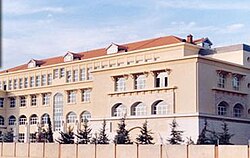
The Beirut Campus
Located in the residential area of Mouseitbeh in west Beirut, the Beirut campus consists of seven buildings (Blocks A through G). Block A houses the campus manager's office on the fifth floor, while Block B contains the registration, business, and student affairs offices, along with two auditoriums and underground parking. Block C is the largest building, featuring Mass Communication offices and a specialized studio on the ninth floor. To accommodate growing enrollment, Blocks D, E, and G were planned starting in the 2011-2012 academic year, alongside dedicated dormitories for transferring students.
Regional Campuses
The Saida Campus is the second largest by enrollment. In the Tyre region, the Tyre Campus is the first university to offer a diverse selection of over 40 degree programs. The newest additions to the network are the Rayak and Halba-Akkar campuses.
Academic Organization
The university is organized into five primary faculties, each offering a range of undergraduate and graduate programs.
| Faculty | Key Areas of Study |
|---|---|
| School of Arts and Sciences | Physical/Biological Sciences, Computer Science, Fine Arts, Communication Arts |
| School of Engineering | Electronic, Computer, Electrical, Mechanical, Surveying, and Industrial Engineering |
| School of Business and Management | Accounting, Economics, Banking & Finance, Hospitality, International Business |
| School of Pharmacy | Pharmacy and Doctor of Pharmacy |
| School of Education | Teacher Education, TEFL, Curriculum Design, Educational Management |
School of Education Details
The School of Education provides three main pathways: a Bachelor's of Education (3-year program, 99 credit hours), a Teaching Diploma (1-year program, 24 credit hours), and a Master's of Education (2-year program, 39 credit hours). Admission requires the Lebanese Baccalaureate II or equivalent, and candidates must pass an English Placement Exam or provide a TOEFL score.
Students in this school can engage in the Book/Debate Club and participate in professional development events, such as the International Arab Conference on Quality Assurance in Higher Education (IACQA' 2018) and various STEM and autism spectrum disorder workshops.
Student Life and Branding
Student expression is fostered through The Scope, a student-run magazine. In June 2017, the university underwent a branding change, renaming itself the International University of Beirut in most locations, while retaining the name Lebanese International University (LIU) for the Khiara and Rayak campuses in the Bekaa region.
Frequently Asked Questions
Who founded the Lebanese International University?
The university was founded in 2001 by Abdul Rahim Mourad, a philanthropist and former Lebanese minister of defense and education.
What are the admission requirements for the School of Education?
Applicants must hold a Lebanese Baccalaureate II (any strand) or its equivalent and must demonstrate English proficiency via the International TOEFL or an English Placement Exam.
Does LIU have campuses outside of Lebanon?
Yes, LIU has an international presence with campuses in Yemen (Sanaa, Aden, and Taiz), Mauritania, and Senegal, as well as branches in Saudi Arabia, the UAE, Egypt, and Syria.
What is the difference between LIU and the International University of Beirut?
In June 2017, the institution changed its name to the International University of Beirut for most of its locations, except for the Bekaa campuses (Khiara and Rayak), which continue to operate as LIU.
What degrees are offered by the School of Pharmacy?
The School of Pharmacy offers undergraduate degrees in Pharmacy and a graduate Doctor of Pharmacy program.