Le Roman de Troie: The Medieval Epic that Shaped Western Literature
Written between 1155 and 1160, Le Roman de Troie (The Romance of Troy) is a monumental 30,000-line epic poem by Benoît de Sainte-Maure. This medieval retelling of the Trojan War did more than simply recount ancient battles; it sparked an entire literary movement and influenced some of the greatest writers in history, from Geoffrey Chaucer to William Shakespeare.
The work served as a catalyst for the roman antique, a genre of ancient-themed romances. These stories were later loosely organized by the poet Jean Bodel under the umbrella of the "Matter of Rome," while the specific focus on the Trojan conflict became known as the "Matter of Troy."
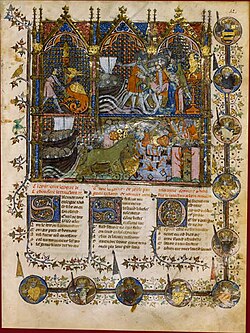
Key Facts
- Author: Benoît de Sainte-Maure.
- Composition Date: Approximately 1155–1160.
- Length: 30,000 lines.
- Primary Influence: Inspired the "Matter of Troy" and the "Matter of Rome."
- Key Innovation: Introduced the romantic tragedy of Troilus and Briseida.
- Dedication: Likely dedicated to Eleanor of Aquitaine.
Literary Sources and Global Reach
Benoît de Sainte-Maure did not write in a vacuum. He relied on Latin recensions (versions of a text) from Dictys and Dares. He also incorporated material from a nearly lost Latin recension, which survives today only as a fragmentary manuscript known as the Rawlinson Excidium Troie, housed in the Bodleian Library at the University of Oxford.
The impact of Le Roman de Troie extended far beyond France. In the East, it was translated into Greek as The War of Troy (Ο Πόλεμος της Τρωάδος), becoming the longest medieval Greek romance. In the West, it stands as one of the most influential works on the Trojan subject, rivaled only by Guido delle Colonne's Historia destructionis Troiae.
The "Mirror for Princes" and Courtly Love
The poem was written for an aristocratic audience. For these nobles, the narrative functioned as a mirror for princes—a form of didactic (instructive) literature designed to provide moral and political guidance to rulers.
To align the ancient story with the medieval ideals of courtly love (a stylized code of chivalrous love), Benoît invented a poignant subplot. He introduced the romance between the Trojan prince Troilus and Briseida, the daughter of the defector Calchas. This narrative arc—where Briseida is handed over to the Greeks during a hostage exchange and subsequently wooed by the warrior Diomedes—created a love triangle that fascinated later authors.
This character evolved through various literary iterations: she appeared as Criseida in Boccaccio's Il Filostrato, Criseyde in Chaucer, Cresseid in Robert Henryson's The Testament of Cresseid, and finally as Cressida in Shakespeare's Troilus and Cressida.
Dating the Work via Dedication
The poem contains a dedication to a "riche dame de riche rei" (rich lady of a rich king), which is interpolated deep within the narrative. Historians generally believe this refers to Eleanor of Aquitaine, the consort of Henry II. Because the dedication exists, scholars can date the poem to the years preceding Eleanor's imprisonment by Henry in 1173.
| Author/Work | Character Name |
|---|---|
| Benoît de Sainte-Maure (Le Roman de Troie) | Briseida |
| Boccaccio (Il Filostrato) | Criseida |
| Geoffrey Chaucer | Criseyde |
| Robert Henryson (The Testament of Cresseid) | Cresseid |
| William Shakespeare (Troilus and Cressida) | Cressida |
Frequently Asked Questions
What is the "Matter of Troy"?
The Matter of Troy refers to the body of medieval literature centered on the subject of the Trojan War, a movement largely propelled by Benoît de Sainte-Maure's epic poem.
Who was the intended audience for Le Roman de Troie?
The poem was written for aristocrats, serving as a "mirror for princes" to provide moral instruction through the lens of heroic narrative.
How did Benoît de Sainte-Maure change the original Trojan story?
He introduced the story of Troilus and Briseida to incorporate the medieval principles of courtly love, creating a romantic tragedy that was not present in his primary sources.
Which historical figure is the poem likely dedicated to?
The poem is generally believed to be dedicated to Eleanor of Aquitaine, the consort of Henry II, which helps historians date the work to before 1173.
What sources did the author use to write the poem?
Benoît used Latin recensions of Dictys and Dares, as well as fragments from the Rawlinson Excidium Troie manuscript found at the University of Oxford.