Lauterbrunnen History: From Roman Roots to Global Tourism
Nestled in the heart of the Swiss Alps, the Lauterbrunnen Valley is world-renowned for its dramatic cliffs and cascading waterfalls. While today it is a sanctuary for travelers, its history is a complex tapestry of monastic power, resilient settlers, industrial struggle, and a transformative shift toward global tourism.
Early Settlements and Monastic Influence
The earliest evidence of human presence in the region is modest, consisting of a single Roman coin discovered in the Blumental. However, the valley entered the written historical record during the 13th century under the ownership of the Freiherr of Wädenswil. In 1240, the Sefinen Valley was sold to the Interlaken Monastery, marking the beginning of a century-long expansion of power by the monastery and other local lords.
Around 1300, the Lord of Turn began settling Walser—a group of German-speaking people known for their ability to inhabit high-altitude regions—into the Lötschen Valley and the highlands of Lauterbrunnen. By 1346, several Walser villages, including Lauterbrunnen, Gimmelwald, Mürren, Sichellauenen, and Trachsellauenen, had established their own village governments, granting them a degree of independence from the monastery.
This independence was short-lived. In 1349, a rebellion across the Bernese Oberland against the monastery failed. When the monastery suppressed the uprising, the Walser villages suffered the most severe repercussions.
Religious Shifts and Social Hardship
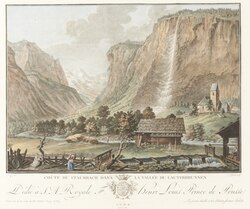
By the 15th century, the valley's villages were integrated into the parish of Gsteig bei Interlaken. The community grew its own spiritual infrastructure, building a filial church between 1487 and 1488, and appointing a full-time priest by 1506.
The 16th century brought ideological conflict. In 1528, the city of Bern adopted the Protestant Reformation—a religious movement seeking to reform the Catholic Church—and attempted to impose it on the Bernese Oberland. Lauterbrunnen joined a failed rebellion against this new faith. Following the victory of Bern, the monastery was secularized, its lands were annexed, and Lauterbrunnen became the center of a new Reformed parish.
Mining and Emigration
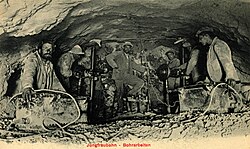
Industrial efforts began in the late 16th century with the establishment of mines in the Trachsellauenen area of the upper valley. To process the iron ore, an iron smelter was constructed in Zweilütschinen in 1715. Despite the industrial activity, the wealth generated by the mines flowed primarily to noble landowners.
The resulting poverty in the 17th and 18th centuries was so severe that many villagers were forced to leave their homes, either joining mercenary regiments or emigrating. A significant number of these emigrants settled in the Carolinas in the United States.
The Rise of Alpine Tourism
The late 18th century marked a turning point as foreign mountain climbers began using Lauterbrunnen as a base for Alpine expeditions. Initially, these visitors stayed in the village rectory, but the growing popularity of the region necessitated more formal infrastructure.
Accessibility improved dramatically with the completion of a road from Interlaken in 1834 and the arrival of the Bernese Oberland Railway in 1890. This sparked a hotel boom and the development of cable cars to Mürren (1891) and Wengen (1893).
The pinnacle of this engineering era was the 1912 completion of the Jungfrau railway. This rack railway travels 9 km from Kleine Scheidegg to the Jungfraujoch, the highest railway station in Europe. Much of the line is carved through tunnels in the Eiger and Mönch mountains, featuring specialized windows for passengers to view the peaks from inside the mountain.
Winter Sports and Modernization
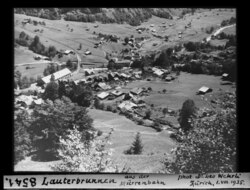
In 1909, English brothers Walter and Arnold Lunn introduced skiing, curling, and bobsledding to the area. This innovation transformed Lauterbrunnen from a summer destination into a year-round resort. While the economy suffered during the Great Depression and both World Wars, tourism rebounded strongly after 1945, leading to the construction of modern chalets, ski lifts, and a heliport.
Administrative Changes and Modern Challenges
The municipality evolved administratively over the last few decades. On January 1, 1973, Isenfluh merged into the municipality of Lauterbrunnen. Later, on January 1, 2010, the area joined the newly created Verwaltungskreis Interlaken-Oberhasli following the dissolution of the Amtsbezirk Interlaken.
Today, the village faces the challenges of its own success. In May 2024, local authorities began exploring solutions for over-tourism. Inspired by Venice, the village is considering a 5 to 10 Swiss franc entry fee for day trippers arriving by car, though those using public transport or staying overnight would be exempt.
Key Facts
- Earliest Evidence: A single Roman coin found in the Blumental.
- Walser Settlement: High-altitude settlers established independent village governments by 1346.
- Industrial Peak: Iron mining in Trachsellauenen and smelting in Zweilütschinen (est. 1715).
- Engineering Marvel: The Jungfrau railway (1912) reaches the highest station in Europe at Jungfraujoch.
- Winter Sports: Popularized in 1909 by Walter and Arnold Lunn.
- Current Policy: Exploring a 5–10 CHF entry fee for day-trip motorists to combat over-tourism.
| Period/Year | Event | Significance |
|---|---|---|
| 13th Century | Ownership by Freiherr of Wädenswil | First appearance in historic records |
| 1346 | Walser village governments formed | Increased local independence |
| 1528 | Protestant Reformation | Shift to Reformed parish after Bernese annexation |
| 1715 | Zweilütschinen smelter built | Processing of Trachsellauenen iron ore |
| 1834 | Interlaken road completed | Beginning of increased tourist accessibility |
| 1912 | Jungfrau railway opens | Access to Europe's highest railway station |
| 1973 | Isenfluh merger | Expansion of the municipality |
Frequently Asked Questions
Who were the Walser people in Lauterbrunnen?
The Walser were German-speaking settlers who moved into the highlands of the Lauterbrunnen and Lötschen valleys around 1300, eventually establishing independent village governments by 1346.
What is the significance of the Jungfrau railway?
Completed in 1912, it is a 9 km rack railway that runs mostly through tunnels in the Eiger and Mönch mountains to reach the Jungfraujoch, the highest railway station in Europe.
Why did many villagers emigrate in the 17th and 18th centuries?
Widespread poverty, caused by the fact that mining profits went to noble landowners rather than the workers, led many to join mercenary regiments or emigrate to the Carolinas in the United States.
How did winter sports change the local economy?
Introduced by Walter and Arnold Lunn in 1909, sports like skiing and bobsledding attracted winter tourists, turning a seasonal summer industry into a year-round business.
What is the proposed solution for over-tourism in 2024?
The local authority is exploring the introduction of a 5 to 10 Swiss franc entry fee for day visitors arriving by car, while excluding those using public transport or staying in local accommodations.