Larvae: The Diverse Juvenile Stages of Animal Development
In the natural world, not every animal begins its life looking like a miniature version of its adult self. Many species undergo indirect development, a biological process where they pass through a distinct juvenile form known as a larva (plural: larvae) before transforming into their final adult stage through metamorphosis.
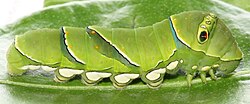
Larvae are often radically different from the adults they will become. They frequently possess unique organs, different physical structures, and entirely different dietary needs. For instance, a caterpillar looks and eats nothing like the butterfly it eventually becomes. In some primitive arachnids, the larval stage is distinguished by having only three pairs of legs, whereas the adult possesses four.
The Biological Purpose of the Larval Stage
The larval phase is not merely a growth period; it is often a strategic adaptation for survival. By occupying different environments than adults, larvae can avoid competing with their own parents for food and shelter. A classic example is the tadpole, which lives exclusively in aquatic environments, while the adult frog can thrive on land.
For many species, the larval stage is critical for dispersal—the movement of a species to new geographic areas. In organisms like barnacles and polychaetes, the adults are immobile, but their larvae are mobile. These dispersing larvae are categorized into two types:
- Planktotrophic: Larvae that feed as they drift.
- Lecithotrophic: Non-feeding larvae that rely on internal yolk reserves.
In social insect colonies, such as those of certain wasps and bees (Hymenoptera), larvae are entirely dependent on adults for nutrition. In the paper wasp Ropalidia marginata, female workers are the primary providers, though males can feed larvae, albeit less efficiently.
Special Cases in Larval Development
While most larvae eventually metamorphose, some exhibit neoteny. This occurs when an organism reaches sexual maturity while still retaining its larval characteristics, effectively bypassing the adult form. This phenomenon is observed in certain species of newts.
It is a common misconception that larval forms always mirror a group's ancient evolutionary history. While this can happen, larval stages often evolve secondarily. In insects, for example, the larval form may differ more significantly from the group's common ancestors than the adult form does.
Classification of Insect Larvae
Among insects, only the Endopterygotes undergo complete metamorphosis with a distinct larval stage. Based on the classification by Antonio Berlese (1913), these larvae are divided into four primary types:
Apodous Larvae
These larvae lack legs and have poor sclerotization (the hardening of the exoskeleton). They are further divided into three forms: eucephalous (well-defined head capsule), hemicephalus (reduced head capsule retractable into the thorax), and acephalus (no head capsule).
Protopod Larvae
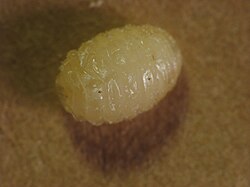
These often take unusual forms and hatch from eggs with very little yolk. An example includes the first instar larvae of parasitic hymenoptera.
Polypod Larvae
Also known as eruciform larvae, these possess both thoracic legs and abdominal prolegs. They are typically inactive and remain in close contact with their food source, such as lepidopteran caterpillars.
Oligopod Larvae
These larvae have six legs, no abdominal prolegs, and mouthparts similar to adults, though they lack compound eyes. They are split into two categories:
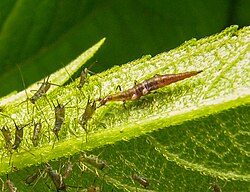
- Campodeiform: Flattened, long-legged predators with forward-facing mouthparts (e.g., lacewings).
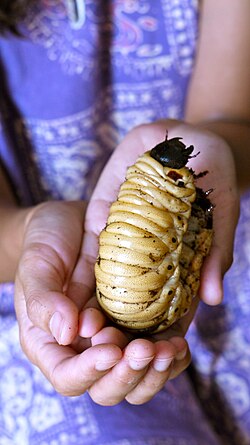
- Scarabeiform: Short-legged, inactive burrowers with a flat thorax and abdomen (e.g., scarab beetles).
Key Facts
- Indirect Development: The process of passing through a larval stage before reaching adulthood.
- Environmental Separation: Larvae often live in different habitats than adults to reduce competition and predation.
- Dispersal: Mobile larvae allow immobile adult species (like barnacles) to spread to new locations.
- Neoteny: A condition where an animal reaches maturity without leaving the larval form.
- Endopterygotes: The group of insects that exhibit complete metamorphosis.
Larval Types Across the Animal Kingdom
Larval forms vary wildly across different phyla, from the simple blastula of sponges to the complex caterpillars of butterflies.
| Animal Group | Larval Name(s) |
|---|---|
| Insects (Lepidoptera) | Caterpillar |
| Insects (Diptera/Hymenoptera) | Maggot |
| Insects (Coleoptera) | Grub |
| Amphibians | Tadpole, Polliwog |
| Molluscs | Trochophore, Veliger, Glochidium |
| Crustaceans | Nauplius, Zoea, Cypris |
| Echinoderms | Bipinnaria, Pluteus, Auricularia |
| Cnidarians | Planula, Actinula |
Frequently Asked Questions
What is the difference between a larva and a nymph?
Larvae are juvenile forms found in animals with indirect development (complete metamorphosis), looking very different from adults. Nymphs are immature forms of hemimetabolous insects, which generally resemble a smaller, wingless version of the adult.
Do all larvae feed themselves?
No. While many are planktotrophic (feeding), some are lecithotrophic (non-feeding, relying on yolk). Additionally, some larvae in eusocial colonies are fed exclusively by adult workers.
What is neoteny?
Neoteny is a biological phenomenon where an organism retains its larval traits into adulthood and becomes sexually mature without undergoing a full metamorphosis into the typical adult form.
Why do some animals have a larval stage?
Larval stages allow species to exploit different food sources and environments than adults, reducing competition. They also facilitate the dispersal of species that are immobile as adults.
What are the main types of insect larvae?
Insect larvae are generally classified as Apodous (no legs), Protopod (unusual forms), Polypod (with prolegs), or Oligopod (six legs, no prolegs).