Landscapes of Dauria: A Transboundary World Heritage Site
The Landscapes of Dauria represent a unique ecological bridge between Russia and Mongolia. This World Heritage Site is a critical component of the Daurian forest steppe ecoregion—a vast natural area that also extends into northeastern China. As part of the Dauria International Protected Area, this region preserves a delicate balance of grasslands, forests, and wetlands, including the vital Torey Lakes.
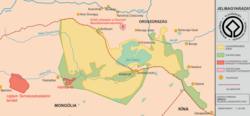
Key Facts
- Location: Shared between Russia and Mongolia.
- Ecoregion: Part of the Daurian forest steppe, which also reaches northeastern China.
- Status: Recognized as a World Heritage Site.
- Key Features: Includes the Torey Lakes and various biosphere reserves.
- Wildlife Focus: Significant habitat for the Mongolian gazelle (known as Dzeren in Russia).
Component Sites and Protected Areas
The Landscapes of Dauria are managed through several distinct protected areas across two nations, ensuring the preservation of biodiversity and the migration patterns of local wildlife.
Russian Protected Areas
In Russia, the site is primarily anchored by the Daursky State Nature Biosphere Reserve (SNBR). This includes a specific forest steppe section covering 300 hectares (740 acres) with a surrounding buffer zone of 3,958 hectares (9,780 acres). Additionally, the combined area of the Daursky SNBR and the Valley of Dzeren Nature Refuge covers 278,723 hectares (688,740 acres), supported by a buffer zone of 124,930 hectares (308,700 acres). The Valley of Dzeren is named after the Dzeren, the Russian term for the Mongolian gazelle.
Mongolian Protected Areas
Mongolia contributes significant territory to the site, most notably through the Mongol Daguur Biosphere Reserve (also known as the Mongol Daguur Specially Protected Nature Area or SPNA). This massive area spans 580,080 hectares (1,433,400 acres) with a buffer zone of 178,429 hectares (440,910 acres). Other critical Mongolian components include the Chuh-Nuur Lake cluster, covering 7,361 hectares (18,190 acres), and the Ugtam Nature refuge, which encompasses 46,160 hectares (114,100 acres).
Site Summary Table
| Site Name | Country | Core Area (ha) | Buffer Zone (ha) |
|---|---|---|---|
| Daursky SNBR (Forest Steppe) | Russia | 300 | 3,958 |
| Daursky SNBR & Valley of Dzeren | Russia | 278,723 | 124,930 |
| Mongol Daguur Biosphere Reserve | Mongolia | 580,080 | 178,429 |
| Chuh-Nuur Lake cluster | Mongolia | 7,361 | N/A |
| Ugtam Nature refuge | Mongolia | 46,160 | N/A |
Frequently Asked Questions
Which countries share the Landscapes of Dauria World Heritage Site?
The site is shared between Russia and Mongolia, though the broader Daurian forest steppe ecoregion also extends into northeastern China.
What is the Daurian forest steppe?
The Daurian forest steppe is the specific ecoregion that characterizes this landscape, blending elements of both forest and steppe environments.
What is a "Dzeren"?
Dzeren is the Russian name for the Mongolian gazelle, a key species protected within the Valley of Dzeren Nature Refuge.
Which is the largest component site in the region?
The Mongol Daguur Biosphere Reserve in Mongolia is the largest component, covering 580,080 hectares of core area.
Are there any significant water bodies in the site?
Yes, the site includes the Torey Lakes and the Chuh-Nuur Lake cluster in Mongolia.