Land Settlement Association: The UK's Interwar Rural Resettlement Scheme
During the economic hardships of the 1930s, the United Kingdom faced significant unemployment in its industrial heartlands. In response, the Land Settlement Association (LSA) was established in 1934. This government-led initiative aimed to revitalize the lives of unemployed workers from depressed industrial regions, specifically targeting those in Wales and North-East England, by transitioning them from urban decay to rural productivity.
The scheme was not a solo effort; it was launched with the critical support of two charitable organizations: the Plunkett Foundation and the Carnegie Trust. Together, they created a system that provided not just employment, but a complete lifestyle change for thousands of families.
The Structure of LSA Settlements
The LSA operated by establishing rural communities where successful applicants were provided with the essential tools for a new life. Each family typically received a small-holding—a small piece of land used for farming—of approximately 5 acres (0.020 km). Along with the land, the Association provided livestock and a newly constructed cottage to house the family.
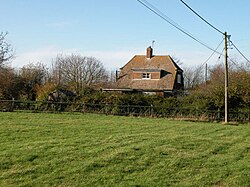
To ensure the viability of these farms, the LSA implemented a cooperative model. These communities functioned as cooperative market gardens, meaning that agricultural production was managed collectively. To maintain quality and efficiency, all materials were purchased and all produce was sold exclusively through the Association.
Selection and Training
Entry into the scheme was not automatic. Applicants underwent a rigorous vetting process to ensure they were suited for rural life. Once accepted, they were required to undergo agricultural training before being assigned their property, ensuring that the transition from industrial work to farming was sustainable.
Cottage Homesteads
Starting in 1937, the LSA introduced a variation known as "Cottage Homesteads." These were smaller plots of about half an acre designed for unemployed men. This specific arrangement allowed participants to maintain their claims for assistance while they worked the land.
Key Facts
- Established: 1934 by the UK Government, Plunkett Foundation, and Carnegie Trust.
- Scale: 1,100 small-holdings created across 20 settlements between 1934 and 1939.
- Land Allocation: Standard small-holdings were roughly 5 acres.
- Economic Impact: By 1983, the scheme produced approximately 40% of English home-grown salad crops.
- Closure: The scheme was wound up and properties privatized in 1983.
Evolution Through War and Peace
The outbreak of the Second World War forced a shift in the Association's operations. The allocation of new settlements to the unemployed was suspended to prioritize the urgent need for increased national food production. During this period, preference for land allocation was given to individuals who already possessed horticultural skills.
Following the war, the LSA continued its mission, though its focus shifted toward encouraging individuals with a genuine passion for agriculture and horticulture. The organization remained a significant force in British farming for several decades.
| Feature | Standard Small-holding | Cottage Homestead |
|---|---|---|
| Average Size | 5 acres (0.020 km) | Approx. 0.5 acres |
| Target Group | Unemployed families | Unemployed men |
| Provision | Cottage, land, and livestock | Small plot |
| Financial Status | Self-sufficient cooperative | Eligible for continued assistance |
Legacy and the LSA Charitable Trust
The Land Settlement Association officially ended its operations in 1983, at which point all properties were privatized. The scale of its success was evident in its output; by the time of its dissolution, the LSA was responsible for roughly 40% of the salad crops grown in England.
The remaining assets of the scheme were used to form the LSA Charitable Trust. This trust continues to operate today, focusing on the benefit of former tenants and the promotion of horticultural education.
Frequently Asked Questions
Who was eligible for the Land Settlement Association scheme?
The scheme primarily targeted unemployed workers from depressed industrial areas, with a particular focus on those from Wales and North-East England.
How did the cooperative market gardens work?
Small-holdings were grouped into communities that operated collectively. All farming materials were bought and all produce was sold exclusively through the Association.
What happened to the LSA during World War II?
New allocations to the unemployed were suspended to maximize food production for the war effort, and priority was given to those who already had horticultural experience.
When did the LSA scheme end?
The scheme was wound up in 1983, and all of its properties were privatized.
What is the LSA Charitable Trust?
The LSA Charitable Trust was created from the residual assets of the Association to support former tenants and promote education in horticulture.