Exploring Kyung Hee University: A Legacy of Peace and Academic Excellence
Located in the heart of South Korea, Kyung Hee University stands as a premier private institution dedicated to the pursuit of knowledge and global harmony. Guided by its profound motto—"Democratization of school, democratization of thought, democratization of living"—the university has evolved from a small military academy into a world-class research hub. With a diverse student body and a commitment to international cooperation, Kyung Hee continues to shape leaders across various disciplines.

Key Facts
- Established: 1911 (originally as Shin Heung Military Academy)
- Locations: Seoul, Suwon (Global Campus), and Namyangju (Gwangneung Campus)
- Total Students: 34,342 (as of 2025)
- Global Reach: Partnerships with 434 sister universities in 69 countries
- Core Colors: Crimson
- Mascot: Laughing Lion
A Rich Historical Journey
The roots of Kyung Hee University trace back to the Shin Heung Military Academy, which operated between 1911 and 1920 to train Korean independence activists. In 1949, the institution began its modern academic journey as Sin Heung Junior College. Following the financial challenges of the Korean War, Young Seek Choue acquired the school in 1951, leading to its accreditation as a four-year undergraduate college in 1952. The institution was officially renamed Kyung Hee University in 1960.
Beyond the classroom, the university has been a cornerstone of international diplomacy and peace movements. It has hosted major global events, including the 1968 conference of the International Association of University Presidents and the 2009 World Civic Forum. In recognition of its contributions to global harmony, Kyung Hee received the UNESCO Prize for Peace Education in 1993.
Academic Structure and Specializations
Kyung Hee University offers a vast array of educational opportunities through 24 undergraduate colleges and 13 specialty graduate schools. The academic landscape is designed to foster both specialized expertise and interdisciplinary innovation.
Medical Excellence and Traditional Integration
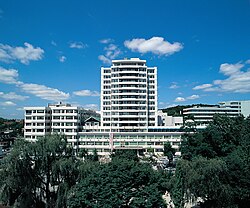
One of the university's most distinguished areas is its medical science. The College of Korean Medicine, founded in 1948, is one of only eleven such colleges in South Korea. A unique feature of the university is its ability to blend Eastern and Western traditions. Through the Graduate School of East-West Medical Science and the integrated services at the Kyung Hee Medical Center, researchers work on combining traditional diagnostic methods with modern biomedical engineering.
Physical Education and Sports Science
The university has played a pivotal role in the development of physical education in Korea. Since the construction of Asia's largest gymnasium in 1955, the College of Physical Education has expanded to include specialized departments such as Sports Medicine, Coaching, Golf Management, and Taekwondo. The institution also pioneered the first doctoral program in physical education in South Korea in 1980.
Diverse Undergraduate and Graduate Offerings
The university provides comprehensive training in fields ranging from the Humanities and Law to Engineering, Music, and Fine Arts. Notable specialized schools include:
- Business and Management: Including the Graduate School of Business.
- International Studies: Focused on global affairs and diplomacy.
- Tourism: Featuring a world-renowned Hospitality and Leisure Management program.
- Science and Technology: Spanning Software, Electronics, and Life Sciences.
Campus Life and Facilities
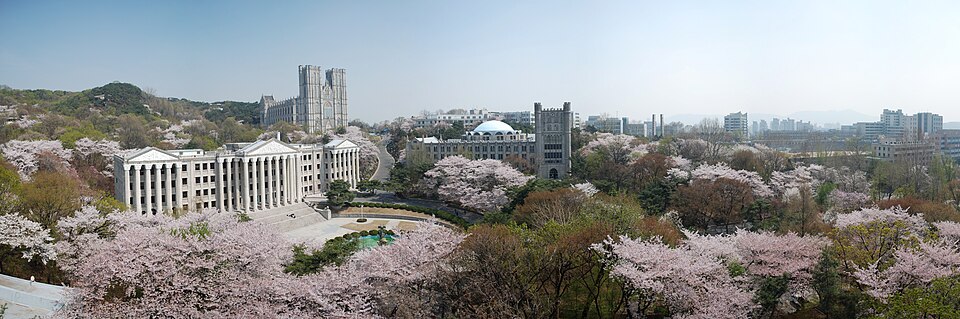
Kyung Hee University operates across three distinct campuses, each serving a unique purpose:
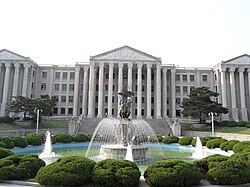
- Seoul Campus: The original 245-acre urban campus located in the Dongdaemun District.
- Global Campus: A 510-acre campus located in Yongin, near Suwon.
- Gwangneung Campus: A 12-acre site in Namyangju, home to the Graduate Institute of Peace Studies.
Cultural and Scientific Resources
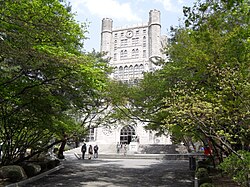
The university maintains significant cultural institutions, including the Central Museum, which was registered as the 1st National Museum of Korea in 2001. For science enthusiasts, the Natural History Museum houses approximately 90,000 specimens, including diverse collections of minerals, birds, mammals, and insects.
University Statistics at a Glance
| Category | Details |
|---|---|
| Total Students | 34,342 |
| Undergraduates | 25,573 |
| Postgraduates | 8,769 |
| Academic Staff | 1,395 |
| Administrative Staff | 1,170 |
Frequently Asked Questions
What are the primary campus locations for Kyung Hee University?
The university has three campuses: the Seoul Campus in Dongdaemun, the Global Campus in Yongin (near Suwon), and the Gwangneung Campus in Namyangju.
How does the university approach traditional Korean medicine?
Kyung Hee integrates traditional practices with modern science through the College of Korean Medicine and the Graduate School of East-West Medical Science, allowing for a blend of Eastern and Western diagnostic and therapeutic methods.
Is Kyung Hee University recognized internationally?
Yes. The university is ranked highly in various global assessments, including being ranked 40th in Asia by QS and holding a significant position in the THE World University Rankings. Its Hospitality and Leisure Management program has also achieved high global rankings.
What kind of research facilities does the university offer?
The university hosts 49 auxiliary research institutions, including specialized centers for biotechnology, oral biology, clinical nutrition, and various institutes for human society and peace studies.
Does the university offer study abroad opportunities?
Yes, Kyung Hee University maintains partnerships with 434 sister universities across 69 different countries to facilitate international exchange.