KXJB-TV History: From CBS Pioneer to KRDK-TV
The landscape of television in eastern North Dakota and northwestern Minnesota has been shaped by several key players, but few have a legacy as complex as KXJB-TV. From its early days as a pioneer of color broadcasting to its eventual transition into KRDK-TV, the station has mirrored the evolving nature of the American media market.
The Early Years of KXJB-TV
KXJB-TV first signed on the air on August 1, 1954, under the ownership of John Boler. Initially operating with studios in Valley City and a 1,085-foot transmitter tower near Pillsbury, the station served as a cornerstone for local news and entertainment. In 1963, the station moved its main studios to Fargo, and by 1966, it had completed a massive 2,060-foot tower near Galesburg to enhance its signal reach.
For decades, KXJB remained a steadfast CBS affiliate. Until its sale in 2014, it was the only major station in the Fargo market that never changed its primary network affiliation. In its early years, it also shared ABC programming with WDAY-TV until the launch of KXGO-TV (now KVLY-TV) in 1959. Additionally, the station was an affiliate of the NTA Film Network.
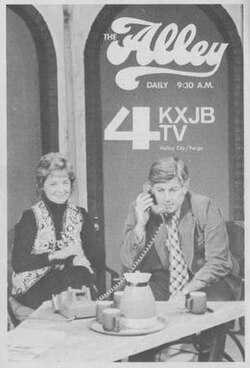
Innovation was a hallmark of the station's early era. On June 11, 1968, KXJB became the first station in North Dakota to broadcast live color programs. The station also experimented with accessibility, opening a studio in the West Acres Shopping Center in 1972 to broadcast daytime local programs and early evening news directly from the mall, though this venture lasted less than two years.
The Late Show Controversy and Market Reach
KXJB is remembered in broadcasting history for a rare programming decision regarding the Late Show with David Letterman. When the show premiered, KXJB was one of only four CBS stations nationwide that declined to carry it, opting instead to keep its existing syndicated lineup. As a result, the program aired on Fox affiliate KVRR. It wasn't until 1994 that KXJB finally began airing the show.
Because the Fargo-Moorhead and Grand Forks areas are treated as one large television market, KXJB's tower location was strategically chosen to cover both regions. While other affiliates relied on full-power satellite stations to reach Grand Forks, KXJB's primary signal provided city-grade coverage to the area.
The Rise and Fall of KXJC (CBS 35)
To better compete with the dominant WDAZ-TV in Grand Forks, Catamount Broadcasting launched KXJC-LP (known as "CBS 35") on December 11, 2000. While KXJC was a semi-satellite of KXJB—meaning it simulcast most network and syndicated content—it functioned as a separate entity by producing its own weeknight newscasts and local commercials.
| Attribute | Detail |
|---|---|
| Analog Channel | 35 (UHF) |
| Branding | CBS 35 |
| Affiliation | CBS (2000–2003) |
| Owner | Catamount Broadcasting |
| Operational Dates | Dec 11, 2000 – Apr 30, 2003 |
Despite plans to increase its power from 10,000 to 60,000 watts to reach Grafton, ND, and Thief River Falls, MN, KXJC went silent on April 30, 2003, and its license was canceled shortly after.
Consolidation and the Transition to KRDK
The mid-2000s marked a period of consolidation. In 2003, Catamount entered into a Local Marketing Agreement (LMA)—a contract where one station manages the operations of another—with KVLY-TV. By 2004, KXJB moved into KVLY's facilities, and by 2007, the two stations began simulcasting news under the brand Valley News Live.
In 2013, a complex series of sales involving Parker Broadcasting, Hoak Media, and Gray Television led to a major shift. To comply with FCC scrutiny regarding LMAs, Gray Television moved KXJB's CBS programming to a digital subchannel of KVLY (KVLY-DT2) and divested the actual license to Major Market Broadcasting (MMB), a minority-owned company.
On November 30, 2014, the original KXJB signal went dark. After the purchase was finalized, the station's call letters were changed to KNDF-TV and finally to KRDK-TV on January 13, 2015. KRDK pivoted away from CBS, instead launching a variety of digital networks including Cozi TV, Grit, Escape, and later Laff and Bounce TV. In May 2021, the station added MyNetworkTV programming and began airing Green Bay Packers preseason games in August of that year.
Key Facts
- First Air Date: August 1, 1954.
- Color Pioneer: First station in North Dakota to broadcast live color on June 11, 1968.
- Network Loyalty: Remained a CBS affiliate from 1954 until 2014.
- Infrastructure: Operated a 2,060-foot tower near Galesburg completed in 1966.
- Current Identity: Now operates as KRDK-TV following a 2014 sale to Major Market Broadcasting.
Frequently Asked Questions
Why did KXJB-TV change its name to KRDK-TV?
The change occurred after the station was sold to Major Market Broadcasting in 2014. As part of a deal to satisfy FCC regulations, the CBS programming was moved to a KVLY subchannel, and the original license was rebranded as KRDK-TV to carry different networks.
What was the relationship between KXJB and KVLY?
The two stations entered into a Local Marketing Agreement in 2003, which eventually led to them sharing facilities and simulcasting news under the "Valley News Live" brand.
What was KXJC-LP?
KXJC-LP was a semi-satellite of KXJB-TV that operated in Grand Forks from 2000 to 2003. It provided locally focused CBS programming and news for the Grand Forks area before going silent.
Did KXJB always air all CBS programming?
No. Notably, KXJB was one of the few CBS stations that initially refused to air the Late Show with David Letterman, which instead aired on a local Fox affiliate until 1994.
What networks does KRDK-TV carry now?
KRDK-TV carries a variety of digital networks, including Cozi TV, Grit, Escape, Laff, and Bounce TV, and it offers MyNetworkTV programming late at night.