Kosin Presbyterian Church in Korea: A Legacy of Faith and Resistance
The Kosin Presbyterian Church in Korea (also known as Korea-pa) stands as a significant Evangelical Reformed and Presbyterian denomination within the Republic of South Korea. While its roots are deeply embedded in Korean soil, its influence has expanded through congregations in North America and various other nations worldwide. At its heart, the denomination is defined by the principle of Coram Deo—living before God—and a commitment to maintaining the authentic, apostolic faith.
Built upon the courage of martyrs who refused to compromise their beliefs during periods of intense oppression, the Kosin denomination seeks to preserve the purity of life and the foundational teachings of the Reformed faith. The church operates under three central pillars: being God-centered, Bible-centered, and Church-centered.
Key Facts
- Origin: Established in 1952 in South Korea.
- Theological Stance: Reformed, Evangelical, and Presbyterian.
- Core Principle: Coram Deo (Life before God).
- Primary Documents: The Bible and the Westminster Standards.
- Global Presence: Headquartered in Seoul, with missions in 46 countries.
- Educational Institutions: Kosin University and Korea Theological Seminary.
Historical Foundations and the Struggle for Faith
The history of Presbyterianism in Korea began with medical missionary Dr. H. N. Allen and was furthered by the arrival of missionary H.G. Underwood in 1885. This period saw the rapid growth of the mission, leading to the establishment of the Pyongyang Presbyterian Theological Seminary in 1901 and the organization of the synod of Joseon Presbyterian Church in 1907.
Resistance to Japanese Colonialism
The landscape of Korean Christianity changed drastically during the Japanese annexation in 1910. As part of a militaristic imperialist effort to "Japanize" the peninsula, the colonial government enforced the worship of Shinto shrines and the deification of the Japanese emperor. While many denominations eventually succumbed to these demands to survive, a dedicated group of ministers chose resistance.
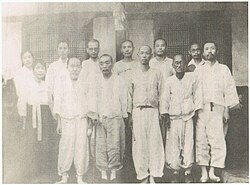
These ministers, including Reverends Joo Ki-Chul, Han Sang-Dong, and Joo Nam-Sun, faced imprisonment and torture for refusing to participate in shrine worship. This period of persecution led to the closure of many Christian schools and the displacement of seminary students. Following Korea's liberation on August 15, 1945, these survivors sought to rebuild a pure, conservative theological foundation.
The Birth of the Kosin Denomination
In 1946, the Koryeo Theological Seminary was established to uphold the reformed faith. Although initially unrecognized by the broader Presbyterian Church, this movement eventually led to the formal establishment of the General Assembly of the Presbyterian Church in Korea (Kosin) on September 11, 1952. Despite various separations and brief unions with other groups like the HapDong branch, the Kosin church has maintained its distinct identity as a bastion of conservative Reformed theology.
Theology and Doctrine
The Kosin Presbyterian Church is strictly Reformed. It adheres to historic Presbyterian confessions to ensure theological continuity and purity. These include:
- The Westminster Confession of Faith (1647)
- The Westminster Larger Catechism
- The Westminster Shorter Catechism
- The Apostles' Creed
The denomination utilizes the Westminster Standards—a collection of doctrinal statements—as its primary guiding documents alongside the Bible.
Institutional Reach and Global Missions
The denomination maintains a robust infrastructure to support its spiritual and social mission. This includes significant educational and medical institutions:
- Kosin University: Authorized by the Korean Ministry of Education, offering various departments and academic programs.
- Korea Theological Seminary: A specialized institution offering M.Div and Th.M degrees.
- Kosin University Hospital: Known as the "Gospel Clinic," providing extensive medical services with over 1,100 beds.
On the mission field, the church is highly active. It supports 220 missionaries serving in 46 different countries. Domestically, the Committee of Evangelism focuses on church planting across South Korea, including rural areas and military chaplaincy.
| Category | Details |
|---|---|
| Congregations | 2,056 |
| Total Members | 473,497 |
| Ordained Ministers | 3,753 |
| Presbyteries | 34 |
| Foreign Missionaries | 220 |
Contemporary Discussions
Like many established institutions, the Kosin denomination has faced internal debates. Recently, controversies have arisen regarding the intersection of the pulpit and politics. Some members have called for disciplinary action against certain pastors for sermons perceived as political agitation, while other groups of pastors have expressed support for specific political figures and stances. These discussions reflect the ongoing dialogue within the church regarding the role of faith in the public sphere.
Frequently Asked Questions
What is the meaning of "Coram Deo" in the Kosin tradition?
Coram Deo is a Latin phrase meaning "before the face of God." For the Kosin denomination, it represents the principle of living one's entire life in the presence of God, maintaining authenticity and integrity in faith.
What makes the Kosin denomination unique in Korean history?
The denomination is uniquely defined by its history of resistance against Japanese colonial oppression, specifically the refusal to participate in Shinto shrine worship, which established its identity as a conservative and martyr-rooted church.
Does the Kosin church allow women's ordination?
No, according to the denomination's current practices and statistics, there is no women's ordination.
Which international organizations is the Kosin church affiliated with?
The Kosin group is a member of the International Conference of Reformed Churches and maintains sister church relationships with organizations such as the Reformed Churches in the Netherlands (Liberated) and the Orthodox Presbyterian Church in the USA.
What are the primary theological documents used by the church?
The church uses the Bible as its principle scripture and employs the Westminster Standards (including the Confession of Faith and Catechisms) as its primary doctrinal documents.