The Rich Tapestry of Korean Music: From Ancient Rituals to Modern K-pop
For thousands of years, the Korean peninsula has been a cradle of musical innovation. From the shamanistic rituals of ancient agricultural festivals to the global phenomenon of modern K-pop, music has remained a fundamental pillar of Korean identity. While the division of Korea in 1945 led to the development of distinct musical styles in both the North and the South, the deep historical roots of gugak (traditional national music) continue to influence the sounds of the peninsula today.
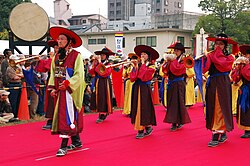
Key Facts
- Gugak refers to traditional Korean music, encompassing court, folk, poetic, and religious styles.
- The geomungo is a traditional zither invented by Prime Minister Wang San-ak during the Goguryeo period.
- Pansori is a unique vocal and percussive art form recognized by UNESCO.
- Traditional music is categorized into Hyang-ak (indigenous music) and Dang-ak (music influenced by the Tang dynasty).
- Modern Korean music is globally recognized through the popularity of K-pop.
A Journey Through History
The Proto-Three Kingdoms and the Three Kingdoms Period
Little is recorded regarding the music of the Proto-Three Kingdoms period (before 57 BCE), but evidence from tomb murals and ceramics suggests that complex string instruments were already in use. It is believed that music played a central role in shamanistic rituals during agricultural festivals.
As the Three Kingdoms period (57 BCE – 668 CE) emerged, each kingdom developed its own musical identity:
- Goguryeo: Popular instruments included the piri (an oboe), the pipa (a lute), and the geomungo (a zither). The geomungo was famously modeled after a Chinese guqin by Prime Minister Wang San-ak.
- Baekje: Known for its musical influence abroad, Baekje musicians were invited to Japan. Notably, a musician named Mimaji emigrated to Japan in 612 after studying music and dance in China.
- Silla: The gayageum (a traditional zither) was introduced to Silla by Ureuk from Gaya. Ureuk is credited with teaching the instrument, songs, and dances to several disciples.
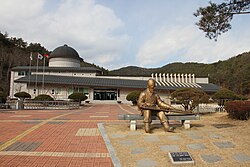
The Goryeo and Joseon Dynasties
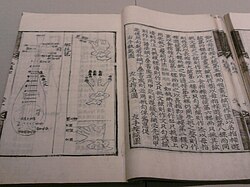
During the Goryeo dynasty, the influence of Song dynasty music began to shape Korean court music. By the 15th century, many Goryeo songs were recorded in the Akhak gwebeom, a document notable for featuring lyrics in the Korean language rather than previous linguistic trends.
The Joseon dynasty (founded in 1392) shifted toward a pro-Confucian, anti-Buddhist stance, which significantly influenced the musical patterns of Yeak (ritual music). Despite these shifts, many musical notations followed the traditions established in the Goryeo era. In a notable moment of cultural diplomacy in 1894, the Joseon government even dispatched ten court musicians to the Boston Exposition in the United States.
The Modern Era and Cultural Shifts
The transition to the Korean Empire and the subsequent Japanese colonization in 1910 brought profound changes. Western music began to influence the peninsula, and traditional court music struggled to survive. During the 1920s, cultural suppression made the survival of traditional music difficult, though some singers found support in the 1930s, including the first live Korean-language radio broadcast in 1934.

Traditional Vocal and Folk Styles
Regional Vocal Traditions (Sori/Chang)
Korean folk songs vary significantly by region:
- Dongbu: Generally characterized by simple and bright musical features.
- Namdo: Originating from Jeolla and parts of Chungcheong provinces, these songs are rich, dramatic, and served as the foundation for genres like pansori and sanjo.
- Jeju: The songs of Jeju Island are incredibly abundant, with approximately 1,600 songs transmitted today, known for their unique melodic lines and rich texts.
Pansori and Pungmul
Pansori is a dramatic art form involving one singer and one drummer. The narrator performs various characters within a story, often incorporating audience participation and humor. Due to its cultural significance, Pansori was designated as an intangible cultural property in UNESCO's Memory of the World in 2003.
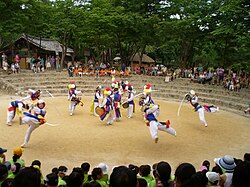
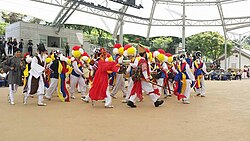
Pungmul is a vibrant folk tradition involving percussion, dancing, and singing. Usually performed outdoors by large groups, it is characterized by constant motion. A popular derivative is Samul Nori, which uses the same instruments as Pungmul but is performed at a faster tempo while seated.
Understanding Court Music and Instruments
Classifications of Court Music
Korean court music is categorized based on its origins:
- Dang-ak: Music derived from the Chinese Tang dynasty, often utilizing imported instruments.
- Hyang-ak: Indigenous Korean music. An example is Sujecheon, an instrumental piece with a history spanning 1,300 years.
Musical Instrument Groups
Traditional Korean instruments are broadly classified into three functional categories:
- String instruments (such as the geomungo and gayageum)
- Wind instruments (such as the piri)
- Percussion instruments (used extensively in Pungmul and Pansori)
Summary of Musical Categories
| Category | Type | Key Characteristics |
|---|---|---|
| Gugak | Traditional | Includes court, folk, poetic, and religious music. |
| Pansori | Vocal/Percussive | A solo singer and drummer telling a story; UNESCO recognized. |
| Pungmul | Folk Percussion | Outdoor drumming, dancing, and singing; includes Samul Nori. |
| K-pop | Modern | Popular music originating from South Korea. |
Frequently Asked Questions
What is the difference between Hyang-ak and Dang-ak?
Hyang-ak refers to indigenous Korean music that developed locally, while Dang-ak refers to music and instruments that were imported or influenced by the Chinese Tang dynasty.
Is Pansori considered Korean Opera?
While sometimes referred to as "Korean Opera," Pansori is specifically a long vocal and percussive art form performed by a single singer and a single drummer who narrates various characters.
What is the significance of the geomungo?
The geomungo is a traditional zither that was famously invented by Prime Minister Wang San-ak during the Goguryeo period, using a Chinese guqin as a model.
How does Samul Nori differ from Pungmul?
Samul Nori is based on the rhythmic patterns and instruments of Pungmul, but it is typically played at a faster tempo and performed while the musicians are seated, rather than in a moving outdoor parade.
What are the main regional styles of Korean folk songs?
The main styles include Dongbu (simple and bright), Namdo (rich and dramatic, the home of pansori), and Jeju (unique melodies with abundant texts).