Korean Fortresses: Diverse Architectural Traditions
Throughout history, the Korean peninsula has utilized a sophisticated array of defensive structures to protect its people and territories. These fortifications were not uniform; instead, they were strategically designed based on the terrain, the intended purpose of the defense, and the specific military needs of the era. By categorizing these structures into distinct types, we can better understand the strategic landscape of historical Korea.
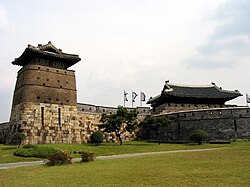
Key Facts
- Korean fortifications are primarily categorized into three types: sanseong, jinseong, and eupseong.
- Sanseong refers to mountain fortresses designed for high-altitude defense.
- Jinseong are camp fortresses, often used for temporary or tactical military encampments.
- Eupseong are city fortresses built to protect urban centers and administrative hubs.
Types of Korean Fortifications
To understand the defensive capabilities of historical Korea, one must distinguish between the three primary architectural styles used to secure the land.
Sanseong (Mountain Fortresses)
Sanseong are mountain fortresses. These structures leverage the natural topography of steep hills and rugged mountains to create a formidable defensive barrier. By utilizing high elevation, these fortresses provided defenders with a significant tactical advantage, making them difficult for invading forces to scale or besiege.
Jinseong (Camp Fortresses)
Jinseong are classified as camp fortresses. Unlike permanent mountain or city structures, these were often utilized as military camps. They served as strategic bases for troops, providing a fortified location for soldiers to regroup, organize, and launch or defend against military operations.
Eupseong (City Fortresses)
Eupseong are known as city fortresses. These were constructed to encompass and protect entire towns or administrative centers. While mountain fortresses focused on terrain, eupseong focused on the protection of civilian populations and the vital economic and political infrastructure of the city.
Summary of Fortress Types
| Fortress Type | English Term | Primary Function |
|---|---|---|
| Sanseong | Mountain Fortress | Defensive use of high-altitude terrain |
| Jinseong | Camp Fortress | Military encampment and tactical base |
| Eupseong | City Fortress | Protection of urban and administrative centers |
Frequently Asked Questions
What is the main difference between a sanseong and an eupseong?
The primary difference lies in their location and purpose: a sanseong is a mountain fortress built on high terrain, whereas an eupseong is a city fortress built to protect urban areas.
What purpose did a jinseong serve?
A jinseong served as a camp fortress, acting as a fortified military camp for troops.
Are all Korean fortresses built on mountains?
No. While sanseong are built on mountains, eupseong are built around cities and jinseong function as military camps.
How many main types of Korean fortresses are there?
There are three main types: sanseong, jinseong, and eupseong.