Kiyosi Itô: The Architect of Stochastic Calculus
Kiyosi Itô was a visionary mathematician whose work fundamentally transformed the landscape of probability theory—the branch of mathematics concerned with the analysis of random phenomena. By developing the foundations of what is now known as Itô calculus, he provided the essential tools needed to model systems that evolve randomly over time, a contribution that remains indispensable to modern science and finance.
Early Life and Academic Foundations
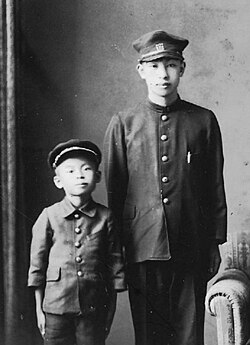
Born on September 7, 1915, in Hokusei-cho, a farming community in the Mie Prefecture west of Nagoya, Japan, Itô demonstrated academic excellence from a young age. He pursued his higher education at the Imperial University of Tokyo, where he focused on mathematics. During his studies, he became captivated by probability theory, a field that was relatively underdeveloped at the time. He graduated from the university's Faculty of Science in 1938.
Professional Beginnings and the Breakthrough
Between 1939 and 1943, Itô served as a Statistical Officer within the Statistics Bureau of the Cabinet Secretariat. This role provided him with the flexibility to continue his independent research, leading to the publication of his seminal 1942 paper, "On Stochastic Processes."
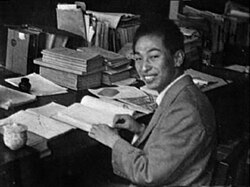
In 1943, Itô joined Nagoya Imperial University as an assistant professor. It was here, through intellectual exchanges with mathematicians Shizuo Kakutani and Kōsaku Yosida, that he defined the stochastic integral (a way of integrating a function with respect to a random process) and established the framework for Itô calculus. He earned his Doctor of Science degree from the Imperial University of Tokyo in 1945.
Overcoming the Challenges of War
Itô's most critical discoveries were made during the "dark age" of World War II and its immediate aftermath. The conflict created severe obstacles for Japanese scholars, including restricted access to libraries and a total loss of contact with Western mathematicians. This isolation meant Itô often worked without awareness of simultaneous global developments.
The struggle continued into the Occupation of Japan. Severe paper shortages once prevented a lengthy article by Itô from being published in a Japanese journal, forcing him to seek publication in an American journal instead. During the war, Gisiro Maruyama was the only other Japanese mathematician actively following Itô's work, often reading mimeographed copies of his papers while stationed in military camps.
Global Academic Influence
In 1952, Itô became a professor at the University of Kyoto, where he remained until his retirement in 1979. In 1953, he published his highly influential text, Probability Theory.
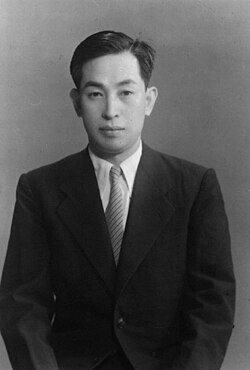
Throughout the 1950s and 60s, Itô spent significant time abroad, collaborating with the world's leading minds. His international appointments included:
- Institute for Advanced Study (1954–1956): A Fulbright fellowship where he worked with Henry McKean and William Feller of Princeton University.
- Stanford University (1961–1964): Served as a professor.
- Aarhus University (1966–1969): Served as a professor.
- Cornell University (1969–1975): His longest international tenure, where he taught courses including Higher Calculus.
Despite his ability to write in English, French, German, and Chinese, Itô noted that his spoken English accent often made it difficult for him to be understood by Americans.
Later Career and Legacy
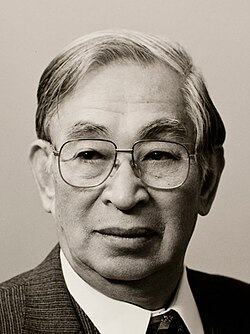
Upon returning to the University of Kyoto from Cornell, Itô served as the director of the Research Institute for Mathematical Sciences. Following his retirement, he was named professor emeritus at Kyoto University and later held a position at Gakushuin University.
His contributions were recognized with the highest honors in mathematics, including the Wolf Prize and the Kyoto Prize. He was elected to the Japan Academy, the National Academy of Sciences (USA), and the Académie des sciences (France).
In 2006, the International Mathematical Union awarded him the inaugural Gauss Prize for his lifetime achievements. Due to failing health, his daughter, Junko Ito, accepted the award from King Juan Carlos I in Madrid, though the medal was later presented to him personally in Kyoto by Sir John Macleod Ball. In 2008, he received the Order of Culture at the Imperial Palace.
Kiyosi Itô passed away on November 10, 2008, in Kyoto, Japan, at the age of 93 due to respiratory failure.
Key Facts
- Primary Contribution: Defined the stochastic integral and founded Itô calculus.
- Major Awards: Gauss Prize (inaugural recipient), Wolf Prize, Kyoto Prize, and the Order of Culture.
- Key Publication: Probability Theory (1953).
- Education: Graduated from the Imperial University of Tokyo (1938); Doctor of Science (1945).
- International Tenure: Taught at Stanford, Aarhus, and Cornell Universities.
| Period/Year | Institution/Role | Key Milestone |
|---|---|---|
| 1938 | Imperial University of Tokyo | Graduated in Mathematics |
| 1939–1943 | Cabinet Secretariat Statistics Bureau | Published "On Stochastic Processes" (1942) |
| 1943–1952 | Nagoya Imperial University | Developed foundations of Itô calculus |
| 1952–1979 | University of Kyoto | Professor and later Director of RIMS |
| 1969–1975 | Cornell University | Longest tenure outside Japan |
| 2006 | International Mathematical Union | Awarded the inaugural Gauss Prize |
Frequently Asked Questions
What is Itô calculus?
Itô calculus is a mathematical framework developed by Kiyosi Itô that allows for the integration of stochastic processes, providing the tools to analyze systems that involve random noise or volatility.
How did World War II affect Itô's research?
The war caused severe isolation, limiting Itô's access to Western mathematical research and libraries. He and his few peers, such as Gisiro Maruyama, had to rely on mimeographed copies of papers and faced extreme paper shortages during the subsequent Occupation.
Which international universities did Kiyosi Itô teach at?
Itô held professorships at Stanford University, Aarhus University, and Cornell University, and spent time as a Fulbright fellow at the Institute for Advanced Study.
What were the most prestigious awards Itô received?
He was the first recipient of the Gauss Prize (2006) and also received the Wolf Prize, the Kyoto Prize, and Japan's Order of Culture.
In what languages could Kiyosi Itô write?
Itô was proficient in writing in Japanese, English, French, German, and Chinese.