Kitt: The Multilingual Legacy of a Cabaret and Screen Icon
With a voice as distinctive as her stage presence, Kitt was a powerhouse of 20th-century entertainment. From her early days as a dancer to her status as a global cabaret star and voice-acting legend, she navigated the worlds of music, theater, and film with an unmatched sophistication. Fluent in four languages and capable of singing in 11, she bridged cultural gaps through her art, leaving an indelible mark on the performing arts.
Key Facts
- Multilingual Mastery: Spoke four languages and sang in 11 different languages.
- Signature Hit: Released the timeless holiday classic "Santa Baby" in 1953.
- Versatile Acting: Portrayed Catwoman in the 1967 Batman series and Yzma in Disney's The Emperor's New Groove.
- Broadway Acclaim: Received a Tony Award nomination for Best Actress in a Musical for Timbuktu!.
- Political Courage: Faced a professional blacklist in the U.S. after criticizing the Vietnam War at a White House luncheon.
Early Career and Rise to Stardom
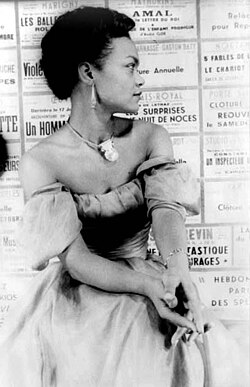
Kitt's professional journey began in 1943 as a member of the Katherine Dunham Company, a troupe she remained with until 1948. Her transition into singing revealed a unique vocal style that captured the attention of the public and critics alike. During her years performing in Europe, she became fluent in French, a skill that further enhanced her international appeal.
Her recording career was prolific, featuring hits such as "Let's Do It," "Champagne Taste," and "C'est si bon." However, it was the 1953 release of "Santa Baby" that became her most recognizable contribution to popular music.
Breakthrough Roles and Film Work
The 1950s marked a period of rapid ascent. In 1950, the legendary Orson Welles cast her as Helen of Troy in his production of Dr. Faustus. By 1952, she appeared in the revue New Faces of 1952, introducing the songs "Monotonous" and "Bal, Petit Bal." This revue was later distributed as a film by 20th Century-Fox in 1954.
Throughout the late 1950s, she appeared in films such as The Mark of the Hawk (1957), St. Louis Blues (1958), and Anna Lucasta (1958). Despite persistent rumors of a romantic entanglement with Orson Welles during her 1957 run in Shinbone Alley, Kitt categorically denied the affair in a 2001 interview with Vanity Fair, describing their relationship as strictly professional.
The White House Incident and Political Fallout
On January 18, 1968, Kitt's career in the United States suffered a devastating blow. During a luncheon at the White House, First Lady Lady Bird Johnson questioned her about the Vietnam War. Kitt responded candidly, stating that the youth of America were rebelling because the country was sending its best citizens to be "shot and maimed."
The remarks reportedly left Mrs. Johnson in tears and led to a severe professional backlash. It was later revealed in 1975 by journalist Seymour Hersh that the CIA had compiled a dossier on Kitt, which included derogatory comments about her personal life and family history. Branded a "sadistic nymphomaniac" by the agency, Kitt shifted her focus to performances in Europe and Asia.
Her relationship with the U.S. government saw a thaw in 1978 when President Jimmy Carter invited her back to the White House for a reception honoring the 10th anniversary of the reopening of Ford's Theatre.
Television and Iconic Roles
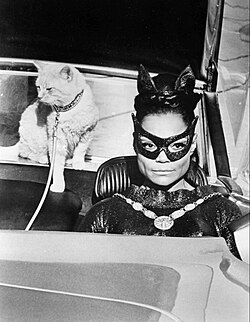
In the late 1960s, Kitt stepped into the role of Catwoman in the Batman television series after the departure of Julie Newmar in 1967. She also showcased her versatility as a contortionist in the Mission: Impossible episode "The Traitor."
Voice Acting and Animation
In her later years, Kitt became a celebrated voice actress. She won an Annie Award for her role as Yzma in Disney's The Emperor's New Groove and earned two Emmy Awards and two additional Annie Awards for the series Kronk's New Groove and The Emperor's New School. Her voice work extended to the BBC Radio adaptation of The Jungle Book (as Kaa) and the Disney film The Jungle Book: Mowgli's Story (as Bagheera).
Broadway and Later Musical Success
Kitt's presence on the stage remained potent throughout the 1970s and 80s. She earned a Tony nomination for Timbuktu! in 1978 and received critical acclaim in the West End production of Stephen Sondheim's Follies, where her performance of "I'm Still Here" became a highlight of the show.
In 1984, she successfully pivoted to the disco scene with "Where Is My Man," which became her first certified gold record and reached No. 7 on the U.S. Billboard dance chart. This era brought her a new generation of fans, and she frequently performed benefit concerts for HIV/AIDS organizations.
| Category | Key Achievement / Role | Year/Period |
|---|---|---|
| Music | Release of "Santa Baby" | 1953 |
| Theater | Tony Nomination for Timbuktu! | 1978 |
| Television | Catwoman in Batman | 1967 |
| Animation | Yzma in The Emperor's New Groove | 2000 |
| Dance Music | Gold record for "Where Is My Man" | 1984 |
Frequently Asked Questions
How many languages could Kitt speak and sing?
Kitt was fluent in four languages and was capable of singing in 11 different languages, a talent she frequently showcased in her cabaret performances.
What was the "White House Incident"?
The incident occurred in 1968 when Kitt criticized the Vietnam War during a luncheon with First Lady Lady Bird Johnson, leading to a professional blacklist in the U.S. and a derogatory CIA dossier.
Which Disney role won her an Annie Award?
Kitt won an Annie Award for her voice role as the villainous Yzma in the feature film The Emperor's New Groove.
What was her most successful disco hit?
Her most successful disco track was "Where Is My Man" (1984), which became her first certified gold record and peaked at No. 7 on the U.S. Billboard dance chart.
Did she ever return to the White House after her controversy?
Yes, she returned on January 29, 1978, after being invited by President Jimmy Carter to attend a reception for the reopening of Ford's Theatre.