Kingfishers: The Vibrant Hunters of the Alcedinidae Family
Kingfishers are a diverse family of small to medium-sized birds known for their striking colors and powerful hunting abilities. Belonging to the family Alcedinidae within the order Coraciiformes, these birds are found across the globe, from the tropical forests of Africa and Asia to the temperate regions of Europe and the Americas. While often associated exclusively with water, kingfishers occupy a vast array of environments, including deep forests, open woodlands, and even arid deserts.
With 118 species divided into 19 genera, the family is characterized by several distinct physical traits: large heads, short legs, stubby tails, and long, sharp, pointed bills designed for precision striking.
Key Facts
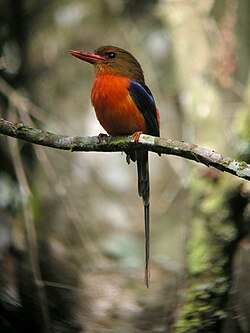
- Global Presence: Found worldwide except in polar regions and some of the driest deserts.
- Diverse Diet: While some specialize in fish, others eat insects, crustaceans, reptiles, and small mammals.
- Physical Variety: Ranges from the African dwarf kingfisher (10 cm) to the giant kingfisher (up to 46 cm).
- Nesting Habits: Primarily cavity nesters, often digging tunnels into riverbanks or utilizing termite nests.
- Vision: Possess binocular vision and the ability to compensate for light refraction when diving underwater.
Taxonomy and Evolution
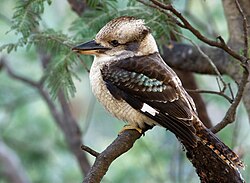
The family Alcedinidae was first introduced as Alcedia by Constantine Samuel Rafinesque in 1815. Taxonomically, the family is split into three distinct subfamilies:
- Alcedininae: The river kingfishers, which are considered basal to the other two groups.
- Halcyoninae: The tree kingfishers, none of whom are specialist fish-eaters.
- Cerylinae: The water kingfishers, including the species found in the Americas.
Evidence suggests that kingfishers originated in the Indomalayan region approximately 27 million years ago before expanding into the Australasian realm. Fossil records indicate their presence as far back as 30–40 million years ago in Germany and Wyoming.
Physical Characteristics and Adaptations
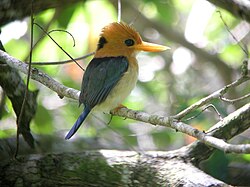
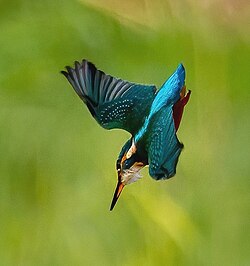
The most prominent feature of the kingfisher is its dagger-like bill. The shape of the bill typically reflects the bird's diet: fish-hunting species have longer, more compressed bills, while those that hunt ground prey have shorter, broader bills. An exception is the shovel-billed kookaburra, which uses its wide bill to dig through the forest floor.
Their vision is highly specialized. Kingfishers use head movements to track prey due to limited eye movement within their sockets. To protect their eyes during high-velocity water impacts, they possess nictitating membranes (transparent third eyelids). The pied kingfisher takes this further with a bony plate that slides across the eye upon impact.
Distribution and Habitat
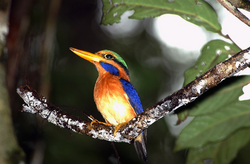
![The black-backed dwarf kingfisher is considered a bad omen by warriors of the Dusun tribe of Borneo.[citation needed]](/images/1a/48/1a4838af5dfd42dbfc6b99bff1671aee28146c68b50963522aeb232148ec6aec.jpg)
While the Australasian realm is the center of kingfisher diversity, they are distributed cosmopolitantly. In the Americas, representation is sparse, consisting of only six species (four green kingfishers and two crested kingfishers). In contrast, regions like Africa show immense diversity; for example, the small area of the Gambia hosts eight resident species.
Habitats vary wildly by species. Over half of all kingfishers live in forests or forested streams. Some, like the red-backed kingfisher, thrive in Australia's driest deserts, while others inhabit tropical coral atolls or human-modified urban parks and gardens.
Behavior, Diet, and Breeding
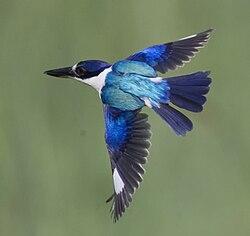
Kingfishers are opportunistic hunters that typically swoop down from a perch to snatch prey. Their diet is surprisingly varied, encompassing frogs, annelid worms, mollusks, spiders, centipedes, and even other birds. To handle larger prey, kingfishers beat the animal against a perch to kill it and break protective bones or spines before swallowing.
Breeding is generally monogamous, though some species, such as the laughing kookaburra, practice cooperative breeding where helpers assist the dominant pair. Most species are cavity nesters, digging tunnels into earth banks. These tunnels can be remarkably long; the giant kingfisher is known to dig tunnels up to 8.5 meters (28 ft) in length.
Summary of Kingfisher Subfamilies
| Subfamily | Common Name | Primary Habitat/Diet | Key Characteristic |
|---|---|---|---|
| Alcedininae | River Kingfishers | Rivers/Water-based | Basal lineage |
| Halcyoninae | Tree Kingfishers | Forests/Insects | Not specialist fish-eaters |
| Cerylinae | Water Kingfishers | Water-based | Includes American species |
Conservation Status
Many kingfishers are currently threatened by human activity, particularly those with limited distributions on islands. Habitat loss through forest clearance and the introduction of invasive species are primary drivers of decline. For instance, the Marquesan kingfisher is critically endangered due to habitat degradation caused by introduced cattle and predation.
Frequently Asked Questions
Do all kingfishers eat fish?
No. While they are famous for eating fish, many species—particularly those in the Halcyoninae (tree kingfisher) subfamily—primarily eat insects, crustaceans, and other small invertebrates.
How do kingfishers protect their eyes when diving?
They use nictitating membranes, which are specialized eyelids that cover and protect the eye upon hitting the water. Some species, like the pied kingfisher, even have a bony plate for added protection.
Where do kingfishers build their nests?
Most kingfishers are cavity nesters that dig tunnels into the banks of rivers or lakes. However, some forest-dwelling species nest in arboreal termite nests.
Which is the largest and smallest kingfisher?
The smallest is the African dwarf kingfisher, averaging 10 cm in length. The largest in Africa is the giant kingfisher (up to 46 cm), while the laughing kookaburra is the heaviest species.
Why are some kingfishers endangered?
Many species, especially those endemic to small islands, face extinction due to forest clearance, habitat degradation, and the introduction of non-native predatory species.