Kid Rock: The Evolution of a Genre-Blending Rock Star
From the underground hip-hop scene of Detroit to the heights of global superstardom, Kid Rock has carved a unique path through the music industry. By blending rap, rock, and country, he transitioned from a local rap pioneer to a multifaceted entertainer known for his high-energy performances and refusal to be pigeonholed into a single genre.
Key Facts
- Breakthrough Album: Devil Without a Cause sold over 14 million copies.
- Chart Success: Rock n Roll Jesus was his first album to hit No. 1 on the Billboard 200.
- Genre Shift: Evolved from pure hip-hop in the late 80s to a country-rock fusion in later years.
- Notable Collaborations: Worked with artists ranging from Sheryl Crow and Bob Seger to Metallica.
- Alter Ego: Performs under the name Bobby Shazam for specific tracks and projects.
Early Career and the Detroit Hip-Hop Scene (1988–1995)
Kid Rock's professional journey began in the late 1980s as a member of the hip-hop group Beast Crew. His early career was marked by a pivotal relationship with producer Mike E. Clark, who was impressed by the artist's ability to use turntables and equipment to create his own beats. This partnership led to a series of demos that attracted interest from six major labels.
At age 17, Kid Rock signed with Jive Records and released his debut studio album, Grits Sandwiches for Breakfast, in 1990. During this era, he became one of Detroit's most prominent rap stars, touring with artists like Ice Cube and D-Nice. However, tensions with other artists and unfavorable comparisons led Jive to eventually drop him.
In 1992, he signed with the independent label Continuum. This period saw the release of The Polyfuze Method (1993), which began incorporating a more rock-oriented sound. He also experimented with the Fire It Up EP, featuring the heavy rock track "I Am the Bullgod" and a cover of Hank Williams Jr.'s "A Country Boy Can Survive." To maintain local momentum, he released a series of "Bootleg" cassettes.
By 1994, Kid Rock moved away from relying solely on DJs, forming the rock band Twisted Brown Trucker to provide live instrumentation. Producer Mike E. Clark encouraged him to lean into his singing voice after recording a reworked cover of Billy Joel's "It's Still Rock and Roll to Me."
The Rise to National Superstardom (1996–2000)
The mid-90s marked a turning point in Kid Rock's stage presence. He integrated pyrotechnics, dancers, and a lavish light show into his acts, adopting a 1970s pimp persona. In 1996, he self-distributed Early Mornin' Stoned Pimp, selling 14,000 copies and cementing his local success.

Despite initial resistance from labels hesitant to sign a white rapper, attorney Tommy Valentino positioned him as a "rock star and everything in between." This strategy worked when Jason Flom of Lava Records signed him to Atlantic Records in 1997. The resulting album, Devil Without a Cause, became a massive commercial hit, certified Gold and Platinum and selling over 14 million copies through singles like "Bawitdaba" and "Cowboy."
During this peak, Kid Rock performed at Woodstock 1999 and the MTV VMAs. Despite a decade in the industry, he was nominated for the Grammy Award for Best New Artist in 2000. He further expanded his reach by collaborating with Metallica on the Summer Sanitarium Tour and releasing the double-platinum compilation The History of Rock.
Transitioning to Country and Rock (2001–2008)
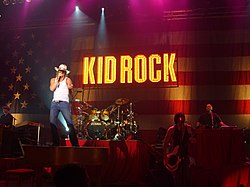
In the early 2000s, Kid Rock began shifting his sound further away from hip-hop. The 2001 album Cocky featured the country ballad "Picture" with Sheryl Crow, which introduced him to a broader, more mainstream audience. By 2003, his self-titled sixth album leaned heavily into rock, featuring a cover of Bad Company's "Feel Like Makin' Love."
His seventh studio album, Rock n Roll Jesus (2004), debuted at No. 1 on the Billboard 200 and sold over 5 million copies. The global hit "All Summer Long" showcased his ability to mash up classic influences, blending Lynyrd Skynyrd and Warren Zevon.
Country Rock and Modern Era (2009–Present)
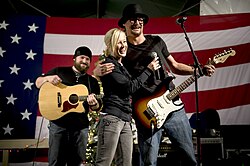
By 2010, the transition to country was complete with the release of Born Free, produced by Rick Rubin. While his career continued with albums like Rebel Soul (2012) and First Kiss (2014), he also began using his platform for social and political commentary.
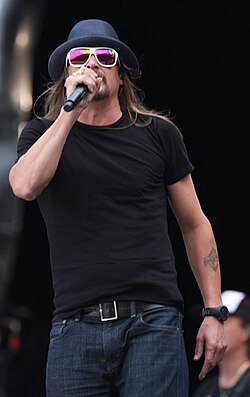
In recent years, Kid Rock has focused on independent releases and touring. He released Sweet Southern Sugar in 2017 and his first greatest hits collection in 2018. In 2020, he released "Quarantine" under his DJ Bobby Shazam persona, donating proceeds to fight COVID-19. His 2022 album, Bad Reputation, continued his trend of blending rap-rock with outspoken lyrical themes.
| Album Title | Year | Primary Genre/Style | Key Achievement |
|---|---|---|---|
| Grits Sandwiches for Breakfast | 1990 | Hip-Hop | Debut Studio Album |
| The Polyfuze Method | 1993 | Rap-Rock | Shift toward rock sound |
| Devil Without a Cause | 1998 | Rap-Rock / Nu-Metal | 14+ Million copies sold |
| Rock n Roll Jesus | 2004 | Rock / Country | No. 1 on Billboard 200 |
| Born Free | 2010 | Country Rock | Produced by Rick Rubin |
| Bad Reputation | 2022 | Rap-Rock / Country | Included 5 lead singles |
Frequently Asked Questions
What is Kid Rock's alter ego?
Kid Rock uses the alter ego Bobby Shazam, which was introduced on the song "Cucci Galore" from the album Rebel Soul and later used for the single "Quarantine."
Which album brought Kid Rock national fame?
Devil Without a Cause, released in 1998, was his commercial breakthrough, selling over 14 million copies and featuring hits like "Bawitdaba" and "Cowboy."
How did Kid Rock's musical style change over time?
He began as a pure hip-hop artist in the late 80s, transitioned into a rap-rock fusion in the late 90s, and eventually shifted toward country rock and southern rock in the 2000s and 2010s.
What is the significance of Twisted Brown Trucker?
Twisted Brown Trucker is the rock band Kid Rock formed to replace DJs with live instrumentation, allowing him to transition from a rapper to a full-fledged rock performer.
Has Kid Rock ever charted at number one?
Yes, his seventh studio album, Rock n Roll Jesus, was his first release to reach No. 1 on the Billboard 200 chart.