Jorge Newbery Airpark
Located just 2 km (1.2 mi) northwest of downtown Buenos Aires, Jorge Newbery Airpark (IATA: AEP, ICAO: SABE)—commonly known as Aeroparque—is a vital artery for Argentine aviation. Situated in the Palermo neighbourhood along the banks of the Río de la Plata, this public and military facility covers 138 hectares (341 acres) and serves as the primary hub for domestic travel within Argentina and key regional destinations in South America.
Operated by Aeropuertos Argentina 2000 S.A., the airport is strategically positioned for urban accessibility, making it the busiest airport in Argentina by passenger volume.
Key Facts
- Location: Palermo, Buenos Aires, Argentina.
- Passenger Volume: 17,738,000 passengers (2025), ranking it 1st in Argentina.
- Primary Hub For: Aerolíneas Argentinas, Flybondi, and JetSmart Argentina.
- Runway: A single concrete runway (13/31) measuring 2,700 meters (8,858 ft).
- Elevation: 5 meters (16 ft) above mean sea level (AMSL).
Historical Evolution
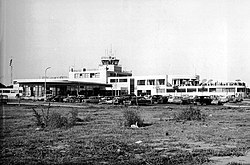
The concept for the airport dates back to 1925, proposed by Mayor Carlos Noel. After years of zoning disputes and feasibility studies, a site of reclaimed wetlands from the Río de la Plata was chosen. Designed by engineer Víctor Acuña, the facility opened in 1947 as Aeroparque 17 de Octubre.
The airport began operations in January 1948, initially serving domestic routes and flights to Uruguay with a 1,000-meter runway. By 1951, the first terminal was completed and the runway extended to 1,550 meters. Following the 1955 coup against President Juan Perón, the airport was renamed in honor of aviation pioneer Jorge Newbery. In 1960, it was re-inaugurated with a new terminal and a runway extended to 2,070 meters.
The eastern end of the airport became a site of political significance in 1965 with the establishment of an Argentine Air Force base; it was here that President Isabel Perón was formally deposed during the March 1976 coup.
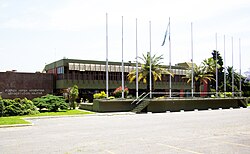
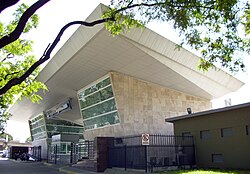
Throughout the late 20th and early 21st centuries, Aeroparque underwent significant modernization. Operations were privatized in 1998 under Aeropuertos Argentina 2000. To meet growing demand, Terminals III and IV were inaugurated in March 2014, doubling passenger capacity. While the government briefly moved most international flights to Ezeiza Airport in 2019 to alleviate congestion, international services have since recommenced to better connect tourists with domestic networks.
Infrastructure and Operations
Aeroparque is designed for high-efficiency turnaround, focusing on short-to-medium haul flights. The runway was extended in 2007 and further modified during the COVID-19 pandemic to accommodate wide-body aircraft (large aircraft with two aisles), such as the Airbus A330.
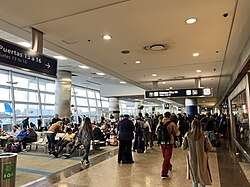
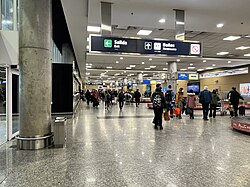
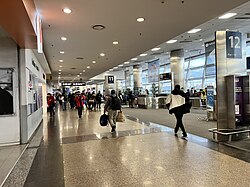
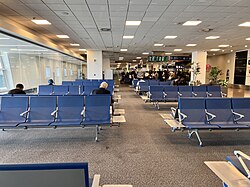
The facility features a streamlined layout to handle millions of annual passengers, including dedicated areas for baggage claim and various boarding gates for both national and regional international flights.
Airport Summary Table
| Feature | Detail |
|---|---|
| IATA / ICAO Code | AEP / SABE |
| Operator | Aeropuertos Argentina 2000 S.A. |
| Opened | 1947 |
| Runway Surface | Concrete |
| Total Area | 138 hectares (341 acres) |
| 2025 Passenger Traffic | 17,738,000 |
Airlines and Regional Connectivity
Aeroparque serves as a critical link between Buenos Aires and the rest of the Southern Cone. Major carriers operate a variety of routes to Brazil, Chile, Paraguay, and Uruguay.
- Aerolíneas Argentinas: Operates flights to São Paulo–Guarulhos, with seasonal services to Brasília and Cabo Frio.
- Flybondi: Provides connectivity to Asunción.
- JetSmart Argentina: Serves destinations including Natal, Recife, Resistencia, and Trelew.
- LATAM Brasil: Connects to Porto Alegre, Rio de Janeiro–Galeão, and São Paulo–Guarulhos.
- Gol Linhas Aéreas: Operates routes to Belo Horizonte–Confins, Brasília, and Porto Alegre, with seasonal flights to Punta del Este.
Safety Record
Over its long history, the airport has experienced several aviation incidents. Notable events include the 1957 LADE Vickers Viking crash and the 1981 Austral Líneas Aéreas Flight 901 crash. One of the most significant accidents occurred on August 31, 1999, when LAPA Flight 3142 crashed during takeoff due to pilot error, resulting in 65 fatalities, including two people on the ground.
Frequently Asked Questions
Is Aeroparque the main international airport for Buenos Aires?
No. While Aeroparque handles many regional international flights (particularly to neighboring South American countries), the primary gateway for long-haul international travel is the Buenos Aires-Ezeiza International Airport.
Who operates the Jorge Newbery Airpark?
The airport is operated by Aeropuertos Argentina 2000 S.A., a private conglomerate.
Which airlines use Aeroparque as a hub?
Aerolíneas Argentinas, Flybondi, and JetSmart Argentina all utilize the airport as a primary hub.
Can wide-body aircraft land at Aeroparque?
Yes. Following runway expansions completed during the COVID-19 pandemic, the airport can now accommodate wide-body aircraft such as the Airbus A330.
Where is the airport located in relation to the city center?
It is located approximately 2 km (1.2 mi) northwest of downtown Buenos Aires in the Palermo neighbourhood.